Sebastian Martinez Galindo recalls how, during middle school in Mexico, he and his friends earned small amounts—about 150 pesos ($8)—by completing classmates’ assignments. With those earnings, they would buy tacos from a street vendor near their school, served from a tricycle outfitted with a metal bin and grill that carried the distinct aroma of lard. Though the tacos weren’t exceptional, the shared meals strengthened their bond.
“We were not rich, but we were rich by having each other,” Martinez Galindo said. Now a mechanical engineering systems student at ASU and president of Phi Iota Alpha fraternity, he reflects on how economic and immigration policies in the U.S. are making it harder to preserve cultural traditions through food.
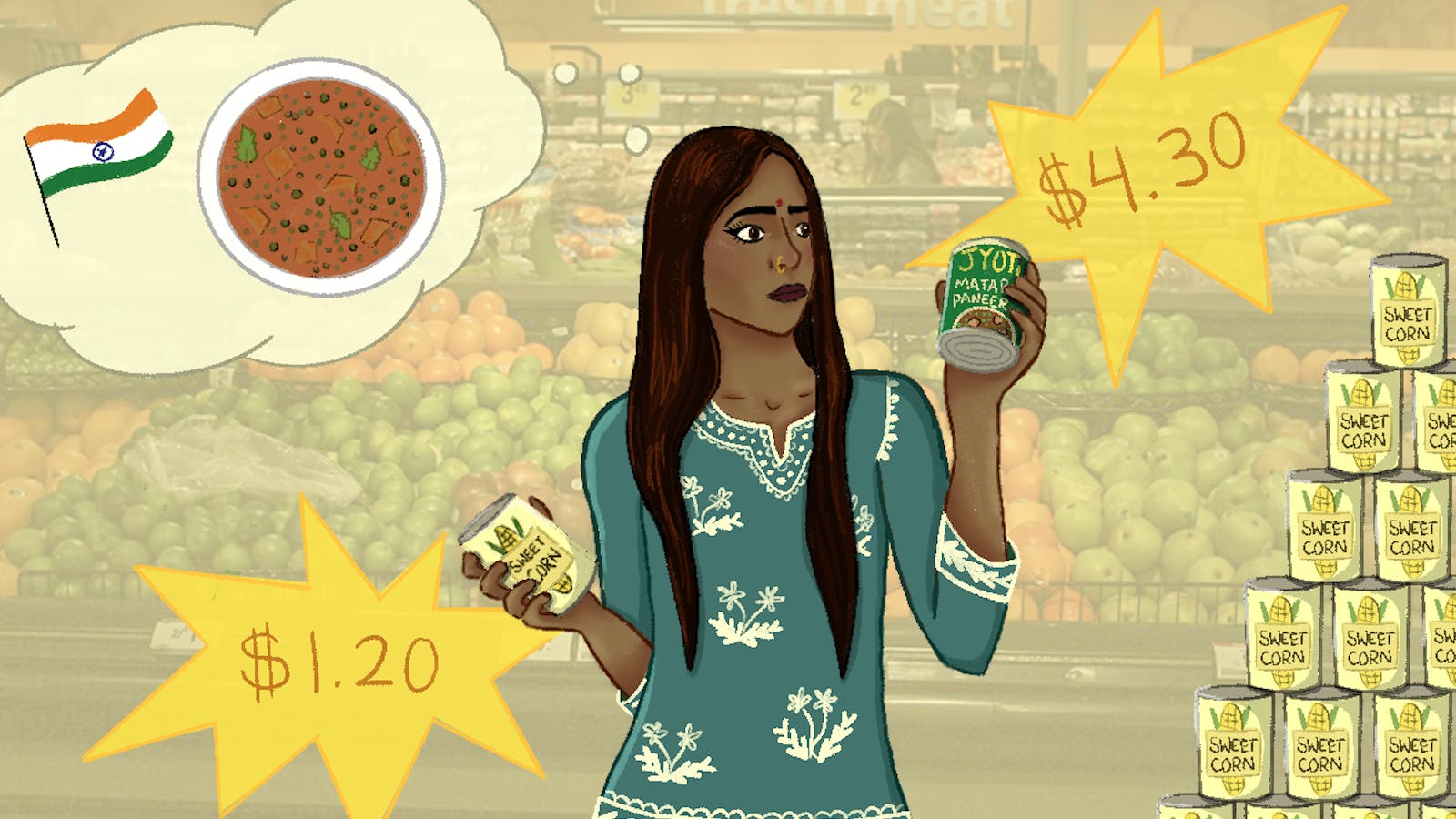
Tariffs are expected to add $1,100 to the average household’s expenses by December, rising to $1,400 in 2026, according to a 2025 Tax Foundation report. Combined with inflation at 3.1%—above the Federal Reserve’s 2% target—these pressures are making imported ingredients more costly. As a result, some communities face growing difficulty accessing culturally significant foods.
Adriana Samper, an ASU professor and expert in consumer behavior, noted that people often adapt by substituting imported items, especially if prices keep climbing. Online shoppers feel this strain acutely, as digital platforms highlight price increases by showing past cart contents. “The sense that your money doesn’t stretch as far becomes more visible,” she explained.
Cooking traditional dishes plays a vital role in maintaining cultural identity, Samper emphasized. But rising costs may force families to forgo these practices. Martinez Galindo, for instance, has stopped preparing tlayudas, a traditional Oaxacan dish, because the specific purple corn he once used is no longer available at his local market due to price hikes.
Monica Villalobos, CEO of the Arizona Hispanic Chamber of Commerce, pointed out that tariff threats have led large corporations to stockpile inventory, leaving smaller restaurants and grocers with limited access. Even when products are available, pricing has increased, further restricting affordability.
Immigration enforcement has also played a role. ICE arrests rose 72% in the first half of 2025, according to the Arizona Center for Investigative Reporting. This has led to labor shortages across agriculture, food processing, and restaurant sectors. “There was an exodus of the workforce,” Villalobos said, noting impacts from dairy farms to produce harvesting.
Martinez Galindo has seen local street vendors disappear, fearful of continuing their work. “They’re scared to go out,” he said. This fear reduces access to authentic, community-based food sources.
Despite these challenges, cultural resilience persists. Latino consumers, who historically spend more of their disposable income, are adjusting. Some businesses have pivoted—converting restaurants into catering services or launching private labels—echoing adaptations seen during the pandemic.
“That entrepreneurism, that ‘can-do attitude,’ is part of our culture,” Villalobos said. She also highlighted acculturation: a mutual exchange where U.S. culture influences immigrant communities and vice versa. Martinez Galindo sees this in his fraternity, where members from Mexico, Peru, Pakistan, and Lebanon share meals from their respective backgrounds.
“We love cooking for them from our culture and having them cook stuff about their culture,” he said. Though economic and policy barriers persist, cultural expression through food continues to endure.
“It takes a lot to break us,” Villalobos said. “And so it doesn’t happen that easily.”
— news from The State Press
— News Original —
Cultural food access stunted by economic and immigration policy
Sebastian Martinez Galindo and his three friends would get paid to do their classmates ‘ homework during their middle school days in Mexico.
They would sell class assignments for around 150 pesos or $8.
If he and his friends made enough money, they would go to the nearby street vendor from his middle school to get tacos, he said.
The street vendor ‘s setup was a tricycle with a makeshift metal bin and a grill, which distinctly smelled like lard.
He remembers they were not the greatest tacos, and his friends joked about them being made from “dog meat.”
“We were not rich, but we were rich by having each other,” he said. “Having us four together, we were all healthy and all eating, so it just would bring us together.”
Martinez Galindo, now an ASU junior studying mechanical engineering systems and the president of Phi Iota Alpha fraternity, is concerned about the price of cultural food and maintaining his culture in the United States.
Imposed tariffs will cost the average household an additional $1,100 as of Dec. 1. The costs are expected to increase to $1,400 in 2026, according to a 2025 report from the Tax Foundation.
READ MORE: Students and local businesses prepare for a cost influx from tariffs
Beyond tariffs, inflation has been a contributing factor for higher food prices, rising to 3.1%, above the 2% benchmark set aside by the Federal Reserve.
These additional costs could create an economic barrier to imported foods, potentially limiting access to cultural connections.
Adriana Samper, a consumer behavior expert and an ASU professor, said substitutions of imported foods are how people cope with a shifting environment and culture. This behavior could accelerate if prices continue to rise.
However, online international food shoppers feel the pinch the most, with services showing shoppers ‘ cart histories from weeks or months prior, Samper said.
“People — especially during the pandemic — started to shop online, and so the presence of increased prices or feelings that your money doesn ‘t stretch to the same degree is going to be almost more obvious,” she said.
Preparing food is a major way to contribute to and maintain a group ‘s cultural identity, Samper said.
“The opportunity might go away, because maybe it ‘s too expensive to do that this year,” Samper said. “Some communities could start to feel, and probably have already started to feel certain loss.”
Namely, Martinez Galindo stopped cooking his favorite dish called tlayudas, a corn-based Oaxacan dish. Previously, he would use a particular kind of purple corn; now, the market he frequents no longer stocks it because of rising prices.
Monica Villalobos, the president and CEO of the Arizona Hispanic Chamber of Commerce, said the current tariff policy has influenced large companies.
The simple threat of tariffs prompted large companies to stockpile food inventory, limiting small businesses like retailers and restaurants from accessing products, Villalobos said.
Even if small businesses have access to this inventory, the threat of tariffs has also increased pricing, ultimately limiting access to cultural food.
However, it ‘s not just economic policy stunting cultural connection through food, she said — it ‘s immigration policy as well.
Arrests by U.S. Immigration and Customs Enforcement have increased 72% in the first half of 2025, according to an analysis by the Arizona Center for Investigative Reporting.
This heightened immigration enforcement affected the workforce at the restaurant, supermarket and harvesting level, Villalobos said.
“Whether you ‘re talking about fruits and vegetables or you ‘re talking about milking cows or you ‘re talking about cattle ranchers, they are all suffering because of the immigration policy and threat of the immigration policy,” she said. “As soon as there was that threat, there was an exodus of the workforce.”
Martinez Galindo has felt the threat of immigration enforcement in his own community as businesses he would patronize disappeared.
“(Street vendors are) scared to go out and continue their job,” he said. “A lot of the stuff we would buy from street vendors as well, they don ‘t go out and sell (anymore) because they ‘re scared.”
READ MORE: ASU and Phoenix community educate those affected by recent immigration policies
Villalobos said the effects of these polices do not only impact workers but consumers as well.
Martinez Galindo spoke about his fraternity brother ‘s restaurant, noting how the business was seeing fewer customers.
“Whenever I go out to eat at his restaurant, I ‘m his brother — he doesn ‘t charge me,” he said. “But how the business has been going right now, he would not want to charge any of us, but he has to.”
Latinos tend to spend more of their disposable income than other racial groups, but now a lot of that spending is not happening, Villalobos said.
Nevertheless, economic challenges have not completely stopped cultural connections.
“Minority groups have been through so much,” Villalobos said. “When you come to this country and you have fought to be here, there isn ‘t a whole lot that can break your soul.”
Villalobos connected these economic challenges for Latino groups to the COVID-19 pandemic. Latino-owned businesses pivoted, she said, turning restaurants into catering services and private label companies.
“That entrepreneurism, that aspiration, that sense of ‘can-do attitude ‘ is also part of the manifestation of our culture,” Villalobos said. “And so when you look at different minority groups, you see that come through in times of difficulty, or economic difficulty, like recessions or the pandemic.”
Despite limited food accessibility, the diversity of cultural foods impacted the American palate, Villalobos said, leading to acculturation.
“(Acculturation is) a reciprocal influence, where American culture is influencing minority groups and countries of origin, or people from countries of origin other than the U.S. and vice versa,” Villalobos said.
Martinez Galindo has seen acculturation manifest in his fraternity. While a majority of the members are Mexican, there are others from Peru, Pakistan, Lebanon and other countries.
This acculturation is shared through foods, some of which are not part of Martinez Galindo ‘s culture.
“We love cooking for them from our culture and having them cook stuff about their culture,” he said.
Despite these challenges with cultural food accessibility from rising inflation, the threat of tariffs and changing immigration policies, minority groups continue celebrating their culture and food.
“We ‘ve seen time and time and again during recessions (and) during the pandemic,” Villalobos said. “It takes a lot to break us, and so it doesn ‘t happen that easily.”
Edited by Natalia Rodriguez, Senna James, Tiya Talwar and Ellis Preston.
Reach the reporter at pspascua@asu.edu and follow @pascual_media on X.