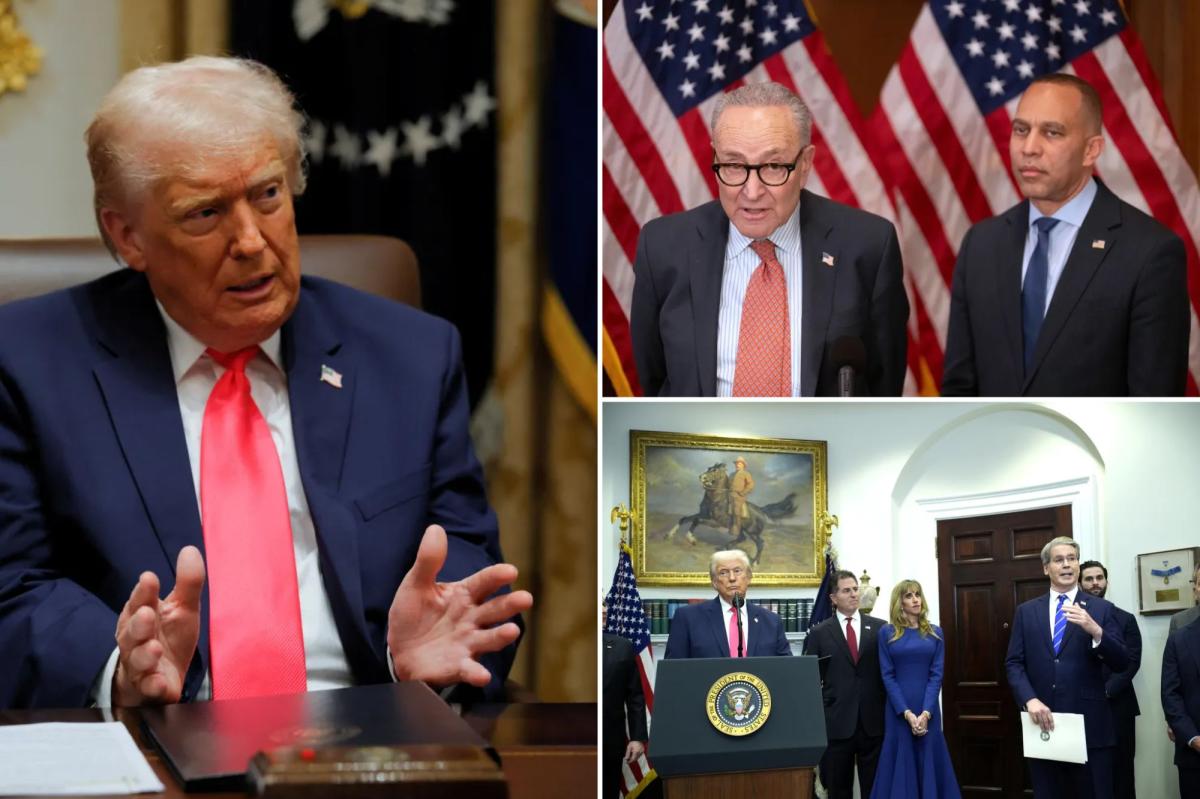
President Trump has launched a nationwide tour highlighting his economic policies, aiming to counter growing Democratic criticism centered on the cost of living. A recent uptick in consumer sentiment, the first in five months, has provided a boost to his messaging, as Americans report feeling more optimistic about inflation and personal finances. The University of Michigan’s survey showed reduced anxiety over future price increases, offering the administration a favorable data point as midterm elections approach.
Trump’s campaign-style tour began in northeastern Pennsylvania at a casino, where he emphasized lower gas prices, a $100 billion investment in energy and artificial intelligence for the state, and approval of Japanese ownership of US Steel. He also previewed plans for additional stops later in the year and in early January. Central to his pitch are proposals like 50-year mortgages to ease monthly housing payments—though such loans would build equity more slowly—and potential tariff rebates of up to $2,000, contingent on Supreme Court validation of existing tariffs.
The president has dismissed the term “affordability” as a Democratic political tactic, despite having used similar language during his campaign. He argues that inflation under his administration has averaged lower than during President Biden’s tenure. Still, the Consumer Price Index remains at a 3% annual rate, keeping economic concerns at the forefront for voters.
Democrats, led by Senate Minority Leader Chuck Schumer and House Minority Leader Hakeem Jeffries, are sharpening their focus on healthcare, housing, food, and energy costs. Schumer highlighted Trump’s past statements about affordability in a social media video juxtaposed with recent claims that the issue is a “Democrat hoax,” underscoring perceived inconsistency.
Treasury Secretary Scott Bessent defended the administration’s economic record, citing upcoming tax reductions on overtime, tips, and Social Security benefits, along with deductions for interest on domestically produced vehicle loans. These changes are set to take effect next year. Additionally, the administration introduced “Trump accounts,” offering a $1,000 government-funded investment for every newborn.
Despite these efforts, political strategist Dennis Lennox noted a gap between policy achievements and public perception. He pointed to persistent concerns about AI-driven job displacement, stagnant wage growth, and delayed recognition of inflation’s decline. Lennox described recent off-year election results as a warning sign, stressing that while Trump energizes his base, broader voter sentiment remains uneasy.
Trump has also taken steps to reduce certain tariffs on items like bananas, coffee, and beef in response to price trends, while maintaining others to protect manufacturing jobs. Critics argue these moves are insufficient, with Democratic strategists planning to use Trump’s earlier rhetoric on affordability against him in campaign messaging.
— news from New York Post
— News Original —
Trump to tour nation with economic pitch as Dems hone ‘affordability’ attack
WASHINGTON — President Trump got a rosy report Friday showing that consumer sentiment increased for the first time in five months, with voters feeling better about inflation and their personal finances as he prepares to tour the nation arguing he’s making economic progress. n nStill, Dems are racing to make the midterm elections squarely about MAAA (Make America Affordable Again), contrasting Trump’s fancy White House ballroom renovations with adults priced out of the housing market and more. n nTrump is pushing back by hitting the road to talk about his economic agenda, floating tariff rebates and 50-year mortgages. n nHe will kick off his economics-focused tour at a casino in northeastern Pennsylvania Tuesday, where he is expected to tout lower gas prices, his role securing $100 billion in energy and artificial intelligence investments for the Keystone State and his approval for Japanese investment in US Steel. n nTrump reportedly is considering a second stop this month before hitting the road again in January. n nThe president has taken to calling the term “affordability” a Democratic “con job” — pointing to inflation that’s lower on average than under former President Joe Biden while acknowledging the need to increase electricity production as prices surge due to AI data centers. n nAlthough he ran for office promising to “make America affordable again” — in a twist on his Make America Great Again mantra — Democrats have now seized upon that messaging as they prepare a campaign strategy going into the November congressional elections. n nSenate Minority Leader Chuck Schumer (D-NY) and House Minority Leader Hakeem Jeffries (D-NY) are pushing messaging on health care, housing, food and energy prices, Axios first reported. n nSchumer on Thursday posted a video montage on Instagram on Trump campaigning last year on making America “affordable” spliced with recent clips of Trump calling affordability a “Democrat hoax.” n nThe word “affordability” emerged as the go-to explanation, supported by polling, for Republicans’s election wipeouts in New Jersey, Virginia and New York City last month — with even conservatives admiring the disciplined messaging of the victorious Democrats in those contests. n nTrump has sought to argue that he’s in the process of improving economic conditions — and the bump in consumer confidence, measured by the University of Michigan, is welcome news, showing less fear about future inflation. n nIn a likely preview of his remarks last week, Trump told his Cabinet Tuesday that “the word affordability is a Democrat scam. They say it and then they go on to the next subject, and everyone thinks, ‘Oh, they had lower prices.’” n nTreasury Secretary Scott Bessent noted at the meeting that Trump’s signature first-year bill will reduce taxes on overtime, tips, Social Security benefits and allowing for deductions for domestic car loan interest — with those changes kicking in next year. n n“The best way to address the affordability crisis is to give Americans more money in their pockets, which is what this bill has done,” Bessent said. n nLater that day, Trump hosted an event celebration the looming launch of “Trump accounts” for newborns, which will be seeded with a $1,000 investment per child. n nAnd the president has pushed for further perks for Americans, including a request for Congress to approve up to $2,000 tariff rebates from tariff revenue, if the Supreme Court upholds the duties in a pending case. n nIt’s unclear if the tariff rebate can pass due to Democratic opposition to the tariffs. Republican leaders shot down a late-2020 plan by Trump to issue similarly sized stimulus checks. n nThe 50-year mortgage idea, meanwhile, could lower monthly housing costs, though it always would result in slower accumulation of equity, and faces an uncertain path forward. n n“Trump’s done a lot on his own — as much as possible and then some given the 60-vote threshold in the Senate — and he’s reasserted American leadership on the world stage. But, domestically, many voters, including within his own coalition, don’t know what’s being done or don’t think enough is being done,” said Michigan Republican strategist Dennis Lennox. n n“They’re hearing constant headlines about white-collar job losses from AI. They don’t yet feel the full impact of declining inflation. And when they look at their paychecks, wages haven’t risen as quickly as they expected. The disconnect between what the administration is advancing and what voters are feeling in real time is driving much of the current frustration.” n nFollow The Post’s live coverage of President Trump and national politics for the latest news and analysis n nLennox said “the off-year and special elections were a wake-up call.” n n“When you look at the generic ballot polling question and the swing Democrats were able to generate, it’s clear Republicans need to get it together,” he said. “2026 won’t be a persuasion election — it will be another turnout election. And the simple reality is that Trump drives turnout.” n nDefending his record, Trump has for weeks noted his recent efforts to lower prescription drugs prices and the fact that egg prices and mortgage rates are down significantly since he took office. n nHe also has touted his tariffs as safeguarding American manufacturing jobs, though he recently lowered levies on bananas and coffee and beef to address rising trends. n nBut Democrats note that voters still rank economic concerns at their top issue as the Consumer Price Index remains stubbornly elevated at a 3% annual rate. n n“He’s lowering tariffs on bananas, but consumers want to throw tomatoes at him. Democrats will have a lot of tomatoes to throw,” said a source familiar with the congressional Democratic campaign plans. n nThe source said Democrats intend to use “Trump’s own words” from last year’s campaign against him.