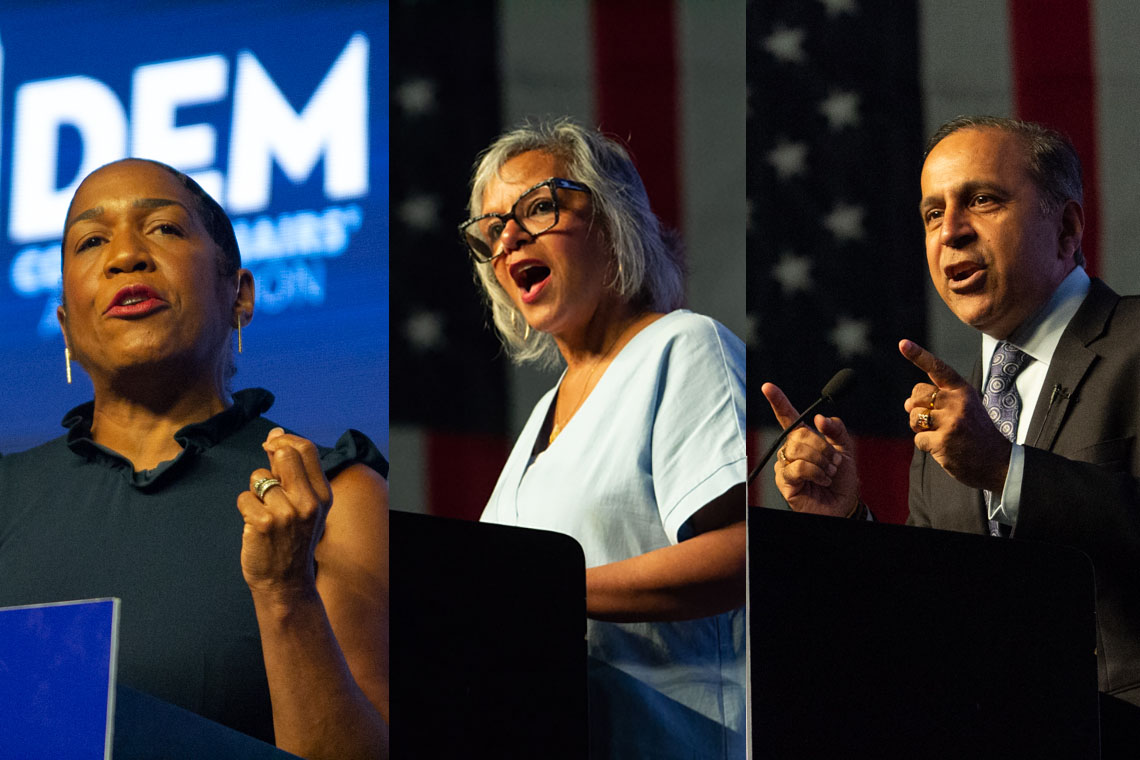
With economic concerns dominating voter priorities ahead of the 2026 election, three leading Democratic candidates in Illinois’ U.S. Senate race have unveiled comprehensive plans targeting affordability issues such as housing, health care, and daily living expenses. Recent polling by Reuters indicates that 45% of voters identify the cost of living as their primary concern, prompting Rep. Raja Krishnamoorthi, Lt. Gov. Juliana Stratton, and Rep. Robin Kelly to release detailed policy agendas. n nKrishnamoorthi emphasized the need for structural reforms, proposing a suite of measures aimed at lowering household burdens. These include restoring a refundable tax credit for first-time homebuyers, rezoning vacant commercial spaces for residential use, and supporting anti-trust actions against grocery chains, particularly in opposition to the Kroger-Albertsons merger. He also advocates for expanding Pell Grants, increasing funding for career education, and mandating colleges to disclose graduate earnings data. On labor, he supports raising the federal minimum wage to $15 and indexing it to inflation, while also backing legislation to limit presidential authority in imposing tariffs through emergency declarations. n nStratton’s platform includes tax incentives for builders to develop below-market homes and penalties for hedge funds purchasing single-family properties. She proposes a permanent grant program enabling states to source food locally for food banks, modeled after the defunct Illinois-EATS initiative. Her health care vision aligns with Medicare for All, including expanded coverage for long-term care, hearing, and vision services. She also calls for higher taxes on individuals earning over $1 million annually, paired with tax reductions for middle-income households, and supports broadening the Earned Income Tax Credit. n nKelly’s approach includes capping annual rent increases and restricting corporate ownership of single-family homes. She backs Medicare for All with inclusion of dental and vision benefits and wants to extend Affordable Care Act subsidies to more middle-class families. On taxation, she proposes a minimum tax rate for those with a net worth exceeding $100 million and lifting the cap on Social Security payroll taxes. In child care, she endorses the Child Care for Working Families Act to reduce daily costs to under $15 and supports clean energy incentives under the Bipartisan Infrastructure Law. n nWhile all three support increasing the federal minimum wage, their strategies diverge on implementation and broader fiscal policy. Krishnamoorthi does not endorse Medicare for All but instead focuses on drug price negotiation and regulating pharmacy benefit managers. Kelly’s plan omits food insecurity measures, while Stratton and Krishnamoorthi offer targeted solutions in that domain. n— news from IPM Newsroom
— News Original —
How Illinois’ Democratic U.S. Senate candidates plan to address economic issues
Candidates propose solutions on housing, health care and other cost-of-living issues n nRecent polling by Reuters found that 45% of voters list “cost of living” as their top concern heading into the 2026 election. n nWith that in mind, the three top Democrats vying to become the party’s nominee for U.S. senator in Illinois have released proposals detailing how they plan to make life more affordable for Americans. n n”The cost of living is just too darn high, which is why I am putting forth a menu of policy proposals to drive down the cost of living, make it possible for everyday folks to buy a home, send their children to quality public schools, start a business, continue their post-secondary education, afford their life-saving prescription drugs, and more,” U.S. Rep. Raja Krishnamoorthi, a Schaumburg Democrat, said in a statement Tuesday releasing his agenda. n nKrishnamoorthi, Lt. Gov. Juliana Stratton and U.S. Rep. Robin Kelly are the most well-known names in a 14-candidate primary to replace retiring U.S. Sen. Dick Durbin. n nThe economic plans show plenty of similarities between candidates in a race where they’ve yet to separate themselves on major policy issues. But they did differentiate in a few key areas in terms of how to achieve similar results. n nThe federal minimum wage has been $7.25 since 2009, and each candidate supports raising it to at least $15. But the two incumbent members of Congress go a step further, with Kelly, a Lynwood Democrat, proposing increasing the wage to $17 by 2030 and Krishnamoorthi proposing raising the wage to $15 and then tying it to inflation so it will increase in subsequent years. n nHere are other ways their economic plans compare: n nHousing n nEach candidate announced substantial proposals to address housing affordability. n nStratton’s plan calls for creating tax incentives to encourage construction companies to build homes below the median price point, creating a tax penalty for hedge funds that buy single family homes in hopes of keeping them affordable, and restricting the ability of artificial intelligence to set rents and screen applicants. n nKrishnamoorthi said he wants to reestablish an Obama-era refundable tax credit for qualified first-time home buyers in their first five years of ownership. He also called for opening more land for residential development by rezoning vacant commercial buildings. n nKelly supports capping annual rent increases. She and Krishnamoorthi also generally support policies that limit a corporation’s ability to buy single family homes. n nHealth care n nBoth Stratton and Kelly say they support the concept of “Medicare for All,” which would establish a single-payer, government-run health insurance program that all Americans would have access to. Stratton’s plan also calls for Medicare to cover long-term care home services, hearing and vision, while Kelly only said it should cover dental and vision. n nKelly also wants to expand Affordable Care Act eligibility to more middle-class Americans and increase tax credits available under the act, though many credits are set to expire at the end of the year. n nKrishnamoorthi’s plan does not indicate he supports the Medicare for All plan popular among many progressive Democrats. Instead, he calls for allowing Medicare to negotiate prices for more drugs each year and for passing legislation to regulate pharmacy benefit managers in hopes of reducing drug prices. n nOpen interactive graphic in new tab n nFood and hunger issues n nWith food prices a top issue in conversations about cost of living, and the Trump administration labeling affordability a Democratic “con job,” both Krishnamoorthi and Stratton have proposed ideas to help people struggling to afford to eat. n nKrishnamoorthi is calling for establishing a national free lunch program that would provide all children at least one free meal each day at school. He also wants U.S. government agencies to promote export policies that would help smaller family farms access overseas markets. n nKrishnamoorthi said he will push for anti-trust legislation that targets grocery stores. Krishnamoorthi has released a TV ad that highlights his opposition to a merger between grocery chains Kroger and Albertsons. n nStratton said she would seek to create a permanent grant program that allows states to source food from local farmers to go to food banks. That would follow a similar model as the Illinois-EATS program, which fell victim to federal spending cuts earlier this year. n nKelly’s economic plan did not address food and hunger issues. n nTaxes n nThe candidates’ tax proposals reveal some of the most obvious differences between their plans. n nKelly’s plan calls for establishing a minimum tax on people with an annual net worth of $100 million or more and lifting the cap on Social Security taxes. n nKrishnamoorthi wants union members to be able to deduct dues from their taxes and eliminate federal taxes on Social Security benefits. n nStratton is calling for the most aggressive tax hikes and cuts by proposing to raise taxes on people earning more than $1 million annually and provide a corresponding tax cut for middle class earners. Her plan does not address Social Security. n nKrishnamoorthi was also the only candidate to substantially address tariffs in the economic plan and said Congress should change the law to limit the president’s ability to use emergency powers to raise tariffs — power that’s typically reserved to Congress. The incumbent congressman also said the federal government should make new low-interest loans available to farmers in response to tariffs. n nChild issues n nMaking caring for children more affordable is also a sizable portion of some candidates’ platforms. n nKrishnamoorthi wants to make low-interest federal loans available to entrepreneurs to open affordably priced child care centers that also pay workers an undefined “living wage.” He also proposed raising the Child Tax Credit to a maximum of $4,000 per recipient, up from $2,200 in 2025. n nKelly said she supports the Child Care for Working Families Act, which she said would bring down an average family’s daily child care costs to less than $15. The legislative proposal aims to make child care free to more people, among other things. n nStratton’s plan proposed expanding the Child Tax Credit but does not specifically say how. n nOther issues n nEach candidate also put forward a few proposals that were unique to their plans. n nOn energy, Kelly said she stands by the Bipartisan Infrastructure Law passed during the Biden administration as an effective way to reduce energy prices. Krishnamoorthi said he would push to create more incentives for homeowners to install solar panels and also restore funding for clean energy projects the Trump administration has slashed. n nKrishnamoorthi’s plan was the only one to touch on education, as he proposed increasing the maximum Pell Grant award for college students, doubling spending on career and technical education and requiring colleges to post more information about student outcomes, such as post-college earnings for graduates. n nStratton was the only candidate to propose expanding the Earned Income Tax Credit, though she did not specify by how much.