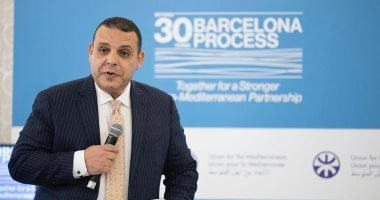
Dr. Abdulaziz Al-Sharif, Commercial Minister Plenipotentiary and First Deputy Head of the Egyptian Foreign Trade Representation, took part in the 7th Union for the Mediterranean (UfM) Trade and Investment Forum held on December 10, 2025, at the UfM headquarters in Barcelona, Spain. The event gathered ministers, high-level officials, international organizations, development institutions, and major companies from countries across both shores of the Mediterranean.
Dr. Al-Sharif contributed to the forum’s opening session titled “Global Trade Disruption and its Repercussions in the UfM Region,” which examined the profound shifts and challenges currently affecting the global trading system and their direct consequences for Mediterranean nations.
In his remarks, Dr. Al-Sharif emphasized that the international trade landscape is undergoing an unprecedented phase of instability, driven by geopolitical tensions, rising protectionist tendencies, and structural changes in supply chains. These dynamics have increased market fragility and heightened risks for businesses, particularly small and medium-sized enterprises (SMEs) across the region.
He noted that Mediterranean countries are especially vulnerable due to their deep integration with global markets. Therefore, diversifying trade partnerships, strengthening regional integration, and effectively implementing trade agreements are essential for enhancing resilience and adaptability.
Dr. Al-Sharif also outlined Egypt’s strategic approach to navigating these global shifts, highlighting several priorities: improving the trade facilitation environment through digitalization of procedures, simplification of customs processes, and harmonization of standards; boosting regional value addition by advancing productive capacities in promising sectors such as clean energy, digital services, and advanced manufacturing; expanding support for SMEs by improving access to financing, market information, and regional platforms; and reinforcing institutional coordination to develop more agile and responsive economic policies.
He stressed that regional economic integration in the Mediterranean remains below its full potential, calling for the removal of tariff and non-tariff barriers and the activation of mechanisms for joint economic cooperation. Such efforts could foster new regional value chains and strengthen the collective ability of Mediterranean nations to withstand external shocks.
In conclusion, Dr. Al-Sharif underscored that the region stands at a critical juncture—facing either deeper fragmentation or the opportunity to build a more stable, integrated, and resilient economic framework. He emphasized that political will, strategic vision, and regional collaboration are key to transforming current challenges into shared growth opportunities.
Since its inception in 2019, the UfM Forum has served as a high-level platform for dialogue and knowledge exchange on trade and investment trends in the Euro-Mediterranean region, promoting economic connectivity and sustainable development amid rapid global transformations.
— news from (اليوم السابع)
— News Original —
مصر تشارك فى المنتدى السابع للتجارة والاستثمار للاتحاد من أجل المتوسط (UfM)
شارك الوزير المفوض التجاري د. عبد العزيز الشريف وكيل أول الوزارة ورئيس التمثيل التجاري المصري في فعاليات المنتدى السابع للتجارة والاستثمار للاتحاد من أجل المتوسط (UfM)، والمنعقد يوم 10 ديسمبر 2025 بمقر منظمة الاتحاد من أجل المتوسط بمدينة برشلونة إسبانيا، وذلك بمشاركة وزراء ومسؤولين رفيعي المستوى وممثلي منظمات دولية ومؤسسات تنمية وشركات كبرى من دول ضفتي المتوسط. n nوجاءت مشاركة د. الشريف في الجلسة الأولى بالمنتدى تحت عنوان : Global Trade Disruption and its Repercussions in the UfM Region والتي تناولت التحديات والتحولات العميقة التي يشهدها النظام التجاري العالمي، وتأثيراتها المباشرة على دول المتوسط. n nوأكد د. الشريف في كلمته أن المشهد التجاري العالمي يمر بمرحلة غير مسبوقة من الاضطراب نتيجة التوترات الجيوسياسية، وارتفاع النزعات الحمائية، وتغير هيكل سلاسل الإمداد، وهو ما أدى إلى تزايد هشاشة الأسواق وارتفاع المخاطر أمام قطاع الأعمال، وخاصة الشركات الصغيرة والمتوسطة في دول المنطقة. n nوأشار الشريف إلى أن دول المتوسط تُعد من أكثر المتأثرين بهذه التطورات نظرًا لارتباطها الوثيق بالأسواق العالمية، مما يجعل تنويع الشركاء التجاريين وتعميق التكامل الإقليمي وتنفيذ اتفاقيات التجارة عناصر أساسية لتعزيز القدرة على التكيف والصمود. n nكما استعرض رؤية مصر للتعامل مع هذه المتغيرات، مؤكدًا أهمية: تطوير بيئة تيسير التجارة وتحسين الربط والخدمات اللوجستية من خلال رقمنة الإجراءات وتبسيط المعاملات الجمركية وتوحيد المعايير. رفع مستوى القيمة المضافة الإقليمية عبر تطوير القدرات الإنتاجية في القطاعات الواعدة مثل الطاقة النظيفة والخدمات الرقمية والصناعات المتقدمة. توفير الدعم للشركات الصغيرة والمتوسطة من خلال إتاحة التمويل والمعلومات والأسواق والمنصات الإقليمية. تعزيز التنسيق المؤسسي وصياغة سياسات أكثر مرونة قادرة على مواكبة التحولات السريعة في البيئة الاقتصادية العالمية. n nوشدد رئيس التمثيل التجاري على أن التكامل التجاري داخل منطقة المتوسط ما زال أقل من الإمكانات المتاحة، داعيًا إلى إزالة العوائق الجمركية وغير الجمركية، وتفعيل آليات التعاون الاقتصادي المشترك بما يتيح خلق سلاسل قيمة متوسطية جديدة وتعزيز قدرة دول المنطقة على مواجهة الصدمات الخارجية. n nواختتم د. الشريف مداخلته بالتأكيد على أن المنطقة تقف أمام لحظة فارقة: إما مواجهة مزيد من التجزئة أو اغتنام الفرصة لبناء نظام اقتصادي أكثر استقرارًا وتكاملاً وقدرة على الصمود، مشيرًا إلى أن الإرادة السياسية والرؤية الاستراتيجية والتعاون الإقليمي هي مفاتيح تحويل هذه التحديات إلى فرص للنمو المشترك. n nهذا وقد شكّل المنتدى منذ انطلاقه عام 2019 منصة رفيعة المستوى للحوار وتبادل الخبرات حول اتجاهات التجارة والاستثمار في منطقة اليورو-متوسط، وطرق تعزيز الترابط الاقتصادي ودعم التنمية المستدامة في ظل المتغيرات العالمية المتسارعة.