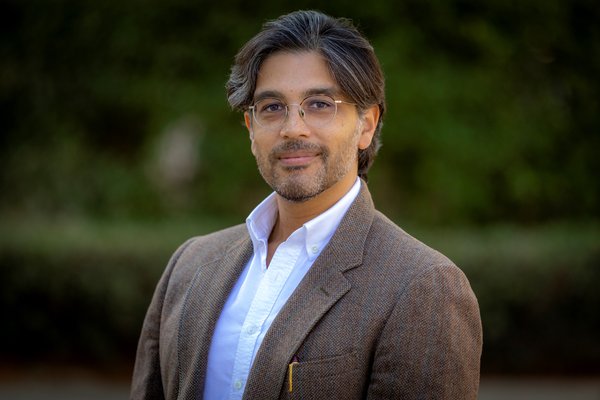
Andrew Sinclair joined Caltech in 2022 as a visiting assistant professor and has since remained to advance his research on Chinese finance. Recognizing the institution as a supportive environment for his academic inquiries, he continues to teach courses such as Hedge Funds, International Trade and Finance, and Understanding China through Finance—a subject deeply tied to his scholarly focus.
Born and raised in Canada, Sinclair completed his undergraduate studies at the University of Toronto and earned a master’s degree from the University of Waterloo. His early exposure to Chinese culture began during childhood, influenced by classmates from Hong Kong. At the time, Hong Kong was transitioning back to Chinese sovereignty after decades under British rule. Uncertainty about the political future prompted many families to seek relocation plans, with a significant number settling in Sinclair’s community.
His interest in East Asia deepened during a summer spent in Hong Kong while pursuing his bachelor’s degree. However, it wasn’t until later in his academic journey that China became central to his research. During his first year at Yale’s graduate program, he authored a paper on Chinese banking. His advisor cautioned him, stating that focusing on Chinese finance might hinder his chances of securing an academic position. Heeding this advice, Sinclair shifted his focus to hedge funds for his doctoral work.
After earning his PhD in 2017, Sinclair accepted a faculty role at the University of Hong Kong. Immersing himself in the region, he encountered an economic model vastly different from Western systems. He frequently consulted with colleagues—many of whom were Chinese economists—seeking insights into how financial decisions are shaped by state policy. He observed that in China, individuals and businesses routinely consider government directives when making investments, purchasing property, depositing savings, or launching enterprises. The stability and direction of state policy play a pivotal role in shaping economic behavior.
Sinclair emphasizes that understanding China’s economic structure is not merely an academic exercise but essential for grasping 21st-century global dynamics. Over the past half-century, globalization has connected markets worldwide, yet the evolving competition between the United States and China raises critical questions. The Chinese state exercises substantial control over national wealth, enabling it to support domestic industries through targeted subsidies. This capacity allows Chinese firms to offer lower prices internationally, gaining dominance in sectors such as rare earth elements, steel, chemicals, shipbuilding, solar technology, and electric vehicles—areas once led by American and allied nations.
He notes that the U.S. lacks comparable fiscal tools to match these subsidies, potentially leading to a fragmentation of the global marketplace as protective measures increase. Sinclair aims to equip Caltech students with a conceptual framework to interpret these complex dynamics. To illustrate institutional differences, he asks students to identify the mayor of Pasadena—an exercise highlighting how local leadership holds less immediate relevance in American daily life compared to China, where municipal officials often directly influence access to loans, land, and tax incentives crucial for business operations.
Following two years at Caltech, Sinclair sought permission to return to the University of Hong Kong to teach a course on Chinese economic systems. His request was denied, with officials citing the politically sensitive nature of discussing China’s political economy within the country. He also observes that most Western business schools show limited interest in such topics, as their students typically aim for careers in global financial hubs like Wall Street, where opportunities tied to the Chinese market remain limited for Americans.
At Caltech, Sinclair finds a uniquely receptive academic atmosphere. Faculty, students, alumni, and staff share a deep curiosity about global mechanisms. He describes the institution as unparalleled in its intellectual openness, a quality he attributes to its distinct global perspective.
— news from Caltech