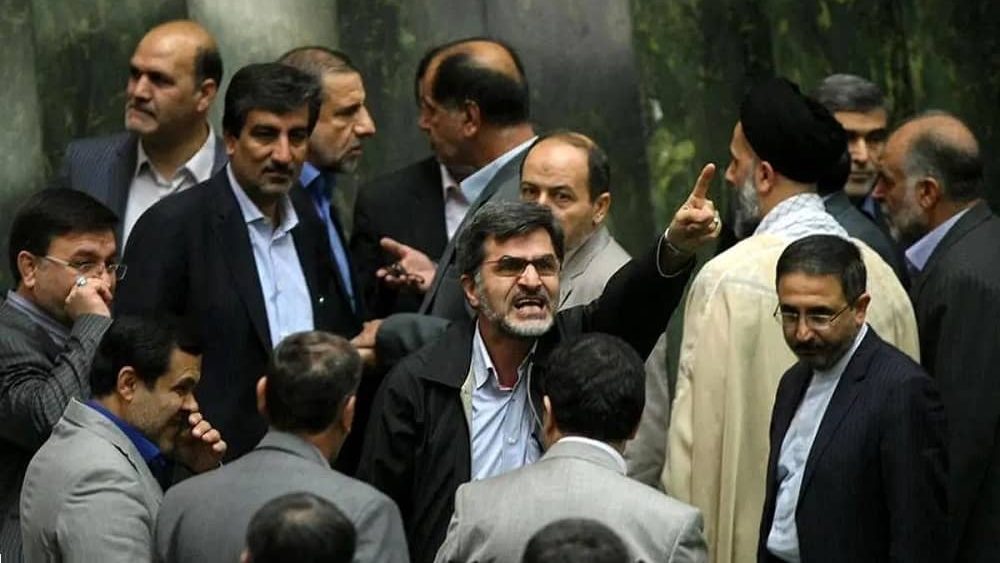
Iranian state-aligned media have recently highlighted intensifying tensions between President Masoud Pezeshkian’s administration and the country’s parliament, as economic turmoil becomes a tool in internal power struggles. Soaring inflation, a plunging national currency, and worsening poverty are being leveraged not to address systemic failures, but to deflect responsibility among ruling elites. n nParliament Speaker Mohammad Bagher Ghalibaf has issued stark warnings: if the government fails to stabilize prices and the collapsing rial, a cabinet reshuffle will be prioritized, followed by potential impeachment proceedings should the president resist. This stance underscores a broader pattern—economic distress is being weaponized within the ruling structure to shift blame rather than enact reform. n nAll factions involved share responsibility for decades of repression, corruption, and economic mismanagement. The current conflict does not reflect democratic accountability or ideological divergence, but a scramble to avoid public backlash amid growing unrest. n nImpeachment, within Iran’s political framework, rarely serves transparency. Instead, it functions as an internal purge—disabling ministries while shielding top leadership from scrutiny. According to Fararu, Ghalibaf explicitly tied legislative pressure to worsening living conditions, suggesting lawmakers may feel compelled to initiate removals if policy adjustments fail. n nEsmail Gerami-Moqaddam, speaking with Etemad Online, described this move as unprecedented, arguing that a minority bloc in parliament is being used to pressure the executive branch. He added that Pezeshkian’s strategy of seeking broad consensus has emboldened rival centers of power to escalate their demands. n nState-affiliated outlets have echoed concerns, noting that the pursuit of consensus has become a liability, exploited by factions aiming to secure more influence rather than resolve deepening structural collapse. n nCritics point out that some of the least effective officials in the current cabinet are tied to Ghalibaf’s network. Analyst Mohammad Mohajeri, cited by Eghtesad News, suggested the speaker’s threats aim to force the inclusion of loyalists into the government—reframing cabinet changes as power redistribution rather than genuine reform. n nArman Melli characterized the standoff as a calculated maneuver, with parliament using economic suffering to corner the executive into a binary choice: reshuffle or face impeachment. However, under conditions of sanctions, capital flight, and institutional decay, personnel changes may amount to superficial fixes with little real impact. n nBehind these political calculations lies a population under severe strain. On December 22, 2025, Setare Sobh reported, citing Labor Ministry data, that 44 percent of Iranians live in absolute poverty, surviving on less than two dollars daily. The publication noted declining nutrition, shrinking access to healthcare and education, and rising psychological distress. n nSeparate reporting from the same outlet warned that food inflation is nearing 70 percent, pushing workers and retirees toward a breaking point. Once inflation expectations become entrenched, they can spiral rapidly, raising fears of uncontrollable price surges. n nInstitutional dysfunction worsens the crisis. Khorasan highlighted the absence of a unified economic authority, leading to contradictory policies and eroding public trust. Javan similarly pointed to fragmented decision-making across agencies, creating conflicting signals that destabilize markets. n nCurrency markets have lost faith in official statements. Jahan-e Sanat, a state-linked outlet, observed that the rial now reacts to rumors and political friction rather than policy announcements, reflecting years of accumulated distrust. n nWith rising fears of social unrest, several regime-aligned publications acknowledge that ministerial changes are unavoidable. Farhikhtegan Daily, linked to Supreme Leader advisor Ali Akbar Velayati, argued on December 22 that key economic ministers—overseeing Industry, Oil, Agriculture, and Labor—lack the capacity to manage under sanctions and crisis. It warned that refusal to act could trigger coordinated impeachment efforts. n nJavan, affiliated with the IRGC, framed a reshuffle as the “easier” path compared to impeachment, while downplaying vocal threats as posturing by a small faction. Yet across the spectrum, the message is consistent: the ruling elite is preparing for survival, not economic recovery. n nWhat emerges from state media is a regime gripped by fear of accountability. The clash between government and legislature is not a debate over policy direction, but a struggle over who will absorb blame for economic devastation, social disintegration, and decades of authoritarian rule. As inflation climbs and deprivation spreads, Tehran’s political battle is less about governance and more about evading public retribution when the next wave of protest emerges. n— news from National Council of Resistance of Iran – NCRI
— News Original —
Iran’s Ruling Factions Weaponize Economic Collapse in a Desperate Bid to Evade Accountability
Three-minute read n nIranian state-affiliated media on Monday openly reflected a sharpening internal confrontation between Masoud Pezeshkian’s government and the parliament, as soaring prices, currency shocks, and deepening poverty are turned into instruments of factional warfare inside the ruling system. n nAt the center of the escalation is parliament speaker Mohammad Bagher Ghalibaf, who warned that if the government fails to contain inflation and the collapsing rial, the “priority” will be a cabinet reshuffle — followed by impeachment proceedings if the president resists. The message was unambiguous: economic failure is not being addressed but deliberately instrumentalized as factions maneuver to escape accountability for decades of repression and plunder. n nAll factions now attacking one another are products of the same ruling structure, with long records of repression, corruption, economic mismanagement, and participation in violent crackdowns. The current conflict does not represent pluralism or accountability; it is a scramble to shift blame as public anger intensifies and fears of a nationwide revolt grow. n nImpeachment as an internal purge mechanism n nAccording to Fararu, Ghalibaf explicitly linked parliamentary pressure to public hardship, stating that if cabinet “repairs” do not deliver results, lawmakers will be “forced” to initiate impeachments. In Iran’s system, such impeachments rarely serve public oversight; instead, they function as internal purges that paralyze ministries while insulating the most senior leaders from scrutiny. n nIn an interview with Etemad Online, Esmail Gerami-Moqaddam described Ghalibaf’s threat as unprecedented, arguing that a parliamentary minority is being used as leverage to pressure the executive. He said Pezeshkian’s policy of broad “consensus” has emboldened rival power centers to escalate their demands. n nOther state-run newspapers echoed this warning, arguing that the so-called “consensus” has turned into a vulnerability exploited by factions seeking more positions and privileges rather than solutions to systemic collapse. n nSame regime, different scapegoats n nMeanwhile, political analyst Mohammad Mohajeri, quoted by Eghtesad News, argued that some of the least effective figures in the current government are themselves linked to Ghalibaf’s political network. Mohajeri said the speaker’s threats are aimed at forcing Pezeshkian to absorb three or four additional loyalists into the cabinet — turning “reform” into a tool for redistributing power. n nArman Melli framed the standoff as a deliberate trap, arguing that parliament has exploited economic pain to push the government into a “reshuffle or impeachment” dilemma. The paper noted that under sanctions, capital flight, and structural decay, changing ministers risks becoming little more than cosmetic damage control. n nEconomic, social, and institutional collapse n nBehind elite maneuvering lies a country under extreme strain. On December 22, 2025, Setare Sobh, citing figures attributed to the Ministry of Labor, claimed that absolute poverty has reached 44 percent, with millions surviving on less than two dollars a day. The paper highlighted falling calorie intake, shrinking access to healthcare and education, and growing psychological distress. n nIn a separate analysis, Setare Sobh warned that inflation in basic food items is approaching 70 percent, pushing workers and pensioners toward a social breaking point. The paper cautioned that once inflationary expectations become entrenched, they accelerate exponentially, raising fears of uncontrollable price spirals. n nInstitutional paralysis compounds the crisis. Khorasan argued that the government lacks a single, authoritative economic command structure, resulting in contradictory policies and mounting public frustration. Javan similarly described fragmented decision-making across ministries and agencies that issue conflicting signals to markets. n nCurrency markets have already lost confidence. The state-run Jahan-e Sanat argued that the rial no longer responds to official reassurances, reacting instead to rumors, political tension, and accumulated distrust built over years of instability. n nPreparing for fallout n nAmid the fear of a social reaction to economic hardship, more factional mouthpieces concede that cabinet changes are inevitable. Farhikhtegan Daily, run by the Supreme Leader’s senior aid Ali Akbar Velayati, argued on December 22 that at least four key economic ministers — Industry, Oil, Agriculture, and Labor — lack the capacity to manage an economy under sanctions and crisis conditions. Another article in the same paper said that if the president refuses to act, parliament will force change through coordinated impeachments. n nThe IRGC-run Javan portrayed reshuffling as the “easier” option compared to impeachment, while dismissing the loudest threats as theatrics by a noisy minority. Yet the message is consistent across factions: the ruling elite is positioning itself for survival, not economic change. n nWhat Iranian state media now reveal is a regime increasingly consumed by fear of accountability. The infighting between government and parliament is not a contest of visions but a struggle over who will bear the blame for economic ruin, social collapse, and decades of repression. As inflation surges and poverty spreads, the battle in Tehran is less about governance than about who might escape the public’s wrath when the next uprising erupts.