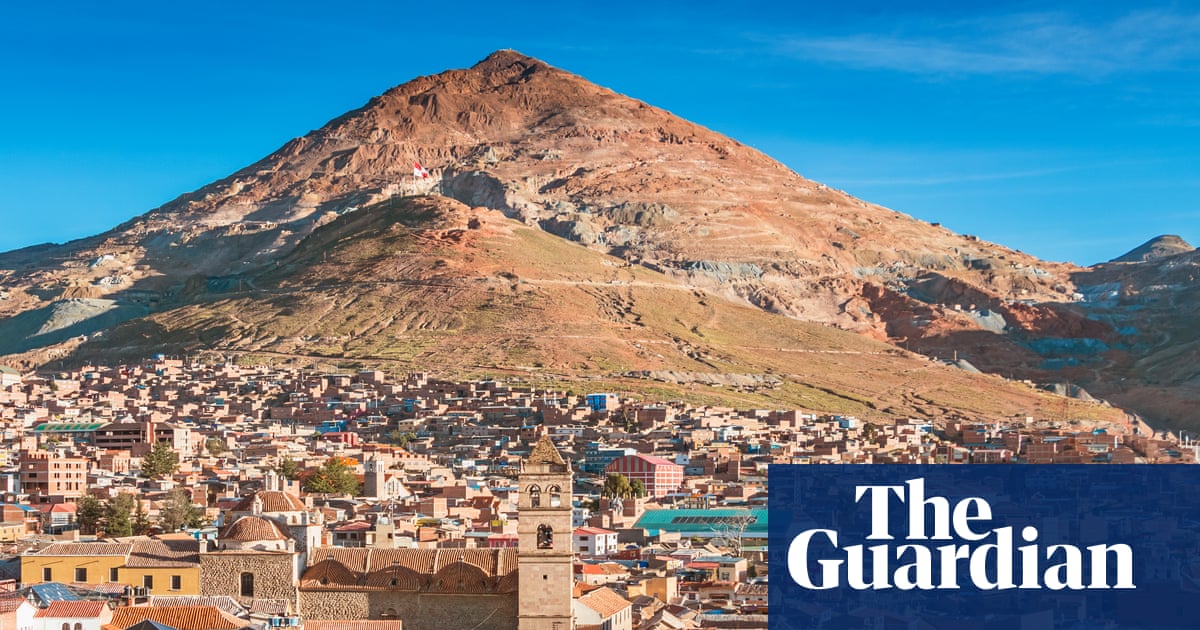
In the 17th century, Potosí in modern-day Bolivia was celebrated as the “treasure of the world,” drawing immense wealth from silver mined at Cerro Rico. This single mountain supplied 60 percent of the globe’s silver, fueling Spanish military campaigns and debt payments while stimulating economic growth in India and China. Yet this prosperity came at a staggering human cost: one in four indigenous miners died under brutal conditions, earning the mountain the grim nickname “the mountain that eats men.” n nSven Beckert’s sweeping historical account of capitalism uses Potosí as a foundational example, illustrating how extreme inequality, global trade networks, and systemic violence have long been embedded in the economic system. A Harvard historian and author of the acclaimed Empire of Cotton, Beckert challenges the conventional Eurocentric narrative that credits capitalism to Enlightenment ideals or free markets. Instead, he presents a far-reaching chronicle spanning nearly a millennium and every continent, arguing that capitalism evolved through state power, coercion, and colonial expansion rather than organic market forces. n nBeckert defines capitalism as the relentless accumulation of privately held capital, a force so pervasive it shapes nearly every aspect of modern life. He dismisses Adam Smith’s portrayal of self-interest as benign, emphasizing instead the roles of violence, political authority, and exploitation in building capitalist structures. The term “capitalism” itself emerged in 19th-century France alongside critiques like socialism and communism, but the mechanisms it describes predate the label by centuries. Beckert traces early capitalist practices to 12th-century Aden, a Yemeni port where merchants developed accounting and insurance systems—hallmarks of modern finance—yet lacked institutional support. These “capitalists without capitalism” operated in isolated hubs until European powers forged global connections between 1450 and 1650. n nThe transatlantic slave economy exemplifies capitalism’s transformative and destructive power. On Barbados, a small group of planters combined American land, African labor, and European capital to create a prototype of capitalist enterprise built on slavery. Millions of enslaved people represented trillions in uncompensated labor, and even after abolition, everyday consumption—such as sweetened coffee—remained entangled with past exploitation. The Industrial Revolution reduced reliance on overt slavery but maintained coercive labor systems. Manchester, dubbed “the chimney of the world,” became synonymous with both innovation and human suffering. n nBeckert dismantles myths of the free market as natural or self-sustaining, showing how state intervention has always shaped economic outcomes. The Protestant work ethic, often praised as a moral foundation, was used to justify child labor and forced work abroad, including atrocities under Belgian rule in Congo. Despite predictions of collapse—from Marx to Schumpeter—capitalism has proven remarkably resilient, adapting through crises and reinventing itself. The post-1945 era saw a tempered version, influenced by Keynesian policies and labor movements, delivering growth and reduced inequality. However, the rise of neoliberalism shifted the system toward commodifying nearly all aspects of life. n nBeckert’s research spans locations from Samarkand to Phnom Penh, drawing on diverse cultural sources and profiling figures like merchant Jakob Fugger, dictator Augusto Pinochet, and industrialist Ardeshir Godrej. While he compellingly documents capitalism’s harms—including environmental degradation and systemic injustice—he gives less attention to its benefits, such as improved living standards and technological progress. His portrayal leans toward depicting capitalism as an autonomous, almost alien force, driven by human actors yet operating beyond their control. Ultimately, the book presents capitalism not as destiny, but as a historically contingent system shaped by choices, conflicts, and consequences.
— news from The Guardian
— News Original —
Capitalism by Sven Beckert review – an extraordinary history of the economic system that controls our lives
In the early 17th century, the Peruvian city of Potosí billed itself as the “treasure of the world” and “envy of kings”. Sprouting at the foot of the Cerro Rico, South America’s most populous settlement produced 60% of the world’s silver, which not only enabled Spain to wage its wars and service its debts, but also accelerated the economic development of India and China. The city’s wealthy elites could enjoy crystal from Venice and diamonds from Ceylon while one in four of its mostly indigenous miners perished. Cerro Rico became known as “the mountain that eats men”. n nThe story of Potosí, in what is now southern Bolivia, contains the core elements of Sven Beckert’s mammoth history of capitalism: extravagant wealth, immense suffering, complex international networks, a world transformed. The Eurocentric version of capitalism’s history holds that it grew out of democracy, free markets, Enlightenment values and the Protestant work ethic. Beckert, a Harvard history professor and author of 2015’s prize-winning Empire of Cotton, assembles a much more expansive narrative, spanning the entire globe and close to a millennium. Like its subject, the book has a “tendency to grow, flow, and permeate all areas of activity”. Fredric Jameson famously said that it was easier to imagine the end of the world than the end of capitalism. At times during these 1,100 pages, I found it easier to imagine the end of the world than the end of Capitalism. n n“No religion, no ideology, no philosophy, has ever been as all-encompassing as the economic logic of capitalism,” Beckert claims, defining it as “the ceaseless accumulation of privately controlled capital”. Accounting for it therefore feels like explaining water to fish. Adam Smith, “the hero of capitalism’s triumphant self-remembrance”, attributed it to benign self-interest. Beckert, however, calls it a revolution, centuries in the making, which depended on things that Smith downplayed: “power, violence, the state”. Far from natural or inevitable, it has always been “unstable and contested”, proceeding by jolts. n nThe word “capitalism” originated in France in the 1840s, around the same time as its antagonists “socialism”, “communism” and “anarchism”, but the system was much older. “Capitalism is a process,” Beckert writes, “not a discrete historical event with a beginning and an end”. He begins tracking the process in the port of Aden in 1150. This vibrant trade hub between Asia and the Middle East, in what is now Yemen, was one of several “islands of capital” which formed a “capitalist archipelago”. Inventing new trades like accountancy and insurance, its “strikingly modern” residents were in the vanguard of a global insurgency. But their accumulation of profit for its own sake was regarded with suspicion by rulers, religions and ordinary people alike. They enjoyed wealth without power or prestige: “capitalists without capitalism”. n nWhat they needed was the state’s collaboration. This developed during the “Great Connecting” between 1450 and 1650, when the discovery of the Americas (named after a slave-owning merchant) finally enabled European traders to challenge Asia and the Middle East while making themselves indispensable. In the era of “war capitalism”, new trade routes and territorial seizures triggered conflict, which trade then financed. Colonialism established capitalism’s “connected diversity”, which is to say, think global, act local. n nLike silver, sugar reconfigured the world. On the previously uninhabited island of Barbados, just 74 sugar planters used “American lands, African labour and European capital” to create a private slave colony – the new capitalist avant garde. Across the Americas, millions of enslaved people represented trillions of dollars in unpaid labour. Even after Britain abolished slavery in 1833, there were no clean hands. An ordinary European who began his day with a cigarette and a cup of sweetened coffee was already complicit in three branches of the slave trade. The Industrial Revolution, capitalism’s Great Leap Forward, required less explicit forms of coercion and exploitation. One luminary described Victorian Manchester as “the chimney of the world … the entrance to hell realised”. Meanwhile, envy of America’s vast territories and abundant resources inspired Europe’s dismemberment of Africa, which one French newspaper called “America at our doorsteps”. n nBeckert enjoys shredding capitalism’s self-flattering myths. He calls the notion of the free market “nothing more than a figment of scholars’ and ideologues’ imaginations”. The Protestant work ethic was deployed to justify child labour at home and forced labour abroad. “It is necessary to use methods that best can shake their idleness and make them realise the sanctity of work,” was how the Belgian King Leopold II rationalised working millions to death in Congo Free State. And yet, impossible though it was to imagine at the time, capitalism outlasted both slavery and empire. n nCapitalism’s “permanent revolution”, Beckert writes, produces both dynamism and instability. Similarly, its “connected diversity” cuts both ways – when one crucial region or commodity catches a cold, the whole world sneezes. Crisis is in its DNA. Some emergencies, like the long depressions of the 1870s and 1930s, appeared terminal. Karl Marx, of course, believed that capitalism had an expiration date, but so did the conservative economist Joseph Schumpeter, who asked in 1942: “Can capitalism survive? No. I do not think it can.” Yet every Jeremiah underrated its remarkable survival instincts. Infinitely adaptable, agnostic about nations and creeds, and essentially amoral, it keeps on going. n nIf anyone comes out of this story looking good then it’s John Maynard Keynes, who sought to save capitalism from itself. Combined with thriving labour movements, the challenge of communism and the double shock of war and depression, his prescription for state intervention tamed capitalism’s worst instincts during three decades of extraordinary growth and relative equality after 1945. Call it capitalism with a human face. But then the neoliberal counterrevolution, Beckert argues, spurred capitalism towards its endgame: the commodification of everything. In 2025 it would be foolish to argue that capitalism goes hand in hand with liberal democracy. n nThe scope of Beckert’s research is mind-boggling. He visits Barbados, Samarkand and Phnom Penh. He quotes cultural texts from Abba to Zola. He profiles emblematic figures such as the Bavarian merchant Jakob Fugger (possibly the richest man who ever lived), Chile’s General Pinochet (“the Lenin of neoliberalism”), the Indian nationalist and industrialist Ardeshir Godrej and the German steel magnate and war criminal Hermann Röchling. He manufactures a ceaseless, and sometimes exhausting, flow of startling details. n nThe question that Beckert never quite answers is: why capitalism? While it’s hard to argue with his copious evidence of capitalism’s poisonous offspring, from scientific racism to climate change, and the numerous efforts to resist its advance, there must be more to it than war, slavery, imperialism and inequality. Even Marx and Engels gave the devil his due in The Communist Manifesto: for all its savagery, it had “accomplished wonders”. Beckert is so good at decrying the sticks that he downplays the carrots: longer lives, higher living standards, labour-saving innovations, new vistas of experience. In this story, capitalism is the answer to every question, the root of every ill, yet the histories of feudalism and communism suggest that cruelty and exploitation are not unique to one economic system. n nIf Adam Smith was wrong to see capitalism as human nature manifest, then Beckert overcorrects by presenting it as anti-human: a “rogue artificial intelligence”, an invasive species, an alien force, a supernatural hunger. It is insatiable and unkillable. Beckert calls his book an “actor-centred history” about a phenomenon “made by people”, but it is ultimately a kind of horror story about a monster that eats men.