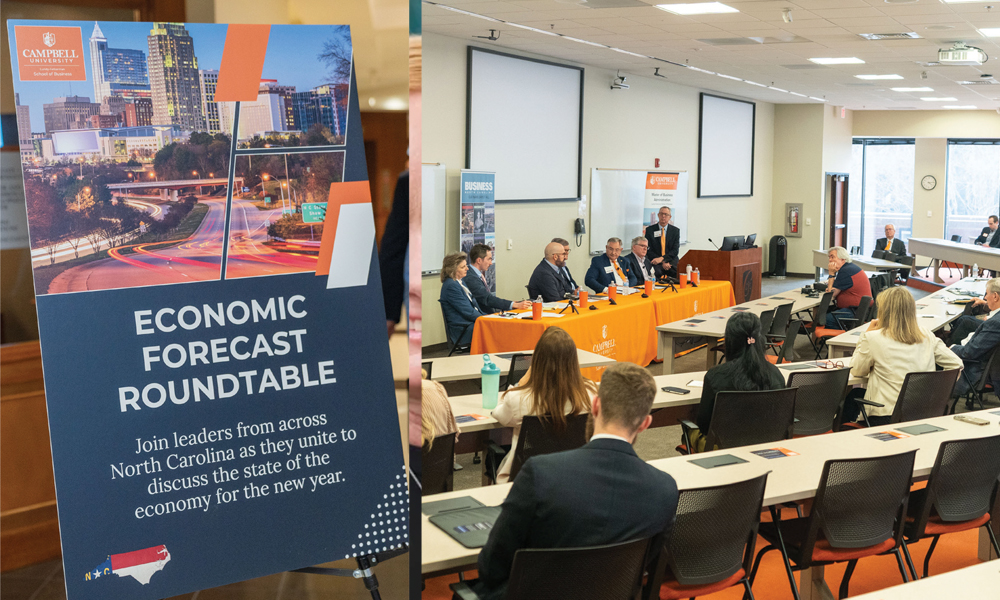
North Carolina is projected to maintain strong economic momentum in 2025 and 2026, with gross domestic product expected to reach 2.6% to 2.7% this year, potentially moderating slightly to 2.4% next year. Non-farm employment rose by 1.7% through November, though labor market conditions have softened according to early 2025 data. The state continues to attract major private investments, including from Amazon Web Services, Novo Nordisk and Fuji, which are collectively anticipated to generate around 59,000 new jobs over the coming years. Factors such as low tax rates, a stable regulatory climate and population growth are drawing investors to the region.
Housing affordability remains a pressing concern. Real estate prices have climbed significantly, partly due to regulatory barriers that restrict supply. Approximately 25% of the cost of a new home can be attributed to delays caused by regulation, prompting calls for faster approval processes for housing developments. Rental costs have outpaced income growth, placing strain on households. While some individuals relocating from high-cost areas like Washington, D.C. may find relative savings, long-term residents face rising living expenses.
Inflation remains above the Federal Reserve’s 2% target, currently at 3%, representing a 50% deviation from the goal. Over the past few years, cumulative price increases have reached about 25%. Experts warn that sustained higher inflation erodes purchasing power significantly over time, especially for lower-income populations. Policymakers anticipate difficult decisions ahead to bring inflation under control, measures that could carry short-term economic pain.
Technology and workforce transformation are shaping future opportunities. Artificial intelligence is increasingly embedded across industries, with companies like Caterpillar already operating 1.5 million autonomous machines globally. At CES 2025, numerous firms showcased advancements in driverless vehicles, highlighting rapid innovation. Expanding high-speed internet access—particularly through satellite systems like Amazon’s upcoming network—could bridge connectivity gaps in rural areas, enabling broader participation in the digital economy.
Energy infrastructure will play a critical role, especially with growing demand from data centers requiring up to one gigawatt each—equivalent to a full-scale nuclear reactor. Small modular nuclear reactors are being explored by Duke Energy and others as viable solutions. Proposals to expand existing nuclear capacity, such as adding a new unit at Shearon Harris Reservoir, reflect growing urgency to meet future energy needs.
Healthcare costs are rising sharply, with premium increases averaging 28% this year and reaching as high as 40% in some cases. Consolidation among hospital systems has contributed to higher prices, while rural providers struggle with sustainability. Medicaid enrollment has grown by nearly 700,000 since expansion in late 2023, now covering about 3.1 million residents. Experts emphasize the need for innovative care models, including local workforce development and telehealth, to improve access and trust in underserved regions.
State investment strategies are under scrutiny. Since 2009, North Carolina’s gross state product has grown 12% while state employment increased by less than 1%. During the same period, population rose 19%, raising concerns about public service capacity. Comparatively, Virginia and Georgia expanded their government workforces more significantly alongside economic growth. Public employees are seen as essential infrastructure—supporting education, transportation and public safety—and their underfunding may deter talent, particularly near academic institutions where housing costs exceed salaries.
Economic disparities persist. Real median household income in the state has lagged behind national trends and declined over the past six years through 2024. Income inequality is expected to widen further, potentially dampening consumer demand and increasing social costs. Experts stress the importance of inclusive policies that enable broader participation in economic growth, particularly in rural areas where demographic shifts vary—some counties gain residents through migration for retirement or recreation, while others face depopulation and poverty.
Tariff policy remains uncertain. Previous increases under the Trump administration raised average rates from 2.5% to over 10%, impacting import volumes. Historical analysis suggests such hikes initially boost exports but later harm the broader economy. Some experts hope for a rollback, warning that prolonged high tariffs could weaken the dollar’s global standing. Others predict a potential trade agreement with China that might reshape import dynamics.
Looking ahead, strategic public investment will be key. Past successes—from rural electrification to world-class university systems—were driven by bold, large-scale commitments. Today’s leaders face similar challenges in ensuring equitable development. Without proactive investment in overlooked communities, market forces alone may deepen regional divides. Expanding access to capital, supporting small business lending and fostering workforce adaptability are seen as essential steps toward a more resilient and inclusive economy.
— news from Business North Carolina
— News Original —
Round Table: Economic Forecast
••• SPONSORED SECTION ••• n nTIMES ARE CHANGING n nThe predictions have been made, and a consensus has been reached. North Carolina’s economy will have another strong year. But that doesn’t mean economic efforts and approaches can remain status quo. Business North Carolina gathered a panel of experts, each with a different perspective of the state’s economy, right after the new year to discuss how technology, workforce, investments and larger issues will affect the state and its residents. They also offered suggestions for how the state can maintain its lofty economic position. Their conversation was moderated by Publisher Ben Kinney. The transcript was edited for brevity and clarity. n nEditor’s note: Adam Currie recently joined the Federal Reserve Bank of Richmond Advisory Council. His thoughts do not necessarily reflect those of the Fed. n nThe discussion was sponsored by: n n•Lundy-Fetterman School of Business, Campbell University n n•First Bank n n•NC Rural Center n n•State Employees Association of North Carolina n n•Brooks Pierce n nWHAT’S IN STORE FOR THE STATE’S ECONOMY? n nSTECKBECK: North Carolina is poised for a strong year. The state’s gross domestic product will be 2.6% or 2.7% for 2025, and it might be slightly softer — 2.4% — in 2026. n nNon-farm employment was up 1.7% through November; that’ll be adjusted. Labor is softening as of the January numbers. North Carolina, especially the Raleigh region, is above the national level. n nPrivate investment has increased. Amazon Web Services, Novo Nordisk, Fuji and other large companies are expected to create about 59,000 jobs in North Carolina over the next few years. Investors are coming to the state because of its low tax rates, stable regulatory environment and growing population. Those are important steps in the right direction. n nReal housing prices have increased in large part because regulations have kept supply from matching demand. About 25% of a new home’s price can be attributed to regulatory stall. More housing developments need to be fast tracked. n nNorth Carolina’s rental market has increased far more than the income rate. Rent has increased. My daughter is moving back from Washington, D.C., and her monthly rent will be about $500 less. But she lived here in 2018, when it was even cheaper. n nWe’re likely to see the Fed make a 50-basis point reduction in interest rates this year. My concern is the politicization of the Fed. That would be bad. Fortunately, I think Federal Reserve Banks have bolstered their independent status, and that will maintain fiscal policy. n nWILLIAMS: I expect the economy to continue growing, subject to the macroeconomic questions that we live in increasing uncertainty about. n nReal median household income in North Carolina was on a declining trend for about six years through 2024. The 2024 number wasn’t far from its 1996 level in terms of real median household income. That doesn’t reflect the national trend, which dipped in the early 2020s but is recovering. I haven’t extended that into the most recent year. n nIncome inequality in North Carolina will continue rising this year. That becomes sensitive to the broader economy, because it can slow demand for various kinds of important consumption. And when people are very poor, they create costs that are socialized onto businesses, municipalities and the state. You don’t want to diminish incentives for creating value and wealth. But we need to ensure we’re putting North Carolinians in a position to contribute economically and live with dignity. n nI teach a law and economic development seminar, and I asked my students to study the economic indicators that the Secretary of Commerce must report and think about what they do and don’t capture. One student questioned the lack of a direct connection between the indicators and actual experiences in the economy. Macrometrics conceal so much heterogeneity in what it feels like to try to make ends meet or have a successful business experience. We must remember that when creating state-level policy or trajectory. A lot is lost in summarization. n nBURGIN: I serve on the National Conference of State Legislatures’ Artificial Intelligence Council. We’re dealing with AI, and we’ll deal with it more in the future. My problem is its lack of conscience and morals. It does what it’s designed to do. Human beings need to be involved, but I see more of them being pushed out of it. n nI recently returned from CES, the world’s largest electronics show, in Las Vegas. AI was everywhere. Caterpillar, for example, has 1.5 million machines running autonomously worldwide, and it has been doing that for 10 years. I met Amazon’s driverless cars division president. There were probably 20 companies doing that. Chinese car companies showed me things we haven’t thought about yet. These are exciting times. n nMuch of rural North Carolina lacks high-speed internet. Amazon is unveiling a system later this year. It has 167 satellites in orbit, and it’s launching more. It’s supposedly bringing high-speed internet to the entire world. That’ll be a gamechanger for rural North Carolina. n nEnergy will be a big issue. Data centers are being built around the world. Some are looking at North Carolina right now. Each requires a gigawatt of power, the equivalent of one base-load nuclear reactor. I serve on the state Senate’s Agriculture, Energy and Environment Committee, and its members met with a group that’s doing small modular nuclear reactors. Duke Energy is working on them, too. They’ll be a big thing. I want Duke to put another base-load nuclear reactor at Shearon Harris Reservoir. n nCURRIE: I’m bullish about North Carolina, where it’s economically and where it’s going. Its growth will outpace the nation this year. n nThe Fed must remain independent. We’ll have a new Fed chair, and it will be a big deal for interest rates and the country’s economy. n nWATKINS: Big businesses will be fine this year, but people won’t. North Carolina household income is 12% below the national average. That’s not good. n nGDP or gross state product, inflation and unemployment are important economic indicators. North Carolina’s GSP has grown 12% while its number of state employees has grown by less than 1% since 2009. Our population grew 19% during that time. During that same time, Virginia’s GSP grew 15% while it increased state employees by 32%, and Georgia’s GSP grew 22% while it increased state employees 18%. I’m no economist, but that’s nothing to sniff at. How can we serve you? Well, we can’t. We’re trying to keep up with population growth. n nState employees are the main infrastructure for attracting and keeping business. They build roads, staff prisons, and educate students and workforce. North Carolina wants the best university employees, but many of them can’t afford to live near the university. We don’t pay enough, so we can’t recruit them. Businesses consider this when making relocation or expansion decisions. Eventually that becomes about every North Carolinian and our overall economy. n nWHAT EFFECT WILL TARIFFS HAVE MOVING FORWARD? n nSTECKBECK: President Donald Trump increased tariffs before pulling back many. The average tariff rate went to 10% to 11% from about 2.5%. That has impacted imports. Many people are crowing that it hasn’t affected exports, because that sector remains strong. But tariffs usually affect those a few years later. I recently read a study that found every tariff rate hike from 1860 to 2024 has led to an immediate decrease in imports and increase in exports, and then adverse effects on the macroeconomy. I hope the Trump administration continues to backtrack on tariffs. n nA tariff hike usually increases the dollar’s value. People buy fewer foreign goods, so the demand for foreign currency decreases. We’ve seen the opposite, and we’ve seen an increase in gold and silver. One valid argument is investors are not moving to the dollar like they used to, and that’s a concern. It has been a stable currency, and we want it to stay that way. n nBURGIN: I think President Trump will negotiate a grand bargain with China this year. We buy so much from China, and we do so much with them. We’re going to see a lot of things change with tariffs. n nHOW WILL GROWTH SHAPE THE STATE’S ECONOMY? n nBURGIN: North Carolina was home to more than 11.1 million people as of January, and 339 more move here daily. U-Haul recently reported that most of its moving trucks went to Texas last year. Florida was No. 2 and North Carolina was No. 3. North Carolina is the ninth-most populous state, and is on its way to being No. 7 by 2030. n nCounties that border Wake, Mecklenburg or Guilford counties will blow up this year. I live in Harnett County, which I predict will be one of the state’s fastest growing. At one point, it had about 22,000 new home permits out. Every builder known to man has been here. It has slowed some the past six months. Signs listing homes starting at $300,000 now read high $280s. n nWILLIAMS: Growth is more than successful businesses and rising incomes. We all can foresee a time when you’ll never leave suburbia while driving between Rocky Mount and Winston-Salem. I’ve seen that scenario in the Midwest. That’s not the North Carolina we envision or remember. There’s nothing wrong with suburbs, but we must consider our vision of where and how growth happens. We need to pull our policy levers to preserve what we love about North Carolina. It’s more than transformative growth numbers. They change every society that experiences them. n nESTES: North Carolina is the tale of two rurals. One is losing population and struggling with poverty. The other is welcoming people for outdoor recreation, second homes or retirement. The latter creates growth and economic opportunities, though these jobs don’t pay enough in relation to local housing costs. n nWe need to create different shared ownership models to keep housing affordable, because those communities’ success depends on that workforce. And it’s not only retail. It’s healthcare and all the services that people want nearby. n nPeople move to North Carolina for a lower cost of living. Residents are moving to rural counties from urban ones for similar reasons. While that brings some benefits, such as a larger tax base to fund needed services, it isn’t the only economic development solution for those counties. Growth can be good, but we must manage it, so we benefit more fully. n nWHAT WILL HAPPEN WITH INFLATION? n nSTECKBECK: The Fed’s target is 2% inflation, but we’re at 3%. That’s not 1% more; that’s a 50% increase. Prices have increased 25% since 2020, and that’s far greater than typical inflation. It’s a major concern. n nCURRIE: There is a massive compounding difference over the course of 10 years of the real spending power of people when they accept 3% inflation versus 2% inflation. Inflation will prove to be stickier than anyone wants it to be. But it won’t be anything that our state and country can’t overcome. n nWe’re about four years into this, and it will only get worse. We’ll have to make hard decisions to reduce inflation at some point. They’ll probably hurt, but everybody, particularly those at the lower end of the economic spectrum, will feel increasing pain until we do. n nWILLIAMS: Consumer expenditures are rising in ways that inflation data doesn’t capture particularly well. While real household income is down, spending is up and increasing. Healthcare and housing account for about half of that increase. You’d expect that to create price sensitivity from consumers, causing concern in sectors where there’s supposedly some level of secular domestic demand for highly discretionary expenditures. n nWHAT ABOUT HEALTHCARE COSTS? n nBURGIN: A recent Forbes’ report put North Carolina healthcare costs as the country’s highest. Blue Cross recently told me that the average increase is 28%. The lowest is 19% and the highest is 40% for this year. That’s across the board. n nWe’re working on healthcare costs, but many things drive them. Institutions are where 77% of doctors work now. A friend recently sold his practice, and the hospital immediately began adding a $100 facility fee to bills. Drug costs are through the roof. Although the president has been negotiating some changes, about 27 cents of every healthcare dollar goes to pharmaceuticals. That’s bad and good; pharmaceuticals can reduce the need for more expensive treatments or procedures. n nAbout 3.1 million people in North Carolina are on Medicaid. Almost 700,000 have been added since its December 2023 expansion. We need a plan to get people off government programs, helping them care for themselves and their family. That makes people happier and healthier, I believe. n nWATKINS: Major hospital assets doubled from 2000 to 2020, so wealthy hospitals became wealthier, and rural and underserved hospitals suffered more. There was more consolidation, and that monopolization increased prices. n nWe deal with healthcare as a small employer and when representing state employees. State employees and retirees make up one-tenth of the healthcare commercial market in North Carolina. We don’t know the reimbursement rate that the state health plan pays providers through its third-party administrator. Why does that matter? It’s public money. We know a range, which went up to 800% plus of Medicare reimbursement as a reference rate the last time it was reported. That’s four times what it takes to operate profitably. So, if one-tenth of the commercial market is willing to do this, what happens to everybody else? n nESTES: Expiring American Care Act subsidies will disproportionately affect rural residents. That’s a reality we must consider when helping people without healthcare access through their employer. I participated in an informal discussion about the money we’ll receive through the reconciliation bill. It’s about $200 million, which breaks down to less than $100 per person in rural North Carolina. It sounds like a lot of money, but it isn’t transformative. n nWhile rural counties adjacent to urban ones will catch up on healthcare, the economies of scale will never work well in those farther away. I participated in a rural healthcare summit last summer. It was chaired by former U.S. Sen. Bill Frist from Tennessee. It focused on finding strategies unique to these communities. Telehealth isn’t the only answer. We must hire and train local people to provide preventive care, because there can be a lack of trust with providers from big cities hours away, who swoop in and tell people to show up for this appointment. We need to treat people with dignity and build respect. It’s complicated. It takes more than money. n nHOW SHOULD THE STATE MAKE INVESTMENTS? n nWILLIAMS: North Carolina’s economic development wins are partly the result of investments at scales unheard of in government today. The state and federal investments made in rural North Carolina during the mid-20th century are staggering. We went from nearly none to almost complete rural electrification in less than 20 years. Roads followed a similar trajectory. It would be difficult to find anyplace else in the country with the same density of education as the Triangle. And the state’s university system, which has been the envy of many for a long time, has extended it well beyond. n nThose investments happened because our leaders had a genuine commitment to the well-being of North Carolinians. It wasn’t driven only by their relationship to productive statistics. And we understood that the market alone doesn’t set the conditions for prosperity in regions lacking infrastructure or other elements that businesses need to succeed. You must invest to make these things happen. n nBut we may be eating some of the seed corn. We’re not extending investments into the future when our ability to win on cost in a global market is rapidly vanishing. The relative cost improvement of coming to North Carolina is quite small in some instances. We’re competing at a much larger scale, so we can’t win on that in the future. n nESTES: It takes will from everybody to recognize the need for systemic investment. Our rural model for years was someone builds a factory, which would fund the tax base and pay for the schools. When that business left, we never considered investing in that community or its residents as we would in an urban community. n nRural communities need to participate in community and business development. What do they have that’s valuable to somebody else? How do we get them there and create jobs? Attraction and extraction shouldn’t be their only development solutions. That was our historic success for much of the 1950s, 60s and 70s. That model no longer works. n nWe must apply the strategies that are successful elsewhere in the state’s economy. We need to grow the intellectual capital of our workforce. We need to teach them adaptability not only the skills for the next job. They need to be able to start businesses or find new opportunities when they’re created, so they can adapt and gain those jobs. n nWe’re in a moment. We can keep growing, allowing the market to control what happens. Or we can consider investing in places being left behind. But it takes will, because it’s going where there’s fewer people, fewer voters and less money creation. If you don’t get to that interdependent framework, then you probably won’t get enough will to do it. n nSmall business loan participation is a big part of our work. We lend to banks and community development financial institutions to lower borrowers’ loan costs. We’re receiving another tranche of Treasury money to continue that work. We’re involved in venture capital, but we need a way to get it to rural communities. The market doesn’t drive that. People don’t see the value without some risk reduction. n nWHAT’S AHEAD FOR THE STATE’S WORKFORCE? n nBURGIN: I expect the workforce to completely transform. Many jobs will change, and new ones will be created. Young people have many opportunities. They need to be prepared to try different things. n nNot everyone needs a four-year degree. Only about 50% of IBM’s advertised jobs require a degree. CES speakers talked about hiring good people and sending them to community college, technical school or their own training to learn specialized jobs. n nWATKINS: Rural communities are part of the solution. State facilities were purposely placed in them to create jobs where they were needed. That was part of the solution back in the day. Constricting state services with fewer employees has a double effect. First, we want to provide services for businesses and residents, but we can’t because there are fewer per capita than there used to be. n nWe still don’t have a state budget. And without one, the thousands of vacant positions are frozen under the law. So, regardless of how much they’re needed, we can’t fill them until a budget is passed. That’s frustrating, because people need help, and our schools need investment. ■