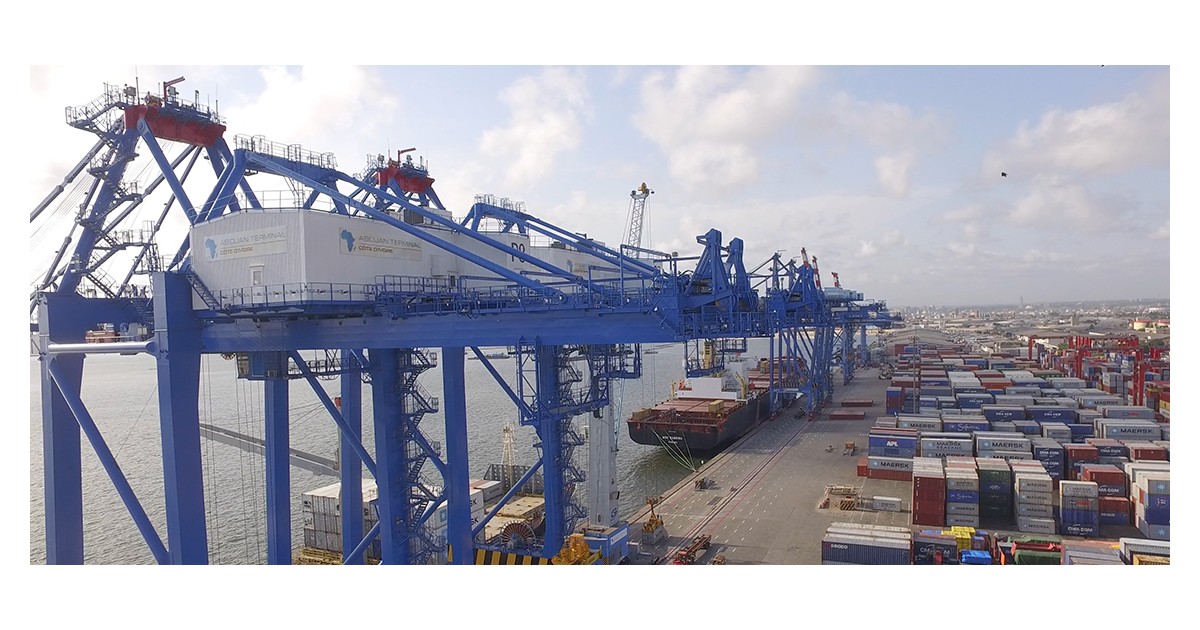
Over the past decade, Côte d’Ivoire has emerged as one of Africa’s standout economic performers. Between 2012 and 2019, the nation achieved an average annual growth rate of 9.2%, or 6.4% per capita, and maintained a solid 6.5% overall growth (3.8% per capita) from 2021 to 2024 despite external shocks. This trajectory places it among the continent’s top four fastest-growing economies and within the global top ten. The nickname “Les Éléphants” now reflects not just footballing pride but also a broader national drive for advancement.
Yet beneath these strong headline figures, structural weaknesses are emerging. Productivity gains have weakened over the last five years, with expansion driven more by increases in labor and capital inputs than by innovation or efficiency improvements. This input-heavy model limits long-term sustainability.
Equally troubling is the disconnect between economic expansion and poverty reduction. From 2018 to 2021, the country’s growth-to-poverty elasticity stood at only 0.6, significantly below both regional and global benchmarks. This indicates that economic progress is not sufficiently reaching the most vulnerable populations.
To meet ambitious goals—including generating jobs for 4 million new labor market entrants by 2030, halving poverty, and achieving upper-middle-income status by 2035—Côte d’Ivoire must shift toward a productivity-led development path. A key lever will be strengthening the private sector through targeted foreign direct investment (FDI) and improved business conditions.
In pursuit of this transformation, government leaders convened former ministers from high-performing economies such as Morocco, Vietnam, South Korea, Ethiopia, and India, alongside World Bank and global experts, to shape the 2026–2030 National Development Plan (NDP). Four strategic priorities were identified:
First, enhancing agricultural productivity. While farming remains central to the economy, future gains depend on raising yields rather than expanding farmland. Drawing lessons from Ethiopia, Vietnam, and Thailand, the country can accelerate progress by integrating AgriTech, upgrading rural infrastructure, and supporting smallholder inclusion in value chains. Establishing agro-industrial clusters backed by strategic FDI could catalyze rural employment and economic diversification.
Second, boosting FDI and trade competitiveness. Aiming to double foreign investment, Côte d’Ivoire plans to streamline regulations, digitize administrative processes, and launch a unified investment promotion agency. Emulating models from Morocco and Vietnam, the focus will be on creating dynamic economic zones, strengthening domestic firms, and improving access to finance and innovation support for SMEs.
Third, investing in human capital. Current data shows that a child born today in Côte d’Ivoire will reach only 38% of their full productive potential due to deficits in health, education, and nutrition. To close this gap, the NDP proposes expanding early childhood education in rural areas, implementing cross-sectoral nutrition programs, upgrading healthcare systems, and modernizing technical and vocational training. Inspiration comes from Ghana’s success in reducing child malnutrition and Vietnam’s education reforms, which allocate 16–18% of the national budget to schooling and have led to strong international learning outcomes.
Fourth, ensuring effective implementation. Drawing from South Korea and Rwanda, the plan emphasizes institutional coordination through high-level bodies with presidential backing. These entities would oversee priority projects, eliminate bureaucratic bottlenecks, and use digital monitoring tools to track performance and adjust strategies in real time.
The path forward is clear: by combining bold policy reforms with strategic learning from global peers, Côte d’Ivoire can transition to inclusive, sustainable growth. The upcoming development blueprint offers a chance to turn vision into tangible progress for all citizens.
— news from World Bank Blogs
— News Original —
Sustaining “les Éléphants” economic prowess and renewing Côte d’Ivoire’s growth model
Few nations can rival Côte d’Ivoire’s extraordinary economic journey over the past decade. Fueled by determination and vision, the country has posted a stellar average annual growth rate of 9.2% over 2012-2019 (6.4% per person) and 6.5% (3.8% per person) over 2021-2024 despite global and regional turbulence. This powerful surge propels Côte d’Ivoire into the ranks of Africa’s top four fastest-growing economies and secures it a spot among the top ten globally. “Les Éléphants” success story isn’t limited to the soccer pitch—it’s a testament to national ambition and resilience. n nBut beneath the surface of this impressive progress, a critical challenge looms. Over the last five years, productivity growth has started to slip. Much of the growth has relied on simply adding more capital and labor, rather than a bigger drive of innovation or efficiency (see chart). n nEven more concerning: the pace of poverty reduction has not kept up. Between 2018 and 2021, Côte d’Ivoire’s growth-to-poverty elasticity—a measure of how effectively growth reduces poverty—was just 0.6, well below both the African and global averages. This means that economic gains are not translating into better lives fast enough for those who need it most. n nSo, how can Côte d’Ivoire build on this momentum and achieve its bold ambitions to create jobs for the 4 million people that will join its labor market by 2030, slash poverty by half and join the ranks of upper-middle-income countries by 2035? The answer lies in embracing new ideas to unleash productivity and power up the private sector with robust foreign direct investment (FDI) (see chart 2). But what exactly should the country do to achieve this? n nThis urgent question brought together Cote d’Ivoire government leaders, seasoned ex-ministers from economic success stories like Morocco, Vietnam, South Korea, Ethiopia, and India, and global and World Bank experts to provide inspiring examples that can spark the next wave of productivity-driven growth and shape Côte d’Ivoire’s new National Development Plan (NDP) for 2026-2030. Four game-changing priorities were highlighted: n nAgricultural Productivity: Agriculture powers Côte d’Ivoire’s economy, but the real game-changer will be boosting yields rather than just expanding farmland. It’s time to modernize with smart, coordinated policies—including tech upgrades using AgriTech services, better infrastructure, and skills training. Inspired by Ethiopia, Vietnam, and Thailand, Côte d’Ivoire can leap ahead by driving digitalization, attracting private investment, and building agri-industrial clusters with targeted and strategic Foreign Direct Investment (FDI). Key priorities: bring digital and financial tools to rural communities, and make sure smallholders thrive in value chains. With these bold moves, Côte d’Ivoire can ignite rural job creation and spark true economic transformation. n nSupercharging foreign direct investment & Trade: Côte d’Ivoire is setting its sights high: it aims to double FDI and making the private a stronger engine of growth. Inspired by the successes of Morocco, Vietnam, and Ireland, the country now aims to revamp its business environment, rolling out digital reforms, and launching a one-stop investment promotion agency to better attract global investors. The focus is on building dynamic competitiveness clusters, empowering national champions, and making it easier for businesses to access finance, navigate regulations, and innovate. These ambitious moves will turbocharge trade, unleash SMEs, and fuel job creation, hence paving the way for prosperity and better lives for everyone. n nBuilding Human Capital: Human capital stands at the heart of Côte d’Ivoire’s transformative ambitions, and the urgency to invest is backed by compelling data: a child born today is projected to realize only 38% of their productive potential due to gaps in health, education, and nutrition. The stakes are high, especially for women and youth, whose limited participation in the labor force underscores the need for cross-cutting action in the 2026-2030 NDP. Drawing inspiration from Ghana’s effective fight against child malnutrition and Vietnam’s bold curriculum reforms, where 16-18% of the budget is committed to education, yielding top PISA scores, the roadmap for Côte d’Ivoire is clear and exhilarating. By expanding preschool in rural areas, rolling out multisectoral nutrition, improving health care infrastructure and modernizing technical education, the country can unleash its full human capital potential. n nDelivering Results: Strong coordination across government agencies through institutional reform and a relentless results focus during implementation prevent delays. The South Korean experience and Rwanda’s Development Board demonstrate how strategic high-level institutions with presidential backing can provide coordination, transcending administrative silos, break bottlenecks, and scale solutions through clear mandates, and performance accountability. Prioritized results indicators observed through digital tools enable dynamic management and timely course correction. n nThe lesson is clear: with its bold new national development plan and a willingness to innovate, Côte d’Ivoire can unlock a new era of growth that truly benefits all. Now is the time to turn ambition into reality and ensure that the legacy of “Les Elephants” is one of shared prosperity and lasting transformation.