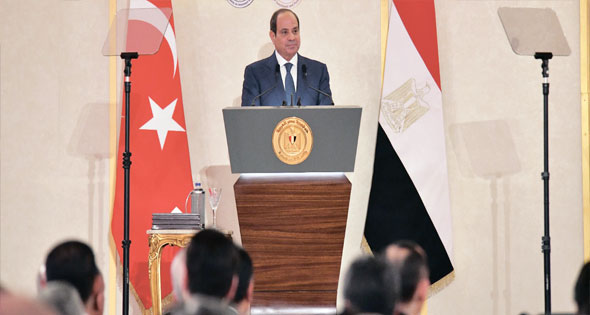
President Abdel Fattah El-Sisi emphasized the solid and practical foundations of economic relations between Egypt and Turkey, noting that strong complementarities between the two economies, combined with geographic and cultural proximity, as well as mutual political will and business community engagement, have driven trade and investment cooperation to unprecedented levels. He revealed that bilateral trade volume has reached approximately $9 billion, with aspirations to increase it to $15 billion or more, making Egypt Turkey’s top trading partner in Africa, while Turkey ranks among the leading destinations for Egyptian exports. Furthermore, Turkish investments in Egypt have surpassed $4 billion, a milestone achieved through coordinated efforts between governments and private sectors, with business leaders recognized as key contributors to this success.
The remarks were delivered by President El-Sisi during the closing session of the Egypt-Turkey Joint Business Forum in Cairo, held alongside Turkish President Recep Tayyip Erdogan, whose official visit to Egypt provided the backdrop for the event. El-Sisi welcomed Erdogan and his delegation, expressing deep appreciation for the role of business communities in both nations in strengthening economic and commercial ties over recent years, reflecting the resilience of shared interests. He also extended gratitude to all parties involved in organizing the forum, highlighting its significance as a timely platform underscoring the strategic weight of bilateral economic partnership.
El-Sisi stressed that the gathering was not merely about reinforcing existing collaborations but about laying the groundwork for a new, ambitious phase focused on maximizing mutual benefits for both populations, aligned with contemporary global shifts and future opportunities. Marking the centenary of diplomatic relations, he noted that discussions with President Erdogan confirmed significant untapped potential for cooperation. Both sides agreed to intensify joint efforts to expand trade and attract additional Turkish investments, particularly through Turkish participation in Egypt’s priority industrial development sectors. Investors would benefit from Egypt’s structural reforms in the investment climate, diverse incentives, strategic location, access to markets via free trade agreements with multiple countries and regional blocs, and a skilled labor force.
He specifically commended the successful experience of Turkish textile and apparel investors in Egypt, whose contributions have significantly boosted Egypt’s exports in this sector. El-Sisi reiterated Egypt’s openness to expanding Turkish investments into other fields such as chemical and healthcare industries, which would generate real added value, create employment, and transfer industrial and technological expertise. Over the past two years, Egypt has continued implementing its economic reform program in coordination with the International Monetary Fund, completing six reviews so far. These policies have yielded notable improvements in financial and monetary indicators, with the Egyptian economy recording a 5.3% growth rate in the first quarter of the 2025–2026 fiscal year. Private sector investments accounted for nearly 66% of total investments, reflecting the government’s focus on empowering the private sector as the primary engine of development—a strategy praised by international credit rating agencies that upgraded Egypt’s credit rating.
Current global developments, El-Sisi noted, underscore the need to deepen supply chain localization and proximity to markets, creating opportunities for Egypt and Turkey to establish joint production and export platforms. These would leverage Turkey’s industrial expertise and Egypt’s market access advantages, supported by Egypt’s extensive infrastructure development since 2014, which has seen over $550 billion invested in modernizing road networks, upgrading energy and water systems, and building smart cities. This infrastructure push was not only aimed at addressing immediate challenges but also driven by a forward-looking vision to create a modern, diversified, and investment-attractive economy.
Special attention has also been given to the logistics sector, with Egypt pursuing a national strategy to become a global logistics hub through the development of commercial ports, including Alexandria Port, Sokhna Port—the largest Red Sea hub—and East Port Said, ranked among the world’s most efficient ports. Building on this momentum, El-Sisi called on business communities in both countries to prioritize several practical pathways in the coming phase: First, boosting joint industrial investments in high-priority, technologically advanced sectors such as automotive manufacturing and components, chemicals, metals, and home appliances. Second, establishing logistics partnerships, maritime transport routes, and regional distribution centers linked to Egyptian ports to serve surrounding markets. Third, advancing cooperation in green transformation, energy efficiency, and clean manufacturing in line with global market trends. Fourth, enhancing direct corporate communication through regular meetings and sector-specific working groups to ensure collaboration opportunities translate into executable contracts and projects.
El-Sisi reaffirmed his warm welcome to President Erdogan and all attendees, expressing confidence that the forum’s outcomes would serve as a tangible step toward deepening private-sector collaboration, fostering joint ventures with added value, opening new markets, and supporting development and prosperity goals for both Egyptian and Turkish people. He concluded with a traditional greeting of peace and reiterated his welcome to President Erdogan, the accompanying delegation, and Egyptian and Turkish business representatives.
— news from بوابة الأهرام
— News Original —
آفاق واعدة للتعاون الاقتصادى مع تركيا r nالسيسى فى كلمته بالجلسة الختامية لمنتدى الأعمال المشترك: إرادة سياسية لدفع التكامل بين الدولتين فى الاستثمار والتجارة والطاقة والتصنيع وسلاسل الإمداد
أكد السيد الرئيس عبدالفتاح السيسى، أن العلاقات الاقتصادية بين مصر وتركيا تقوم على أسس راسخة وعملية، حيث أسهمت مقومات التكامل الاقتصادى الكبير بين البلدين، إلى جانب التقارب الجغرافى والثقافى، وتوافر الإرادة السياسية وإرادة مجتمع الأعمال، فى بلوغ مستويات غير مسبوقة من التعاون التجارى والاستثمارى، مشيرا إلى أن حجم التبادل التجارى وصل إلى نحو 9 مليارات من الدولارات، ونطمح لزيادته إلى 15 مليار دولار أو يزيد، مما جعل مصر الشريك التجارى الأول لتركيا فى إفريقيا، فيما تعد تركيا من أبرز مقاصد الصادرات المصرية، مؤكدا فى الوقت نفسه تجاوز حجم الاستثمارات التركية فى مصر 4 مليارات دولار، وهو إنجاز لم يكن ليتحقق لولا تضافر جهود الحكومات ومجتمع الأعمال معًا، فأنتم شركاء هذا النجاح. n nجاء ذلك فى كلمة الرئيس السيسى التى ألقاها أمس، خلال مشاركته، والرئيس التركى رجب طيب أردوغان، فى الجلسة الختامية لمنتدى الأعمال المصرى– التركي، الذى انعقد بالقاهرة فى إطار زيارة الرئيس التركى إلى مصر. n nواستهل الرئيس السيسى كلمته، مرحبا بضيف مصر العزيز، الرئيس رجب طيب أردوغان، والوفد المرافق له، معبرا عن تقديره العميق لمجتمع الأعمال فى البلدين، الذى نجح خلال السنوات الماضية فى إضفاء زخم متزايد على التعاون الاقتصادى والتجارى، بما يعكس متانة الروابط والمصالح المشتركة بين مصر وتركيا، وأضاف قائلا: «كما أود أن أتوجه بخالص الشكر لكل من أسهم فى تنظيم هذا المنتدى المتميز وجلساته التى امتدت على مدى اليوم، والذى ينعقد فى توقيت بالغ الأهمية ليؤكد مدى ثقل الشراكة الاقتصادية بين بلدينا». n nوأضاف الرئيس: «إننا لا نجتمع اليوم لتعزيز شراكات قائمة فحسب، بل لنضع معا حجر الأساس لمرحلة جديدة تتسم بالطموح، جوهرها تعظيم المنافع المتبادلة لشعبينا، بما يتماشى مع متغيرات العصر ومتطلبات المستقبل الواعد»، واستطرد: «وانطلاقًا من هذا المسار الإيجابى، ومع مرور مائة عام على إقامة العلاقات الدبلوماسية بين بلدينا، فقد أكدت مشاوراتى اليوم مع الرئيس أردوغان وجود توافق كبير على أن آفاق التعاون لم تستغل بعد بالكامل. وقد اتفقنا على العمل المشترك لزيادة حجم التجارة وجذب المزيد من الاستثمارات التركية، بما يحقق منفعة متبادلة من خلال مشاركة المستثمرين الأتراك فى التنمية الصناعية التى تشهدها مصر فى قطاعات ذات أولوية، مستفيدين فى الوقت ذاته من الإصلاحات الهيكلية التى دخلت على بيئة الاستثمار المصرية، والحوافز المتعددة والمزايا النسبية المرتبطة بالموقع الاستراتيجى والنفاذ للأسواق عبر اتفاقيات التجارة الحرة التى تربط مصر بالعديد من الدول والتجمعات الإقليمية والدولية، فضلاً عن توافر الأيدى العاملة الماهرة». n nوأردف: «وأود أن أحيى بصورة خاصة التجربة الناجحة لمستثمرى الملابس والمنسوجات الأتراك فى مصر، حيث تمثل مساهمتهم جزءاً مؤثراً فى صادرات هذا القطاع من مصر إلى الخارج، كما أود أن أؤكد ترحيبنا بتوسيع الاستثمارات التركية فى قطاعات أخرى مثل الصناعات الكيماوية والصحية، بما يمثل قيمة مضافة حقيقية ويوفر فرص عمل وينقل خبرات صناعية وتكنولوجية». وأكد الرئيس أن مصر نجحت خلال العامين الماضيين فى مواصلة تنفيذ برنامجها للإصلاح الاقتصادى بالتعاون مع صندوق النقد الدولى، حيث تم الانتهاء من ست مراجعات حتى الآن، وأسفرت السياسات المطبقة عن تحسن ملحوظ فى المؤشرات المالية والنقدية، إذ سجل الاقتصاد المصرى معدل نمو بلغ 5.3% خلال الربع الأول من العام المالى 2025-2026، وبلغت استثمارات القطاع الخاص نحو 66% من إجمالى الاستثمارات، وهو ما يعكس الأولوية التى توليها الدولة المصرية لدعم القطاع الخاص باعتباره المحرك الرئيسى للتنمية، وقد حظى هذا التوجه بإشادة مؤسسات التصنيف الائتمانى الدولية التى رفعت التصنيف الائتمانى لمصر. وقال إن التطورات العالمية الراهنة تفرض ضرورة تعميق مفهوم توطين سلاسل الإمداد والاقتراب من الأسواق، وهو ما يفتح المجال أمام الشراكة المصرية التركية لبناء منصات إنتاج وتصدير مشتركة، مستفيدة من المزايا اللوجستية والتكامل بين خبرات الصناعة التركية ومقومات النفاذ للأسواق التى تتمتع بها مصر، وأضاف: «ومن هنا تأتى أهمية الجهود التى بذلتها الدولة المصرية فى تطوير البنية التحتية، حيث ضخت منذ عام 2014 استثمارات تجاوزت 550 مليار دولار، شملت تحديث شبكات الطرق، وتطوير قطاعات الطاقة والمياه، وإنشاء المدن الذكية. ولم يكن الهدف من هذا الإنفاق فى البنية الأساسية هو فقط معالجة مشكلات الحاضر، بل كان مبنيا على رؤية مستقبلية تهدف إلى تهيئة أرضٍ صلبة لبناء اقتصاد حديث ومتنوع وجاذب للاستثمارات». وأضاف: «كما أولت الدولة اهتماما خاصا بقطاع اللوجستيات، حيث شرعت فى تنفيذ رؤية قومية لتحويل مصر إلى مركز لوجستى عالمى عبر تطوير الموانئ التجارية، ومن أبرزها ميناء الإسكندرية، وميناء السخنة الذى يُعد أكبر ميناء محورى على البحر الأحمر، إضافة إلى ميناء شرق بورسعيد الذى صُنّف ضمن أفضل الموانئ كفاءة فى العالم». n nالرئيس ونظيره التركى خلال الجلسة الختامية لمنتدى الأعمال المشترك n nوانطلاقاً من ذلك، دعا الرئيس السيسى مجتمع الأعمال فى البلدين إلى التركيز خلال المرحلة المقبلة على عدة مسارات عملية: n nأولا: تعزيز الاستثمارات الصناعية المشتركة فى المجالات ذات الأولوية والقيمة التكنولوجية العالية مثل صناعة السيارات ومكوناتها، وصناعة الكيماويات والمعادن والأجهزة المنزلية. n nثانيا: بناء شراكات لوجستية وخطوط نقل بحرى ومراكز توزيع إقليمية ترتبط بالموانئ المصرية وتخدم الأسواق المحيطة. n nثالثاً: دفع التعاون فى مجالات التحول الأخضر وكفاءة الطاقة والتصنيع النظيف بما يتماشى مع اتجاهات الأسواق العالمية. n nرابعا: تفعيل آليات التواصل المباشر بين الشركات عبر لقاءات دورية ومجموعات عمل قطاعية لضمان تحويل فرص التعاون إلى عقود ومشروعات قابلة للتنفيذ. n nوجدد الرئيس الترحيب بالرئيس رجب طيب أردوغان والحضور، معبرا عن ثقته فى أن مخرجات هذا المنتدى ستشكل خطوة عملية لتعميق التعاون بين القطاع الخاص فى البلدين، وبناء مشروعات مشتركة تحقق قيمة مضافة، وتفتح أسواقا جديدة، وتدعم أهداف التنمية والرخاء للشعبين المصرى والتركى. واختتم كلمته قائلا: «السلام عليكم ورحمة الله وبركاته، وأرحب مرة أخرى بفخامة الرئيس رجب طيب أردوغان والوفد المرافق له ومجتمع الأعمال المصرى والتركى». وصرح السفير محمد الشناوى، المتحدث باسم الرئاسة، بأن المنتدى شهد حضورا واسعا من ممثلى الحكومتين المصرية والتركية، إلى جانب نخبة من رجال الأعمال فى البلدين، حيث شارك أكثر من 460 من رؤساء وممثلى الشركات التركية العاملة فى مصر أو المهتمة باستكشاف فرص جديدة للاستثمار، فضلا عن نحو 270 من ممثلى القطاع الخاص المصري، وقد تناولت جلسات المنتدى سبل تعزيز التبادل التجارى بين البلدين، واستعراض الفرص المتاحة أمام الاستثمارات التركية فى السوق المصرية.