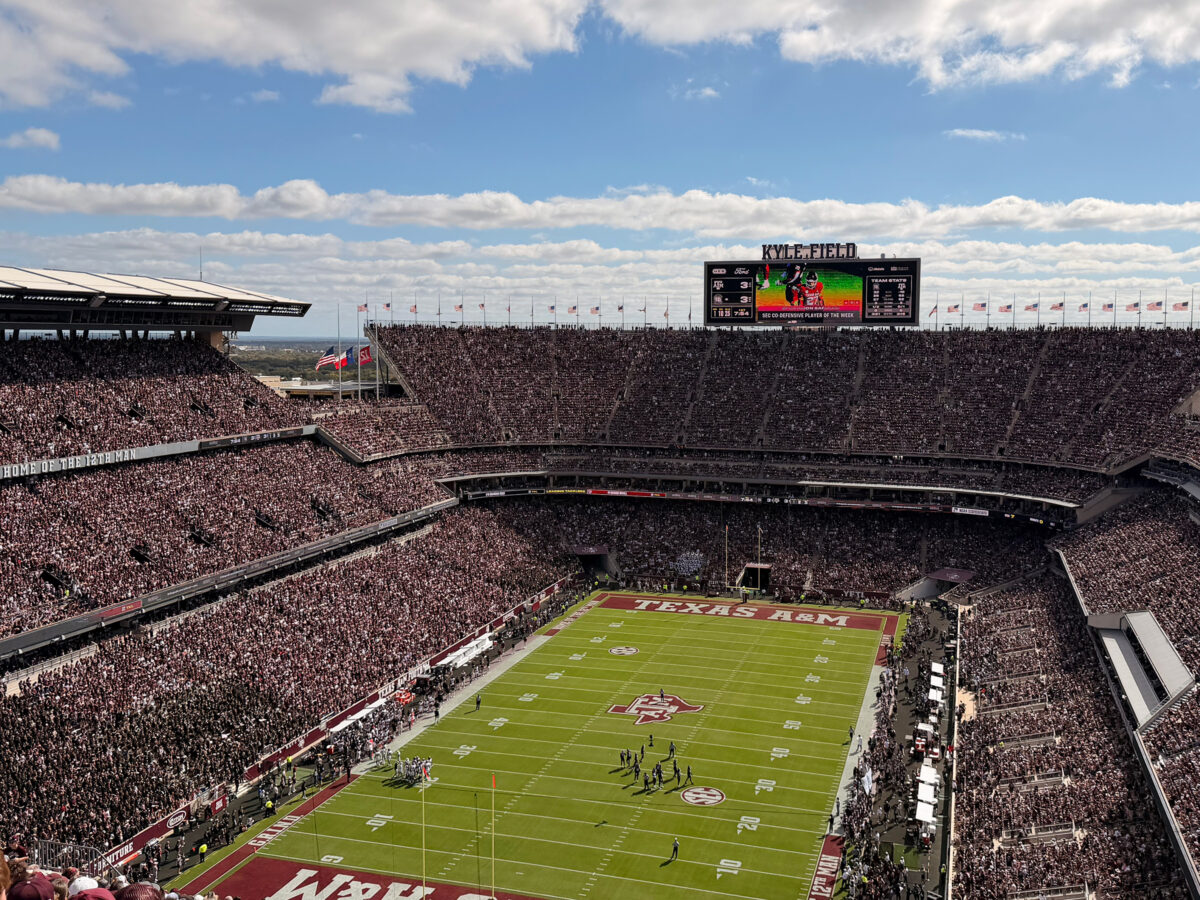
Texas A&M University’s upcoming College Football Playoff game against the Miami Hurricanes on December 20 is expected to bring significant attention to College Station-Bryan, not only for sports fans but also for local economic observers. As the host of its first playoff matchup, the university’s home field could generate a temporary boost in regional economic activity. However, measuring the true net impact requires careful analysis beyond surface-level assumptions. n nEconomic impact studies are commonly used by tourism and development agencies to evaluate the benefits of large events. These assessments function similarly to sales forecasts for all businesses in a given area, helping officials decide whether to support initiatives with public funding. Yet, due to the impracticality of collecting detailed financial data from hundreds or thousands of local firms, such studies often rely on generalized models, aggregate statistics, and informed estimates—frequently accompanied by wide margins of error. n nTypically, these analyses examine both direct effects—such as spending by visitors on lodging, food, and retail—and indirect ripple effects, where money circulates through secondary transactions. Larger and more diverse economies tend to experience greater spillover benefits due to a broader range of local businesses. For example, if a bartender earns an extra $100 in tips before the game, how much of that income is spent locally afterward determines the extent of indirect gains. Online purchases or spending outside the region result in significant leakage, reducing the overall local benefit. n nThe actual economic contribution depends on how much additional spending stays within the local economy and is recirculated among businesses. Visitor expenditures typically flow into hotels, restaurants, bars, and retail outlets—sectors that may see a temporary uptick in revenue. However, it’s important to recognize that these businesses operate even without major events. The key metric is the incremental gain above normal activity, which hinges on available capacity. n nFor instance, if the College Station-Bryan Metropolitan Statistical Area (MSA) averages $6 million in daily sales across these sectors, the potential for growth depends on current utilization. At 50% capacity, a doubling of activity might be feasible; at 75%, the ceiling is lower. Any estimate must focus solely on the additional spending, not total volume. n nAn alternative method involves reviewing historical data. Analysis of Brazos County hotel receipts and sales tax collections since January 2022—including four seasons of regular home games—reveals a consistent increase in lodging revenue during game weekends, averaging an additional $1.2 million per event. However, this figure may overstate local gains, as hotel chains often raise prices during peak demand, with much of the extra revenue flowing to corporate headquarters rather than staying in the community. n nSales tax data, which captures spending by both visitors and residents, showed no statistically significant change during game weekends. This suggests that some local spending may be displaced—residents might choose to stay home or leave town to avoid congestion, effectively shifting rather than increasing economic activity. Such displacement is common during one-off events and limits net gains. n nWhile the event is likely to generate several million dollars in net economic impact and provide a positive boost to municipal revenues, precise measurement remains challenging. Even well-conducted studies can only quantify monetary outcomes. Intangible benefits—such as enhanced university branding, inspiration for future students, alumni pride, and community morale—may hold long-term value beyond financial metrics. n
— news from Texas Real Estate Research Center
— News Original —
Home Field Economic Advantage?
The Aggie faithful awaits a momentous arrival in late December. Of course, I’m referring to the Miami Hurricanes who will visit Kyle Field on December 20 for Texas A&M University’s first College Football Playoff game. Many will prognosticate about the on-the-field outcome between the number 7 and 10 ranked teams. My goal here is to suggest how we might assess the consequences for the local economy in College Station-Bryan. As the author of numerous impact studies, I’m aware of their uses and limits. I have not evaluated any studies of local home games, nor have I run my own model. What follows are thoughts on how we might evaluate the economic impact of this game, or any economic event. n nWhat is an economic impact study? They are the bread and butter of tourism and economic development officials who use them to evaluate the merits of economic projects or policies. The findings can motivate officials to give financial or other support to a project in expectation of a big payoff for the community. Think about a prudent business owner who forecasts their sales to better plan staffing and orders. An economic impact study is like a sales forecast for all businesses in an area. Because there is no practical way to collect financial data on hundreds or thousands of local businesses, these studies rely on generic formulas, summary statistics, and all too often educated guesses. You’ll also see large margins of error in the result. n nImpact studies usually consider the immediate (or direct) impact of an event and spillover (indirect) impacts. Immediate impacts are hard to measure, but usually easier than measuring the spillover effects. In practice, bigger and more diverse economies will see bigger spillover impacts as they have a greater variety of businesses. For instance, let’s say a local bartender makes an extra $100 in tips the day before the game. This is a direct impact. If she lives in a huge metropolitan area, like Dallas-Fort Worth, she will find more places to spend that money compared to living in a smaller region like the College Station-Bryan Metropolitan Statistical Area (MSA). If she spends it online, then very little will go to the local economy no matter the region. Leakage can be very high in many cases. Can we have any sense of how reliable an impact study is? Sometimes we can get a feel for it. n nUltimately, economic impact depends on how much of the extra spending can be kept in the region and recirculated among the accounts of local businesses. Tourist spending ends up in one of three places: with local hotels, restaurants and bars, or retail stores. This is a temporary increase in local business that we can compare to business as usual. Keep in mind that these local firms would do some business even without the event. The potential to increase business over their baseline is key. These firms have some slack capacity. Most restaurants will have unused tables and hotels will have some unrented rooms on a given day. So, when the extra customers show up for the event, local firms can accommodate some of them. How much slack does the local economy have? n nTo start, we can say that on an average day, the retailers, hotels, restaurants, and bars in the College Station-Bryan MSA do $6 million of business. How much extra business they can do really determines the net impact of the event. If we assume they are at 50 percent capacity, then a $12 million day is reasonable. If they are at 75 percent capacity then, $8 million is about the limit. Of course, we should only count the extra spending, not the daily average plus the extra. These assumptions would mean $2 to $6 million in direct spending and some additional amount of spillover. n nAnother way to assess recurring events is by looking at what happened in the past. I consulted hotel receipts and sales tax revenue for Brazos County since January 2022. This period included four seasons of home games (2022 to 2025). Using a simple statistical test, I detected a meaningful increase in hotel receipts for these home games. On average, local lodgers have enjoyed an additional $1.2 million for each home game. We cannot know how much of this increase ended up locally. Hotels may increase their rates for home games. The higher bill will result in more local hotel taxes, but most of the extra revenue may be sent to the hotel chain’s corporate headquarters. n nUsing the same approach, I could not find a statistically significant change in sales tax revenue over the same period. These results make sense. Hotels reflect visitor activity, so we should expect to see a noticeable change there. Sales taxes reflect spending by visitors and by many more locals. Some, maybe more, spending by visitors displaces spending by locals that would have happened if the event didn’t take place. It is not uncommon to hear someone say they are staying in or even leaving town during a busy home game weekend. These people wish to avoid the congestion and inconvenience that comes with large crowds. This displacement is very common for one-time events. Historical data suggests a more modest potential economic impact than given in the capacity assumptions above. n nMy commentary is not intended to deny that there are net economic benefits to any particular event. Based on experience and the crude estimates above, I would expect a home playoff game to generate several million dollars in true net economic impact, and it should be a net positive impact to local government revenue. There probably isn’t a study that can say much more. n nThe bottom line is, good impact studies can help us understand the consequences of a major economic event. At the end of the day, however, even good studies only count what we measure in dollars. The enduring impacts of December 20 may be elsewhere and intangible. Think of the brand boost for the university. Think about the kids who will first encounter Texas A&M University while watching that game and who will become prospective students and future Aggies. Think of the nostalgia and pride of the alumni. Finally, think how good it will feel to beat the hell outta Miami. Who would put a price on that? n nViews expressed on The 338 are those of the authors and do not imply endorsement by the Texas Real Estate Research Center, Division of Research, or Texas A&M University.