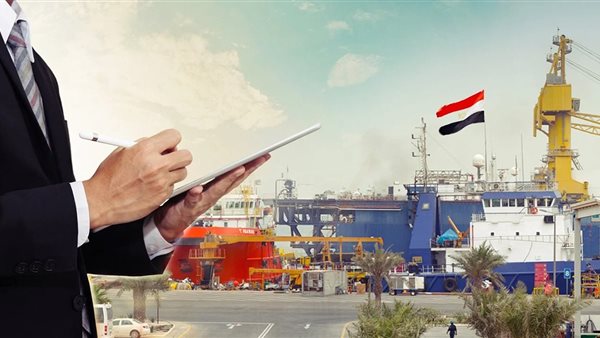
Why has Egypt suddenly become a focal point for foreign investment? Why is the government offering unprecedented incentives to companies? And does this signal a genuine shift in economic strategy? How is Egypt attempting to bridge the gap between savings and investment without falling back into the trap of volatile capital flows? n nCurrently, the Egyptian government is clearly reordering its economic priorities, moving toward long-term direct investment instead of relying on borrowing or short-term capital that enters quickly and exits even faster. This shift is evident in the nature of recent agreements and the structure of incentives offered to investors. n nA key indicator of this transformation is the deal signed with Qatar’s Al-Mana Holding to produce sustainable aviation fuel, involving investments of around $200 million. This project is more than just an industrial venture; it signals Egypt’s intent to attract productive investments tied to sustainable development, clean energy, and emissions reduction—aligning with global trends. n nExperts confirm this agreement is part of a broader Qatari investment package previously announced at $7.5 billion, with additional deals already sealed at values exceeding initial announcements. One of the most prominent is the Alam El Rom project on the North Coast. n nAlam El Rom alone represents a new model for foreign direct investment. Qatar’s Diar Company paid $3.5 billion in cash for land, with over $26 billion in-kind investment planned for development. This translates into real dollar inflows, local job creation, technology transfer, infrastructure growth, and sustainable tourism. n nThe Egypt-Qatar rapprochement has also significantly boosted bilateral trade, which surged by up to 80% over the past two years—a strong sign that economic ties go beyond isolated projects and reflect a growing network of mutual interests. n nCurrent Qatari investments are concentrated in food, real estate, and tourism, particularly along the North Coast. However, expectations are high for deeper entry into high-value-added sectors such as manufacturing, energy, and logistics—precisely the areas the Egyptian government is targeting. n nWhy the strong emphasis on investment over debt? Egypt’s debt burden has become increasingly heavy, especially in terms of debt servicing, which consumes a significant portion of state resources. Even if officials claim figures are under control, the reality is that every pound spent on interest is a lost opportunity for development. n nAs a result, there’s a strategic push to convert portions of debt into tangible investments—either through equity participation in existing firms or launching new ventures. This approach provides funding while generating added value without increasing budgetary pressure. n nThe government is also working to create a fundamentally different investment climate: faster procedures, clearer regulations, tax and customs incentives, flexibility in profit repatriation, and streamlined land allocation. All of this aims to make investors feel that Egypt’s market is not only large but also secure and stable. n nA central tool in this strategy is the Suez Canal Economic Zone (SCEZ). It has evolved into a comprehensive investment platform offering free zone benefits, proximity to ports, ease of importing raw materials and exporting finished goods, renewable energy access, green financing, and fast-track approvals—making it a powerful magnet for global firms. n nThe ultimate goal is to close Egypt’s chronic savings-investment gap. Instead of borrowing to fund projects, the state now seeks partners who contribute capital, operational expertise, and risk-sharing—this is the essence of sustainable development. n nBy avoiding reliance on hot money—capital that flows in for high returns and exits at the first sign of instability—Egypt aims to build an economy anchored in long-term, productive investments that generate jobs, boost output, strengthen the currency, and reduce pressure on foreign exchange reserves. n nThe broader picture suggests Egypt is entering a new phase: attracting not just any investment, but smart, sustainable, and forward-looking capital. If this momentum continues, it could reshape the Egyptian economy in the coming years, making it less vulnerable and more resilient to shocks.
— news from banker