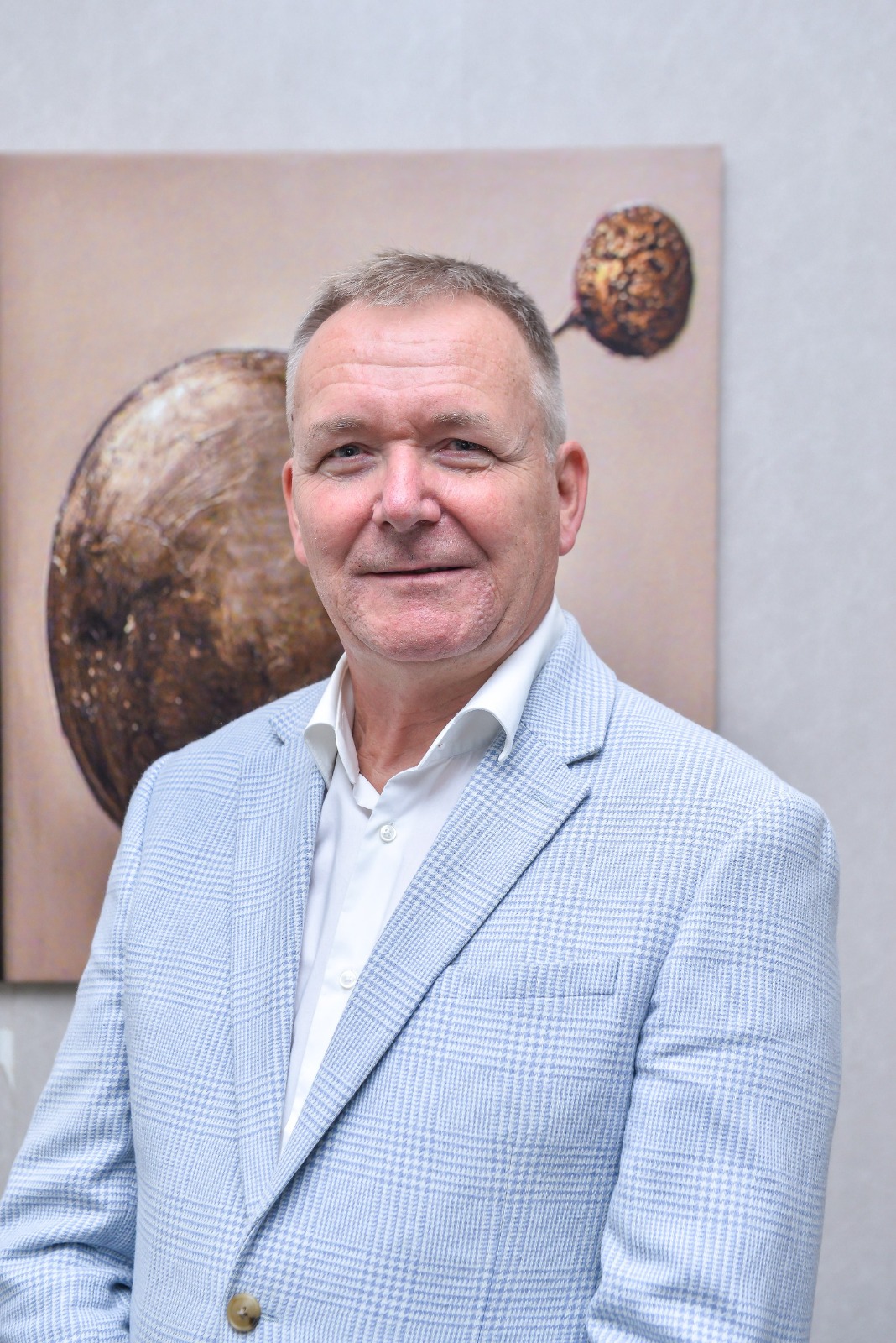
A growing body of economic analysis suggests that the center of global growth is shifting toward Eurasia, where integration between Asia and Europe is accelerating. Joep Konings, Dean of the Nazarbayev University Graduate School of Business, argues that while Western economies face stagnation and institutional strain, dynamic expansion is occurring across Central and East Asia. n nEurope, according to Konings, struggles with negligible growth and mounting debt, while political fragmentation hampers coordinated action. Meanwhile, the United States confronts challenges in higher education and immigration policy that limit its attractiveness to international talent. In contrast, Eurasia benefits from increasing cross-border partnerships, logistical advancements, and demographic vitality. n nCentral Asia, historically a nexus of trade along the Silk Road, is regaining prominence through modern infrastructure initiatives, including the Belt and Road Initiative (BRI). These efforts are evolving beyond physical construction into strategic frameworks focused on supply chain resilience and access to critical resources. n nChina’s role remains pivotal, not only due to its population exceeding 1.4 billion but also because of its proximity to Kazakhstan and deepening regional interdependence. Konings emphasizes that entrepreneurs in Central Asia must engage with Chinese markets to achieve scale. Even traditionally small enterprises—such as consumer goods producers—can generate substantial returns by tapping into vast Asian demand. For instance, selling one item daily to half of China’s population translates into 600 million units, illustrating the power of market reach. n nThe newly launched Eurasian Business program at Nazarbayev University, developed in partnership with Hong Kong University of Science and Technology (HKUST), prepares students for this evolving landscape. The curriculum emphasizes international entrepreneurship, capital acquisition, AI applications in strategy, and ESG principles. Rather than training specialists for narrow roles, the program fosters adaptable thinkers capable of thriving in global firms or launching ventures. n nStudents spend two years in Astana, gaining firsthand exposure to emerging markets, followed by two years in Hong Kong—a leading financial and innovation hub. Graduates gain dual degrees and access to extensive alumni networks from both institutions, including leaders in Kazakhstan’s public and private sectors such as Samruk-Kazyna, the National Bank of Kazakhstan, and multinational corporations. n nWith only 30–40 students admitted per cohort, the program maintains a selective, high-caliber environment. Tuition is competitively priced compared to top Western institutions, enhancing accessibility without compromising quality. Konings views the initiative as a timely advancement in business education, aligning academic training with real-world economic shifts. n
— News Original —n
Beyond West: Why Eurasia Will Shape New Center of Global Economic Gravity n
Editor’s Note: This interview features insights from Joep Konings, Dean of the Nazarbayev University Graduate School of Business and interim Vice Provost for Academic Affairs, whose work has appeared in leading journals such as the Quarterly Journal of Economics and the American Economic Review. For additional context on Kazakhstan’s economic trajectory, readers may refer to The Astana Times YouTube channel video interview with Konings, where he discusses the country’s growth drivers, technological innovation, demographic trends, and ongoing economic reforms. n nIn the Q&A below, Konings explains why the next decade of global growth will be shaped not in the West, but in Eurasia, and how Kazakhstan and the region’s young entrepreneurs can seize the opportunities ahead. n nYou’ve been outspoken about Europe’s stagnation and America’s turmoil. Why do you believe the next decade of growth will be written in Eurasia, not the West? n nThe new program is called Eurasian Business because this is the region where everything is actually happening. Over the next 10 years, the momentum is no longer in Europe. There’s no growth – essentially zero – combined with major debt issues and countries that can no longer collaborate effectively. So, the future is not in Europe. n nThe United States is also facing serious problems. Higher education cannot move forward when a president interferes in everything from governance to academic freedom – which is sad, because the U.S. once set the global benchmark. It’s not going to happen there either. Students face increasing challenges just getting visas, and the overall environment is becoming more restrictive. Real growth will be in Asia and Central Asia. Central Asia, in particular, will act as a major hub for logistics and connectivity, especially with the return of BRI dynamics. n nWhat factors are driving the shift in global economic growth toward Eurasia, and how does Central Asia’s historical and modern role illustrate this transition? n nEurasia is, of course, a huge concept. It spans parts of Europe and Asia, and it reflects a simple reality: the future of economic growth is rooted in this region – essentially in Asia – while still being linked to the technological strengths of the old European economies. What we’re seeing now is an increasing number of international ties, partnerships, and business relationships between legacy Europe and the fast-growing economies of Asia. n nThose European companies that are investing in Asia will remain part of the global future. Collaboration between Europe and Asia is essential, but the center of gravity is shifting – and the focus of growth will be here. n nThat’s why Eurasian business isn’t just a geographic term; it captures the idea that the future sits at the intersection of these cultures. Central Asia, in particular, is where a lot is happening. Historically, this region has always played a critical logistical role along the old Silk Road, and today it does the same in the modern Belt and Road context. BRI is becoming more of a conceptual framework now, one that’s really about the key challenges ahead: the resilience of global supply chains and secure access to critical raw materials. n nYou’ve described Eurasia as the world’s new center of gravity. Naturally, that brings us to China. How central is China to the future you’re talking about, and what does that mean for young entrepreneurs in Kazakhstan? n nThe speed at which things are changing here is much faster than in Europe. If you care about the future, you need to be in Eurasia. And within that picture, the link to China is obvious. n nSome people consider China part of Eurasia, others don’t – but either way, you cannot talk about business or entrepreneurship without including China. We’re talking about a market of well over 1,4 billion people. It’s massive, and it’s right next door to Kazakhstan. If you want to do business, you need to be involved with China. There’s simply no way around it. Even the U.S. government, after all its rhetoric, has softened its stance because they realized the U.S. cannot function without China. Europe can’t either. n nSo, China will remain a key player. Any Kazakh entrepreneur who wants to go global should be thinking about selling to China or working with Chinese partners. That’s why Hong Kong – and the combination of Hong Kong with Kazakhstan and Nazarbayev University – is such a powerful match. n nWhen people hear Eurasian Business, many immediately think of high-tech startups and platform companies. But is the opportunity here limited to tech, or is the picture broader? n nYou don’t necessarily need to be high-tech driven. We all think of Google, Meta, and other amazing tech companies, but consider a simple consumer product company – for example, a cookie company. It could become one of the largest companies in the world. n nIf you sell just one cookie a day to half of China’s population, that’s 600 million cookies. With a profit margin of ten cents per cookie, that adds up to a huge amount of money – every single day. That’s what scale really means. Companies from small European countries, like Belgium, are already reaching huge markets in Asia. A simple, well-executed consumer product can reach millions across the globe. n nBeyond markets and scale, doing business across Eurasia clearly involves navigating very different cultures. What will students actually learn in this program – both in terms of business skills and cultural fluency? n nWhile the program has a focus on Eurasian business, the real emphasis is on international business. You’ll learn a lot about entrepreneurship, international entrepreneurship, and raising capital. If you want to set up a new company, knowing how to raise capital is essential. AI for business strategy will also be a big part of the program. n nHKUST – Hong Kong University of Science and Technology – is far ahead in this type of course and has embedded these topics into their curriculum. ESG is a major focus. Even if it’s been pushed back a little recently, environmental aspects are here to stay. n nIf you specialize in accounting and auditing, that’s fine – but honestly, if that’s all you learn, you’ll likely be an accountant or auditor for the rest of your life. What we’ve built with this program is something different: people who can think conceptually and out of the box. That means job placement isn’t limited to traditional roles. Graduates could end up at Amazon, applying data science or marketing skills, or even at other global giants. Or, of course, they could set up their own company. And importantly, they’re also positioned for opportunities across the fast-growing Asian markets, where demand for talent with an international and Eurasian perspective is rapidly expanding. n nYou mentioned that some students even want to start their own companies while still in the program. How does the school support these entrepreneurial ambitions, and what kind of alumni network and connections will graduates have once they finish? n nIt’s entirely possible because of the career services we provide, as well as the support from Hong Kong. They guide students who want to set up their own company – from developing a business plan to connecting with the right resources. Students can tap into the HKUST alumni network, as well as our own. n nAt NUGSB, our Executive MBA program already has about 500 graduates, many of whom hold top positions across Kazakhstan -from Samruk-Kazyna to the National Bank of Kazakhstan, and Kazatomprom. But it’s not just public institutions: we also have leaders in private and multinational companies like BI Group and ERG. n nGraduates of this program – whether from the HKUST collaboration or the regular bachelor program – can rely on this extensive network. The connections we’ve built through our MBA alumni are now being extended to our bachelor students. In short, graduates can access both the Hong Kong and NU alumni networks – a powerful resource. Who wouldn’t want that? n nCould you give prospective students the essentials – who this program is for, how selective it is, what it costs, and what they get in terms of degrees, experience, and future career opportunities? n nThis program is for top students with a global mindset – from Kazakhstan, Central Asia, China, and beyond – who want exposure to fast-growing Eurasian markets and international business. Selection is strict: only 30–40 students per cohort, to maintain an elite and highly motivated group. n nTuition is very reasonable and very competitive compared to HKUST alone or top Western universities. Students earn a dual degree: part of the program in Astana, gaining hands-on exposure to Central Asia’s dynamic markets, and part at HKUST, one of Asia’s top-ranked business schools – often called the “Harvard of Asia.” n nStudents spend their first two years in Astana – time that sharpens their discipline, builds real academic maturity, and puts them right inside Central Asia’s emerging business landscape. Then the real acceleration begins: two years in Hong Kong, a city that never slows down. It’s one of the world’s most electric business hubs, where finance, tech, and entrepreneurship collide in a tight, fast-moving ecosystem. n nIn my view, the launch of this program, especially in partnership with such a prestigious university, is one of the timely decisions in business education. n nThe article is written in partnership with the press team of Nazarbayev University.