Amid sluggish economic performance and declining productivity, the evolving global geopolitical landscape has made advancing productive development an urgent priority for Latin America and the Caribbean, according to José Manuel Salazar-Xirinachs, Executive Secretary of the Economic Commission for Latin America and the Caribbean (ECLAC). Speaking at the International Economic Forum Latin America and the Caribbean 2026 in Panama City, he emphasized that current global disruptions demand smarter, forward-looking development strategies.
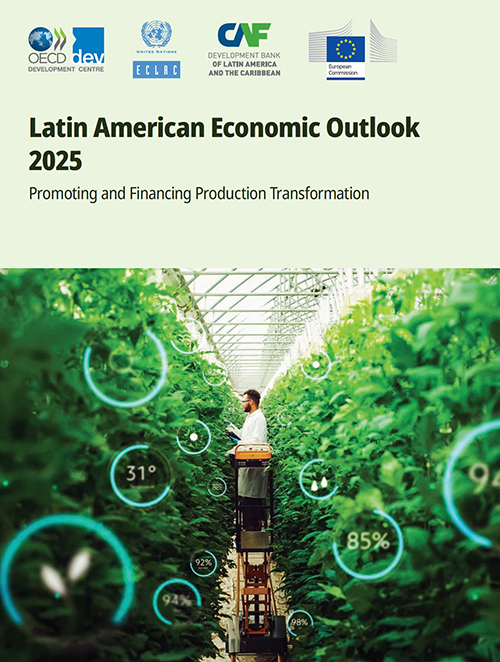
The forum, co-organized by CAF-Development Bank of Latin America and the Caribbean and the Panamanian government, featured the launch of the Latin American Economic Outlook 2025 (LEO 2025), a collaborative report by ECLAC, the OECD, CAF, and the European Commission. The document calls for a renewed focus on policies that foster structural transformation, particularly green industrialization that decouples growth from greenhouse gas emissions.
Salazar-Xirinachs warned that the region risks a third consecutive decade of weak expansion unless a new generation of development initiatives is implemented. He described the current international environment as one of “weaponized interdependence,” where trade, finance, and technology access are leveraged for geopolitical advantage rather than mutual economic benefit.
To avoid marginalization, he urged countries to actively shape their economic destinies—invoking Canadian Prime Minister Mark Carney’s phrase about needing to be “at the table and not on the menu.” This requires strengthening institutions, investing in human capital, adopting new technologies, and building value-added industries beyond raw material exports.
Félix Fernández-Shaw of the European Commission echoed this, stressing the need for Latin America to move up the global value chain through innovation and inclusive investment. Ragnheiður Elín Árnadóttir of the OECD Development Centre highlighted the importance of robust institutions and targeted investments in high-potential sectors. Verónica Frisanchio of CAF underscored the region’s untapped potential, advocating for strategies that leverage natural capital and diversify economies sustainably.
The LEO 2025 is presented not just as an analysis but as a call to action—a roadmap for governments and societies to build resilient, equitable, and dynamic economies at a pivotal moment in global affairs.
— news from Comisión Económica para América Latina y el Caribe
— News Original —
The Geopolitical Scenario and Economic Stagnation Turn Productive Development into a Strategic Priority for Latin America and the Caribbean
If the region’s poor economic performance and stagnating, or even declining, productivity were not enough to justify the scaling-up and improvement of productive development policies, the current geopolitical scenario turns them into a pressing necessity, José Manuel Salazar-Xirinachs, the Executive Secretary of the Economic Commission for Latin America and the Caribbean (ECLAC), affirmed today during the second day of the International Economic Forum Latin America and the Caribbean 2026: How to position the region on the global stage?, organized by CAF-Development Bank of Latin America and the Caribbean and the government of Panama, in Panama City. n nThe United Nations regional commission’s highest authority participated in the inauguration of the panel Latin American Economic Outlook 2025 – Driving and Financing Productive Transformation, where the main findings of the LEO 2025 report were presented. This report is produced jointly by ECLAC, the Organisation for Economic Co-operation and Development (OECD), CAF and the European Commission. n nIn his remarks, José Manuel Salazar-Xirinachs stressed that development strategies and policies must incorporate a well-informed and intelligent reading of the new geopolitics, along with ways to navigate it so as to harness its opportunities. n nThe senior UN official was one of the main speakers at the event along with Félix Fernández-Shaw, Director for Latin America and the Caribbean of the European Commission; Ragnheiður Elín Árnadóttir, Director of the OECD Development Centre; and Verónica Frisanchio, Knowledge Manager at CAF. n n“We are presenting this report at a decisive time in which a long-term trend is converging with a moment of rupture. They mutually reinforce each other in the call that we make in this LEO 2025 to Latin America’s countries and territories: a call to scale up and improve their productive development policies based on a new vision of these policies,” ECLAC’s Executive Secretary stated. n nHe specified that Latin America and the Caribbean is facing a trap of low capacity for growth and transformation, which has led to two lost decades of low economic growth. To avoid a third lost decade, a new generation of productive development policies is needed, with an emphasis on green productive development to be able to decouple economic growth from the emission of greenhouse gases, reduce pollution and drive the energy transition, he stressed. n nJosé Manuel Salazar-Xirinachs added that this structural trend is compounded by an international context marked by geopolitical rivalry between the major powers, which has fractured the rules-based global order. The current scenario is characterized by a “weaponized interdependence,” in which trade, investment and financial flows and access to technology are used to attain security-related, geopolitical or even purely political or non-economic goals, he stated. n n“My reflection today is that the issue addressed in the LEO 2025, which is focused on how to promote and finance the production transformation, is of vital importance, enormous urgency and also great sensitivity. Development strategies and policies today must incorporate a very well-informed and intelligent reading of the new geopolitics and how to navigate it in order to take advantage, and to be at the table and not on the menu, to borrow the expression used by Canada’s Prime Minister, Mark Carney,” he said. n nFinally, ECLAC’s Executive Secretary expressed his hope that the region’s governments can forge, also in practice, a new consensus regarding the need to scale up productive development policies, define what type of policies are most effective in each national and territorial context, establish how to finance them, and strengthen the institutional capabilities for implementing them. n n“This is the invitation that the LEO 2025 makes to governments and societies. This report is a tool, a road map, an invitation to dialogue and to action at a historic and decisive moment in time,” he concluded. n nMeanwhile, Félix Fernández-Shaw, Director for Latin America and the Caribbean of the European Commission, stressed that the region is facing the challenge of productive, inclusive and sustainable transformation. “We need to move up the value chain, incorporate technology, improve human capital, we need for Latin America and the Caribbean to stop being simply a supplier of raw materials and to transform itself. That will require productive – not just extractive or commercial – investment that gets behind human capital, transfers technology and creates local value-added,” he stated. n nRagnheiður Elín Árnadóttir, Director of the OECD Development Centre, emphasized that the LEO is not a standard report but rather an ongoing conversation that is built each year. She added that “to unlock the region’s production potential, strong institutions are needed along with clear investments in very promising sectors, with improved capabilities and skills.” n nVerónica Frisanchio, Knowledge Manager at CAF, stressed the importance of the report, which highlights the region’s enormous potential and focuses on how to harness its natural capital and its multiple strengths to move towards more diversified economies, with higher value-added, that can also be inclusive and sustainable. n nThe presentation of the LEO 2025 included a panel featuring the participation of Juan Vázquez Zamora, Deputy Head for Latin America and the Caribbean at the OECD Development Centre; Marco Llinás, Director of the Division of Production, Productivity and Management at ECLAC; and Anna Guijarro Jiménez, Programme Manager at the Directorate-General for International Partnerships (DG INTPA) of the European Commission. Jessica Roldán Peña, Director of Macroeconomic Studies at CAF, served as the moderator.