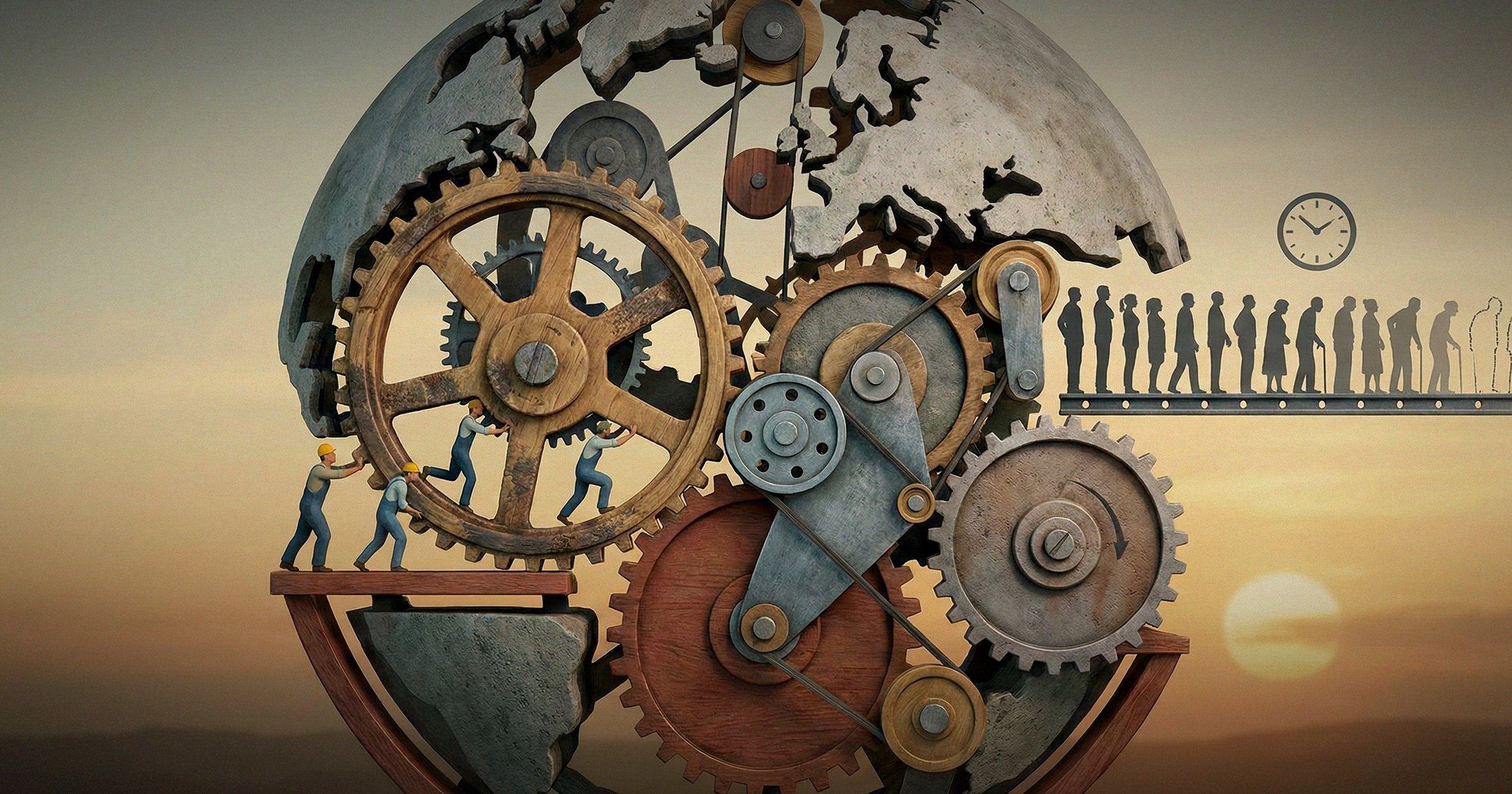
Over the next 15 years, global economic expansion is projected to slow compared to previous decades, according to analysts at The Conference Board. This outlook was shared during a recent webinar focused on the 2026 global economic forecast. n nEric Lundh, senior global economist at the organization, highlighted several structural factors influencing this trend. Demographic changes are increasingly constraining labor supply, particularly in developed economies such as the United States and those in Europe. As populations age and retirement rates rise, the workforce is expected to shrink, reducing one of the traditional engines of economic growth. n nAnother contributing factor is the slowing pace of capital deepening. As major emerging markets mature, the rate at which capital per worker increases is expected to decline. However, there is potential for offsetting gains through improvements in total factor productivity. Advances in digital infrastructure, artificial intelligence, continuous workforce training, and prior investments in physical and technological systems are expected to support future output. n nWhile both advanced and developing economies are anticipated to experience slower growth, emerging markets are still expected to lead global expansion. China and India, in particular, are forecast to remain key contributors. The share of global GDP attributed to these nations is expected to grow, with China showing the most significant increase. n nLundh noted that the overall global growth projection remains unchanged from the previous year, with demographics continuing to play a central role. However, a new development is the emergence of stronger-than-expected productivity gains. n nIn the U.S., economic transformation is underway amid slowing growth. Yelena Shulyatyeva, senior U.S. economist at The Conference Board, cited an aging population and shifts in immigration policy as two primary constraints. With baby boomers exiting the workforce, labor force participation is expected to decline over the coming decades. Additionally, reduced immigration levels and fertility rates below replacement level are exacerbating future labor shortages. n nOn a positive note, breakthroughs in pharmaceutical innovation could extend working lives by improving health in later years, potentially allowing individuals to remain in the labor market longer. The extent of this impact remains uncertain but could influence long-term GDP potential. n nArtificial intelligence represents one of the largest upside risks to the economy, Shulyatyeva added. While AI adoption is currently concentrated in the technology sector, broader integration into manual and industrial fields is expected over the next five years, though progress may be gradual. n nIn China, despite a shrinking working-age population, productivity has improved under leadership changes initiated in 2012. Investment remains the main driver of growth, though concerns persist about the efficiency of spending in real estate and traditional infrastructure. Long-term challenges, including a property sector downturn and geopolitical tensions with Western nations, could dampen consumer sentiment and hinder productivity. Nevertheless, China’s potential GDP growth is expected to remain higher than most advanced economies over the long term. n nEurope’s annual GDP growth is projected to remain around 1% over the next 15 years, according to economist Konstantinos Panitsas. Increased corporate investment in green and digital technologies, along with higher defense spending, may boost capital contributions. However, labor force contraction due to demographic trends and restrictive migration policies continues to weigh on growth. n nExternal risks to Europe include the possibility of the Ukraine conflict expanding into other EU or NATO countries, persistent trade tensions, and renewed disruptions in supply chains—especially for critical materials like rare earth minerals, on which the region is heavily dependent. n
— news from InsuranceNewsNet
— News Original —
Global economic growth will moderate as the labor force shrinks
Global economic growth is expected to moderate over the next 15 years in relation to prior decades, according to economists at The Conference Board. n nThe organization gave its insights on the 2026 global economic outlook during a recent webinar. n nEric Lundh, The Conference Board senior global economist, provided some takeaways on that global prediction, including: n nUnderlying demographic trends will become more challenging and limit economic growth contributions from labor – especially in mature economies such as the U.S. and Europe. n nCapital deepening, which occurs when capital per worker increases in an economy, will moderate as several large emerging markets mature. n nTotal factor productivity growth should improve and help support economic expansion. This is due to past investments in infrastructure, digital transformation, perpetual talent upskilling and deployment of artificial intelligence. n nEconomic growth in both emerging and mature economies is set to slow, but emerging economies will continue to be the most significant drivers of global growth. n nGlobal economic growth hasn’t changed since last year, Lundh said. One major reason centers on demographics and labor concerns as mature economies are dealing with an aging population. n n“The difference this year is we’re starting to see more productivity growth than we had forecasted previously,” he said. n nThe Conference Board predicted emerging economies – most notably China and India – will continue to drive growth. n n“We expect to see some cool down in mature and emerging economies,” Lundh said. “But we continue to project that emerging economies will contribute more to that global growth than mature economies.” n nEmerging economies’ share of global GDP will rise, with China showing the greatest increase. n nThe U.S. economy is undergoing transformation in the midst of a growth slowdown, said Yelena Shulyatyeva, The Conference Board senior U.S. economist. The aging population, as well as changes in immigration policy, are two major factors impacting economic growth. n n“The main factor is the aging of the population,” she said. “With baby boomers retiring, we will have a much lower labor participation rate in the global economy over the next few decades as the quantity of labor is shrinking.” n nIn addition, changes to U.S. immigration policy have had a negative impact on the labor force, as well as on gross domestic product and payroll, she said. U.S. fertility rates have declined to below replacement levels, further impacting a future labor shortage. n nAnother factor that Shulyatyeva cited as impacting potential GDP growth is innovation in pharmaceuticals that will help Americans live longer and healthier lives, potentially allowing people to retire later in life. n n“That’s a big unknown – how much the pharmaceutical industry can contribute to potential GDP growth,” she said. n nAI is the greatest upside risk to the economy, Shulyatyeva said. “For now, the adoption of AI is fragmented, so it’s kind of concentrated in the technology industries. But what about AI adoption in manual industries? It’s coming but it will take time – maybe over a five-year horizon.” n nChina’s productivity growing despite challenges n nChina’s economic growth will steadily moderate over the next 15 years as its working-age population continues to shrink, said David Hoffman, The Conference Board’s China center leader. n nDespite China’s demographic challenges, the country has seen productivity growth around under a new generation of leadership that rose to power in 2012, he said. n nInvestment is China’s primary growth driver but there is concern about the efficiency of much of that investment in real estate and traditional infrastructure such as bridges and roads. n nOver the long term, China’s potential GDP growth will remain notably higher than that of most advanced economies, Hoffman said, but long-term challenges are unresolved and will likely continue to affect China’s economic outlook. China’s property downturn and geopolitical tensions with the West pose challenges to long-term growth and will potentially impact consumer confidence and productivity. n nEurope’s economic growth is stable but faces risks n nEurope’s annual gross domestic product is expected to continue at around 1% growth over the next 15 years, said Konstantinos Panitsas, Conference Board economist. n nHe predicted European countries will see increased capital contribution as companies scale up green and digital investments and nations ramp up spending on defense. n nBut as in other areas of the world, Europe’s economic growth is dragged by a shrinking labor pool due to demographics and less favorable migration agendas. n nEurope’s future economic growth faces several external risks, Panitsas said, including: n nRussia’s war with Ukraine spilling over into other European Union or NATO-member countries. n nOngoing trade frictions. n nRenewed supply disruptions, given Europe’s high reliance on critical supply chains for products such as rare earth minerals.