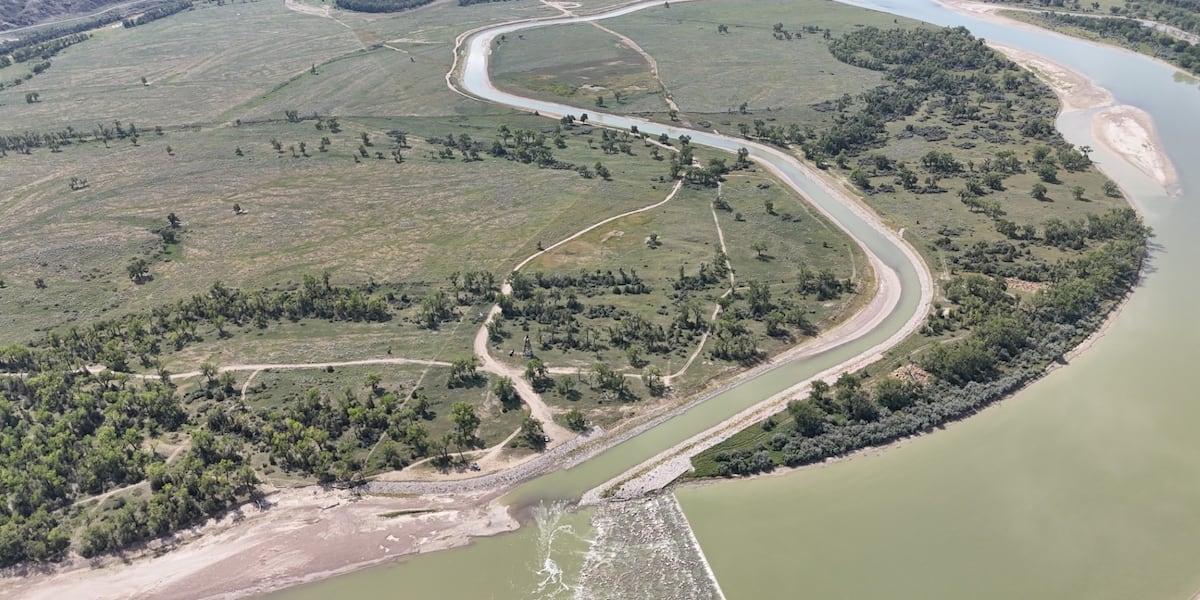
James Brower, manager of the Lower Yellowstone Irrigation Project in Sidney, Montana, is testifying before Congress on February 4 to advocate for continued federal responsibility in managing a $44 million fish bypass structure. The project, built by the U.S. Bureau of Reclamation to aid the endangered pallid sturgeon, now threatens to impose $3 million in annual operating costs on local irrigators—effectively doubling their water taxes.
Brower warns that placing this financial burden on the community could lead to economic collapse for the region. “It won’t be that it could bankrupt us, it is that it would bankrupt us,” he stated. The irrigation district supports around 400 farms and also plays a critical role in replenishing local drinking water supplies through natural groundwater recharge.
The bypass faces ongoing maintenance challenges: winter ice damages the structure, while summer erosion creates sandbars that obstruct fish passage. Despite being a federal construction, the Bureau of Reclamation may require local entities to cover upkeep unless legislation intervenes.
Brower is supporting the bipartisan Lower Yellowstone River Native Fish Conservation Act, introduced by Senator Steve Daines of Montana. The bill would ensure the Bureau retains ownership, operational control, and financial liability for the project.
He emphasized that while conservation is important, community survival comes first. “I care about the fish, and this is great for the fish, but I care about the people first,” Brower said.
The stakes are especially high for Sidney, which recently lost 300 jobs after the closure of its sugar beet processing plant. If the Bureau halts irrigation water due to non-payment, the impact would extend far beyond agriculture, threatening municipal water systems.
The Bureau of Reclamation has not yet provided an official statement on the matter.
— news from KFYR-TV
— News Original —
Sidney Irrigation Manager to Testify in D.C. Over Water, Farms and Fish
SIDNEY, Mont. (KUMV) – In Washington, D.C., this week, lawmakers are weighing a bipartisan bill intended to save an endangered fish, while also protecting the local economy in eastern Montana and western North Dakota. About 400 farmers could soon have their irrigation taxes double. n nBut a century-old law has turned a federal environmental project into what some call “a financial time bomb.” n nA $44 million Lower Yellowstone Fish Bypass, built to help the endangered pallid sturgeon swim upriver, could reportedly cost local irrigators in the Lower Yellowstone Irrigation District $3 million a year to operate, effectively doubling their water taxes, despite being constructed by the U.S. Bureau of Reclamation. n nJames Brower, manager of the Lower Yellowstone Irrigation Project, is testifying before Congress on Feb. 4 to urge lawmakers to keep the federal government footing the bill. n n“We literally are working at a regional water crisis,” Brower said. “It supports 90 percent of citizens, Sidney, Savage, Fairview, it supports their drinking water.” n nMaintenance of the bypass is ongoing. n nIn the winter, chunks of ice crash into the structure; in the summer, massive erosion creates sandbars that block the very fish the project was built to save. n nBrower said that covering these costs would financially devastate the community. n n“It won’t be that it could bankrupt us, it is that it would bankrupt us,” Brower warned. “If we are required by an endangered species law interpretation to pay for the maintenance of a very expensive endangered species project that we never agreed to maintain.” n nIf the Lower Yellowstone Irrigation Project does not reimburse the Bureau, Brower says the federal agency can shut off irrigation water entirely. n nThe threat extends far beyond the fields. The region’s canal system recharges the area’s drinking water through a unique geological process. n n“Within five hours of the water coming down the main canal through the town of Sidney, the recharge goes up in the wells,” Brower explained. “It goes through all the gravel and sand we’re sitting on and feeds the wells.” n nBrower is in D.C. to support a bipartisan bill, the Lower Yellowstone River Native Fish Conservation Act, introduced by Montana Sen. Steve Daines. n nThe legislation would ensure that financial responsibility, ownership, and operational control of the bypass remain with the Bureau of Reclamation rather than falling on local residents. n n“I care about the fish, and this is great for the fish, but I care about the people first,” Brower said. n nFor a community that recently lost 300 jobs following the closure of the Sidney sugar beet factory, the stakes for this week’s hearing couldn’t be higher. n nThe Bureau of Reclamation is still reviewing our questions with its D.C. office and could not provide an on-camera comment by airtime.