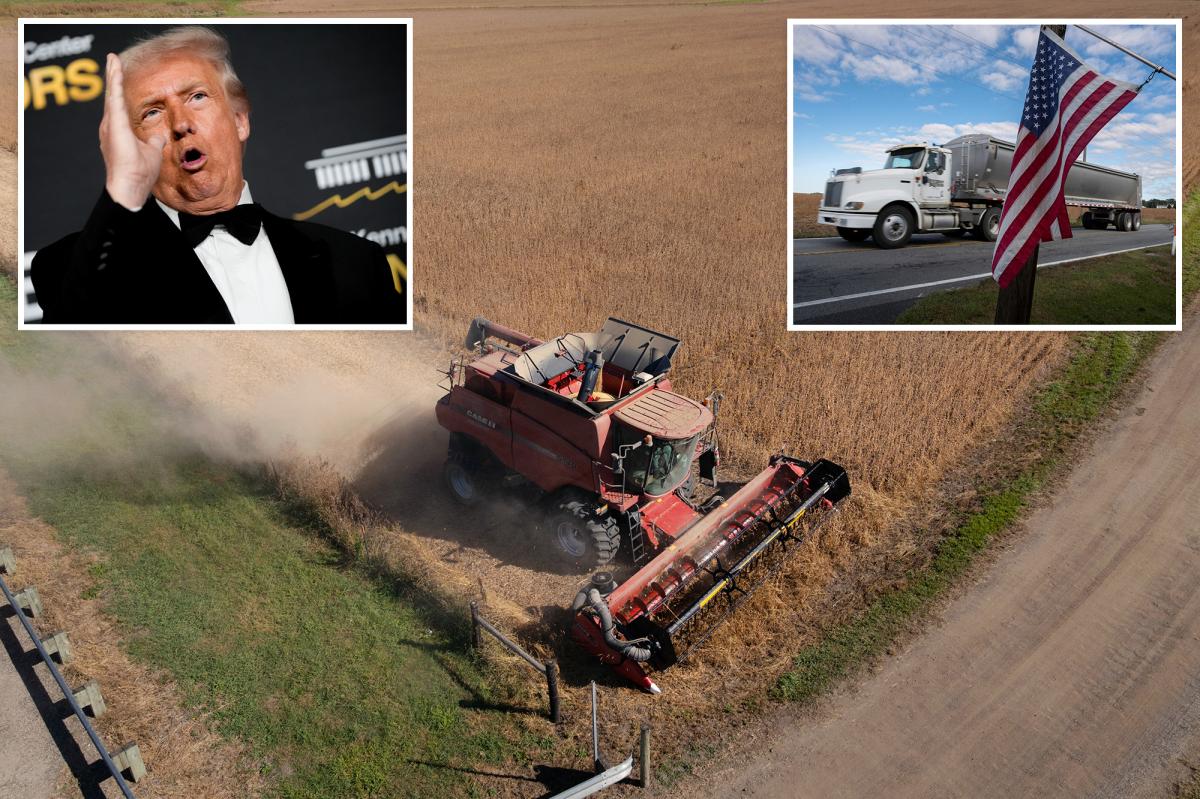
President Trump is set to announce $12 billion in financial support for American farmers facing economic strain from trade disputes, inflation, and market volatility, according to White House officials. The package includes up to $11 billion through a new USDA initiative called the Farmer Bridge Assistance program, which will provide direct payments to producers of corn, cotton, sorghum, soybeans, rice, cattle, wheat, potatoes, and other staple crops. n nThe assistance aims to help agricultural operators recover from foreign trade barriers, inflationary pressures from prior administrations, and ongoing market instability. Officials stated the funds will offer stability as farmers sell their current harvest and prepare for the next planting season. An additional $1 billion will be allocated to crop producers not covered under the main program. The announcement, first reported by Bloomberg, will be made at a White House event attended by Treasury Secretary Scott Bessent, Agriculture Secretary Brooke Rollins, and members of Congress. n nThe aid arrives amid ongoing trade tensions, particularly with China, and as the farm sector faces deepening financial stress. The American Farm Bureau Federation estimates that farmers will operate at a $28 billion deficit during the 2025–26 crop year, up from $17 billion the previous year. n nSoybeans, a major U.S. export, illustrate the challenges. Roughly half of domestic production is exported annually, with China historically purchasing about one-quarter of the 29 million metric tons shipped each year. However, stalled negotiations have disrupted purchases and caused price swings. The remaining soybean output is used domestically for animal feed, cooking oils, and biofuels like renewable diesel. n nIn October, Bessent announced a deal in which China agreed to purchase 12 million metric tons of U.S. soybeans this season and 25 million tons annually over the next three years. In exchange, the U.S. agreed to reduce tariffs on Chinese imports to 47%, down from threats of up to 100%. n nBankruptcies under Chapter 12 have surged by 60% in the first half of the year compared to 2024, according to The Wall Street Journal. Trump will begin a tour in Pennsylvania on Tuesday to highlight his administration’s economic record, despite declining public approval on economic issues. n nRecent data shows core inflation has risen 2.8% since last September, and layoffs have exceeded one million. Concerns are also growing over widening income inequality. These issues gained traction during the 2025 local elections in New Jersey, Virginia, and New York City, where progressive candidates like Mayor-elect Zohran Mamdani campaigned on affordability. n nWhen questioned about shifting messaging, Trump dismissed the focus on affordability, calling it a “con job.” Democrats, meanwhile, are promoting a “Make America Affordable Again” campaign. n nInflation under former President Joe Biden was a key factor in Trump’s 2024 re-election, and it remains a central issue ahead of the 2026 midterms. The president has proposed several new measures, including $2,000 tariff rebates, $1,000 “Trump account” savings for children, and 50-year mortgages. Tax reductions in the One Big Beautiful Bill Act, particularly those eliminating taxes on tips, are expected to stimulate economic growth in the coming year. n— news from New York Post
— News Original —
Trump to announce $12B in fresh economic assistance for farmers
WASHINGTON — President Trump on Monday is expected to announce $12 billion in economic assistance for US farmers grappling with the effects of ongoing trade negotiations with China and others, according to White House officials. n nAs much as $11 billion will come from a new Department of Agriculture program providing bridge payments to farmers of corn, cotton, sorghum, soybean, rice, cattle, wheat, potato and other row crops. n nThe Farmer Bridge Assistance program is meant to help the farmers “recover from years of unjustified trade actions on American agricultural goods by foreign governments, accumulated inflation costs under the previous administration and other market disruptions,” a White House official said. n n“Payments will provide certainty to farmers as they market this year’s harvest and plan for next year’s crops,” the source said. n nAnother $1 billion will be set aside for crop producers not covered by the program. The pending announcement was first reported by Bloomberg. n nTrump will be joined by Treasury Secretary Scott Bessent, Agriculture Secretary Brooke Rollins and other members of Congress for a White House event to announce the funding. n nThe bailout comes amid the president’s trade wars — particularly those involving exports to China — and as farmers are expected to be $28 billion in the red for the 2025-26 crop year, according to the American Farm Bureau Federation. The figure is up from $17 billion the previous year. n nIn terms of one crucial crop, soybeans, the US exports almost half of its production annually, while China usually takes around one-quarter of the total 29 million metric tons of what’s exported every year. But ongoing talks with Beijing stalled purchases and caused price fluctuations. n nThe other half of US soybean production is processed for livestock feed, various cooking oils and biofuels such as diesel. n nIn October, Bessent announced that China had agreed to buy 12 million metric tons of US soybeans this season and 25 million tons annually for each of the next three years as part of a trade agreement. n nThe US in turn said it would lower tariffs on Chinese goods to 47% after threatening up to 100% in additional import duties. n nChapter 12 farm bankruptcies spiked 60% in the first half of this year when compared with 2024, The Wall Street Journal reported. n nTrump will be kicking off a tour in Pennsylvania on Tuesday to tout his administration’s economic successes, even as polls show the president’s favorability on the issue is flagging. n nCore inflation is up 2.8% since September of last year, the US Department of Commerce reported Friday, and layoffs have topped 1 million. n nThere also have been concerns about whether the US is moving toward widening disparities between top earners and the working class. n nThose concerns grew with the 2025 off-year elections in New Jersey, Virginia and New York City, where socialist Mayor-elect Zohran Mamdani had a winning message of economic “affordability.” n n“I think affordability is the greatest con job,” Trump told reporters at the White House last week when asked about a messaging shift on the issue. n nDemocrats have meanwhile been floating a Make America Affordable Again counter-messaging campaign. n nSurging inflation under former President Joe Biden was one of the key issues that propelled Trump to win back the White House in 2024 — and the issue is sure to be a significant factor in the upcoming 2026 midterm congressional elections. n nThe president has already floated some new proposals — including up to $2,000 tariff rebates, $1,000 “Trump account” savings funds for kids and 50-year mortgages — in preparation. n nTax cuts tucked into Trump’s One Big Beautiful Bill Act are also hoped to fuel an economic boom in the coming year, especially through provisions that end taxes on tips.