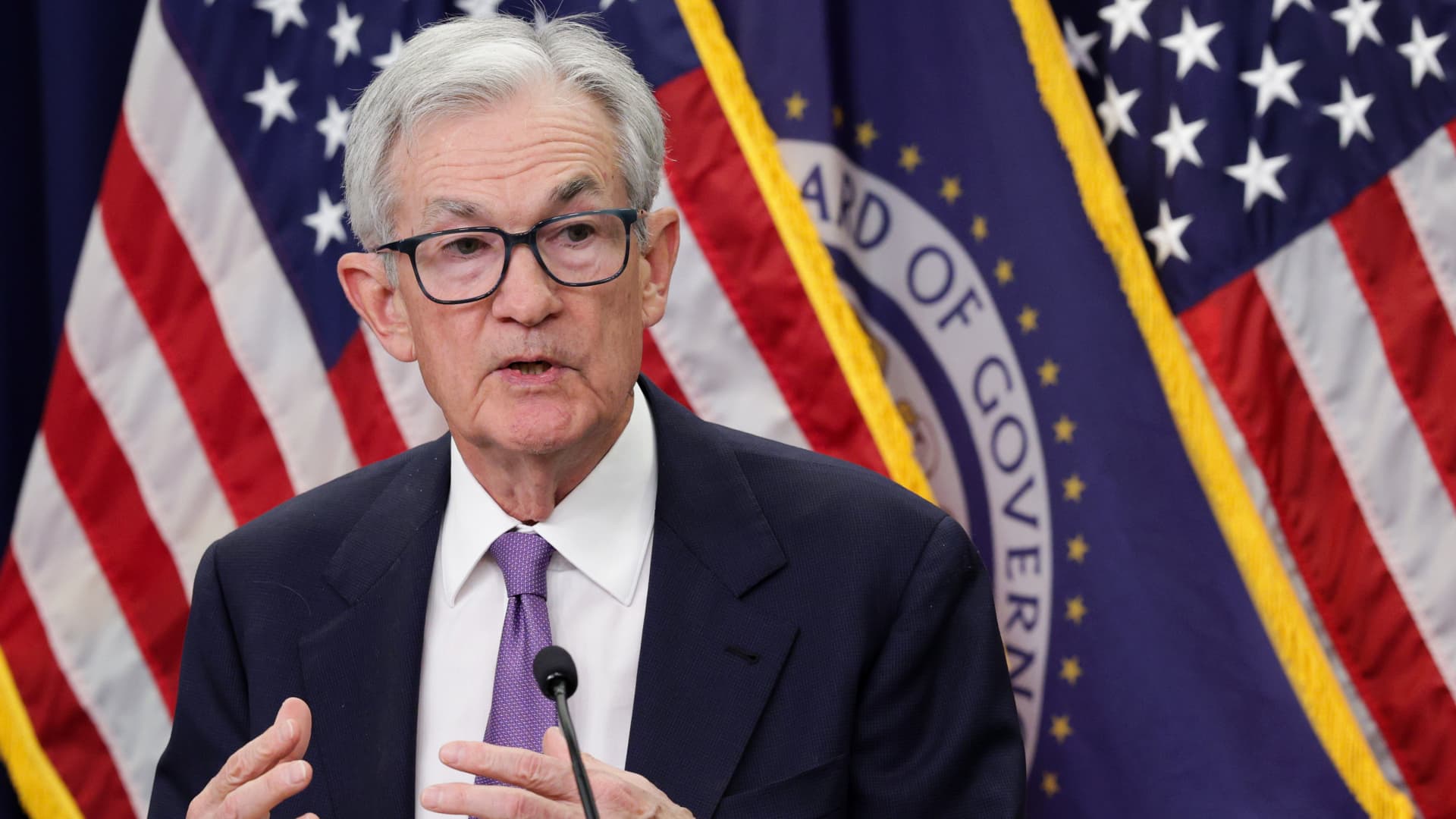
The Federal Reserve decided on Wednesday to maintain its benchmark interest rate within the 3.5%–3.75% range, pausing a recent sequence of rate reductions as economic indicators show stronger-than-expected growth. The Federal Open Market Committee (FOMC) cited solid expansion in economic activity and signs of stabilization in the labor market, despite ongoing concerns about inflation remaining above the central bank’s 2% target. n nThe decision halts three consecutive 25-basis-point cuts, which had been implemented as precautionary measures to support employment amid earlier economic uncertainty. The updated policy statement removed prior language emphasizing greater risks from a weakening job market compared to inflationary pressures, signaling a shift toward a more balanced assessment of the Fed’s dual mandate. n n”Indicators point to sustained economic expansion,” the FOMC noted, adding that job gains have been modest and unemployment trends are stabilizing. “Inflation continues to run moderately high.” This adjustment in tone suggests policymakers believe monetary policy is now closer to neutral, reducing the urgency for further easing in the near term. n nMarkets had anticipated the hold, with expectations that the next rate adjustment will not occur until at least June. The committee reiterated its data-dependent approach, stating it will closely monitor incoming economic indicators, evolving forecasts, and risk balances before making future decisions—a stance first introduced in December and seen as marking the end of the aggressive easing phase that began in September 2025. n nFollowing the announcement, Treasury yields rose, and the S&P 500 remained near the 7,000 level. Two FOMC members, Governors Stephen Miran and Christopher Waller, dissented, advocating for another quarter-point reduction. This marks Miran’s fourth consecutive dissent, though previously he had pushed for a more aggressive 50-basis-point cut. Both officials were appointed by former President Donald Trump, with Miran’s term ending shortly after the meeting and Waller having been considered a long-shot candidate for the chairmanship. n nThe decision comes during a period of heightened scrutiny for the central bank. Chair Jerome Powell, nearing the end of his term after eight turbulent years marked by pandemic response, recession management, and political confrontations, emphasized that recent data reflects a more favorable economic outlook. “Growth has clearly improved since our last meeting,” Powell stated, noting that inflation has behaved as expected and labor trends suggest stabilization. n nPowell also addressed ongoing challenges to the Fed’s independence, including a Justice Department subpoena related to headquarters renovations and past threats from Trump to remove him and other officials. He described the Supreme Court case involving Governor Lisa Cook as potentially one of the most consequential in the institution’s 113-year history. n nEconomically, GDP growth remains robust, with the Atlanta Fed estimating a 5.4% pace in the final quarter of the year, up from 4.4% in the third. Labor market dynamics show low hiring and layoffs, with jobless claims at their lowest in two years. However, inflation persists near 3%, lagging the 2% goal. Tariffs under the Trump administration are seen by Fed analysts as contributing to short-term price pressures, expected to ease later in the year. n nMarket futures suggest no rate cuts in 2027 and at most two in 2026, regardless of leadership changes. Prediction markets currently favor BlackRock’s Rick Rieder as Powell’s likely successor. n
— News Original —nThe Federal Reserve on Wednesday voted to take a break from a recent run of interest rate cuts, as the central bank navigates questions about its independence and awaits a new leader. n nMeeting market expectations, the central bank ‘s Federal Open Market Committee voted to keep its key interest rate in a range between 3.5%-3.75%. The decision put a halt to three consecutive quarter percentage point reductions, billed as maintenance moves to guard against potential downturns in the labor market. n nIn voting to hold the line, the committee raised its assessment of economic growth. It also eased its concerns about the labor market as compared with inflation. n n”Available indicators suggest that economic activity has been expanding at a solid pace. Job gains have remained low, and the unemployment rate has shown some signs of stabilization,” the post-meeting statement said. “Inflation remains somewhat elevated.” n nImportantly, the statement also erased a clause indicating that the committee saw a higher risk from the threat of a weakening labor market than that of heightened inflation. That would argue for a pause on rate cuts at least in the near term as officials see the Fed ‘s dual goals of low inflation and full employment more in balance. n nThere was little in the way of guidance about what ‘s coming next, with markets expecting the Fed to wait until at least June before adjusting its benchmark rate again. n n”In considering the extent and timing of additional adjustments to the target range for the federal funds rate, the Committee will carefully assess incoming data, the evolving outlook, and the balance of risks,” the statement said, repeating language inserted in December that markets saw as a shift away from the easing cycle that began in September 2025. n nTreasury yields moved higher following the decision, while the S&P 500 hovered just 7,000. n nAs has been the case for recent meetings, there were dissents. n nGovernors Stephen Miran and Christopher Waller voted against the hold, with both advocating another quarter-point cut. This was Miran ‘s fourth consecutive dissent, however, he had previously advocated for a deeper half-point cut. n nBoth officials were appointed by President Donald Trump, with Miran filing an unexpired board seat in September 2025 and Waller appointed during Trump ‘s first term. Miran ‘s term expires Saturday, while Waller interviewed for the Fed chair ‘s job but is considered a long shot. n nThe routine nature of the decision comes at a time when nothing is routine for the central bank. n nChair Jerome Powell has just two more meetings before his term at the helm ends, ending a tumultuous eight years at the Fed that has included a global pandemic, a steep recession and a seemingly endless series of battles against Trump. n n”If you look at the incoming data since the last meeting, [there is] clear improvement in the outlook for growth,” Powell said during a news conference. “Inflation performed about as expected, and … some of the labor market data came in suggesting evidence of stabilization. So it ‘s overall, a stronger forecast, really.” n nMost recently, the Justice Department has subpoenaed Powell over the extensive renovations at the Fed ‘s headquarters in Washington, D.C. Before that, the president threatened on multiple occasions to fire Powell and in fact has moved to sack Governor Lisa Cook, a case that is now pending a decision from the U.S. Supreme Court. n nWhen asked about his decision to attend oral arguments at the high court, Powell said the case is “perhaps the most important” in the Fed ‘s 113-year history. n nUnderscoring all of the tension has been a battle over the Fed ‘s independence, or its ability to operate without political interference. In confirming the Justice Department probe, an unusually candid Powell attributed the threat to Trump ‘s efforts to control monetary policy. Prior presidents also have criticized Fed decisions and tried to coerce policymakers into rate cuts, but none have been as aggressive or public about it as Trump. n nThe Fed also has a challenging economic backdrop to navigate. n nGrowth as measured by the widest measure, gross domestic product, has been robust. The third quarter motored ahead at a 4.4% clip and the final three months of the year are tracking at a 5.4% rate, according to the Atlanta Fed. n nAt the same time, hiring is slow in the labor market amid a Trump administration crackdown on illegal immigration. However, layoffs also have been tame, with the trend for initial jobless claims running at its lowest level in two years. n nInflation, though, has proven more troublesome. While off its 40-year highs back in 2022, the rate is still running closer to 3% than the Fed ‘s 2% goal, causing concern among some FOMC officials who either want rate cuts paused or eliminated until there ‘s more evidence that price increases are easing. n nTrump ‘s tariffs are running in the background when it comes to inflation, with Fed economists generally seeing the duties as adding near-term pressures that will abate later this year. n nFutures markets are pricing in at most two rate reductions in 2026 and none in 2027, regardless of the next Fed chair. Predictions markets are pointing to BlackRock bond chief Rick Rieder as the likely candidate to succeed Powell.