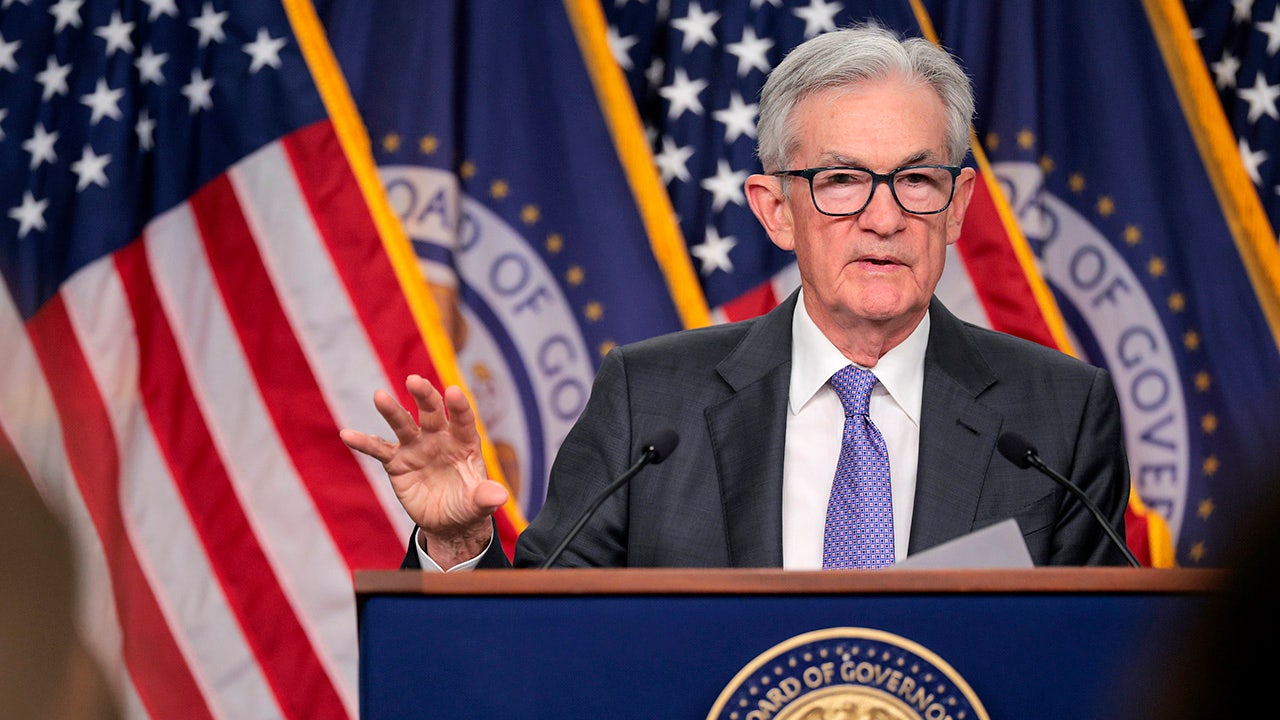
The Federal Reserve opted to keep interest rates unchanged on Wednesday, interrupting a series of three consecutive cuts amid mixed signals from the labor market and persistent inflation above the 2% target. The Federal Open Market Committee (FOMC) maintained the federal funds rate in the 3.5%–3.75% range, a decision supported by 10 of the 12 voting members. n nThe pause follows rate reductions of 25 basis points each in September, October, and December of the previous year, actions taken amid concerns about economic cooling. However, recent data showing solid GDP growth and signs of labor market stabilization led policymakers to conclude that current monetary policy is appropriately calibrated to support both employment and inflation objectives. n nIn its statement, the FOMC observed that the economy is “expanding at a solid pace,” with low job gains and a stabilizing unemployment rate. It acknowledged that inflation “remains somewhat elevated,” particularly in goods, where tariff-related price pressures have played a significant role. n nChair Jerome Powell, speaking at a press conference, emphasized that the central bank now views its policy stance as conducive to achieving its dual mandate. “After three cuts, we believe rates are in a range that supports progress on both fronts,” he said. He noted that while overall job growth has slowed, the private sector has added jobs, and labor supply constraints stem from reduced immigration and weaker labor demand. n nPowell addressed the impact of tariffs, stating that much of the inflation in goods can be traced to trade duties rather than broad-based demand, which he described as a more manageable issue. “If prices were rising due to demand, that would be harder to resolve. Tariffs likely represent a one-time price adjustment,” he explained, expecting their influence to peak and decline in the coming months barring new trade measures. n nRegarding the neutral rate, Powell said it is difficult to determine precisely, but current policy does not appear overly restrictive. With 175 basis points of easing already delivered in 2024 and 2025, the Fed is now in a position to assess incoming data carefully before making further moves. n nHe cautioned against overinterpreting quarterly GDP figures, noting that while recent readings are strong, annualized growth provides a more reliable picture. “GDP was negative in the first quarter last year, but the full-year number was in the mid-2% range,” he said, underscoring the need for a longer-term view. n nThe two dissenting votes came from Governors Stephen Miran and Christopher Waller, both Trump appointees, who favored another 25-basis-point reduction. Miran, whose term expired shortly after the meeting, has consistently pushed for more aggressive easing. Waller, previously seen as a potential chair nominee, last dissented in July when rates were held steady. n
— News Original —nThe Federal Reserve on Wednesday announced it will leave interest rates unchanged, breaking a streak of three straight rate cuts amid uncertainty over the labor market and inflation. n nFed policymakers voted to leave the benchmark federal funds rate unchanged at its current range of 3.5% to 3.75%. The move follows three successive 25 basis point rate cuts in September, October and December to close out last year. n nEconomic data showing a slowdown in the labor market along with inflation continuing to run hotter than the Fed ‘s 2% target prompted policymakers to put rate cuts on pause, after they were deeply divided over the decision to cut in December. n nThe Federal Open Market Committee (FOMC) voted 10-2 in favor of leaving rates unchanged, with dissents by Fed Governors Stephen Miran and Christopher Waller, who were in favor of 25 basis point cuts. n nMiran has been supportive of deeper cuts than the FOMC has favored since he joined the board while taking leave from his role in the Trump administration. His term at the Fed is set to expire on Saturday. Waller is viewed as a potential nominee for Fed chair and last dissented from an FOMC decision in July, when the Fed held rates steady. n nThe FOMC ‘s statement noted that data shows the economy “expanding at a solid pace,” adding that, “Job gains have remained low, and the unemployment rate has shown some signs of stabilization. Inflation remains somewhat elevated.” n nFederal Reserve Chair Jerome Powell said at a press conference that after policymakers lowered rates by 25 basis points at each of the prior three meetings, they “see the current stance of monetary policy as appropriate to promote progress toward both our maximum employment and 2% inflation goals.” n nPowell noted that the labor market has shown signs of stabilizing as the last three jobs reports showed average declines of 22,000 jobs per month, though the private sector added 29,000 jobs per month in that period. He added the slower growth in the labor supply was due to lower levels of immigration and labor force participation as well as softening demand for labor. n nThe Fed chair also said that inflation remains elevated, with the personal consumption expenditures (PCE) index up 2.9% over the past year through December. He explained that “elevated readings largely reflect inflation in the goods sector, which has been boosted by the effects of tariffs,” while in contrast, the services sector has seen disinflation. n nPowell was asked about how close the Fed’s current interest rate policy is at or near neutral, and he said that “it ‘s hard to look at the incoming data and say that policy ‘s significantly restrictive at this time,” saying that it may be “loosely neutral or somewhat restrictive, you know, it’s in the eye of the beholder.” n nHe added that after cutting 175 basis points at the end of 2024 and 2025, the central bank is well-positioned to “let the data speak to us” as they weigh potential interest rate moves at future meetings. n nThe chairman was asked by FOX Business ‘ Edward Lawrence whether the effects of tariffs have moved through the economy in terms of price increases, and Powell said that “a lot of it has” based on elevated goods prices. n n”Most of the overrun in goods prices is from tariffs, and that ‘s actually good news, because if it weren ‘t from tariffs it might mean it ‘s from demand, and that ‘s a hard problem to solve. We do think tariffs are likely to move through and be a one-time price increase,” Powell said. n n”The expectation is that we will see the effects of tariffs flowing through goods prices peaking and then starting to come down, assuming there are no new major tariff increases that are begun, and that ‘s what we expect to see over the course of this year,” he added. n nPowell was asked about the potential for cutting interest rates at a time when recent quarterly GDP data has shown strong growth, and cautioned that “you need to look at 12 months because quarterly GDP can be very lumpy. You know, GDP was negative in the first quarter last year… Over the year, the numbers were nothing like that, it was more in the mid-twos for the year.”