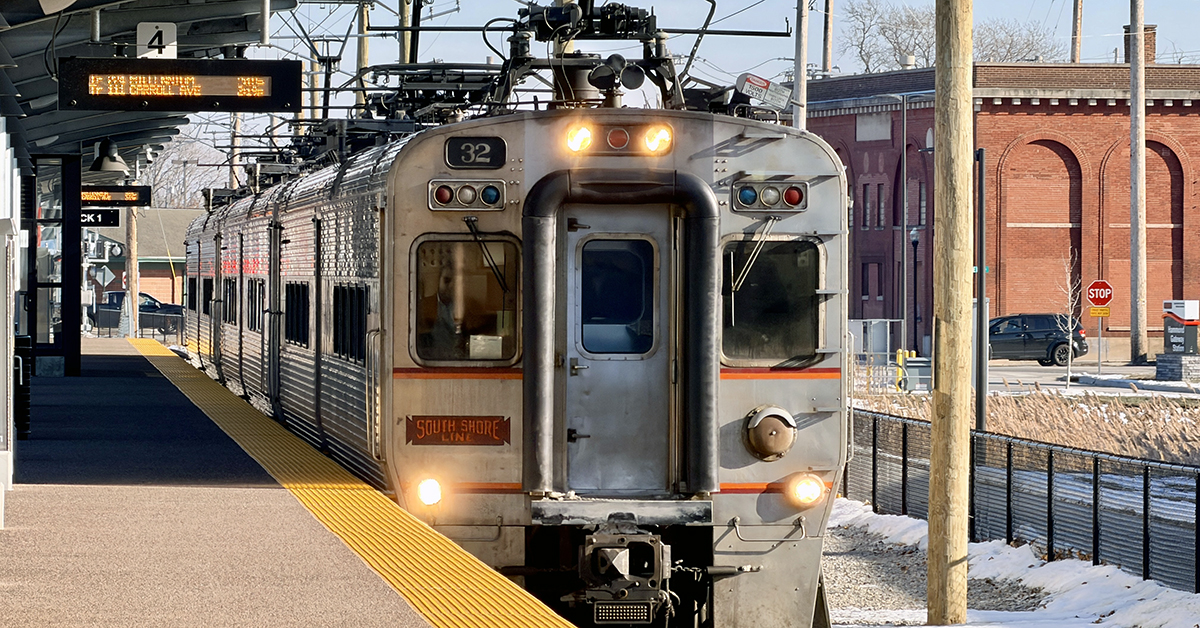
A $1.5 billion investment in expanded commuter rail infrastructure across Northwest Indiana is already generating significant private-sector interest and development, according to regional officials. Transit development districts (TDDs), established by the Indiana General Assembly, are designed to leverage public transportation upgrades into broader economic revitalization.
The Double Track Northwest Indiana initiative, which added a second rail line between Gary and Michigan City, began operations in May 2024, improving connectivity and commute times. Meanwhile, the Monon Corridor—a rebranded version of the long-planned West Lake Corridor—will launch service between Hammond and Dyer in March, further integrating the region with Chicago’s labor market.
Leaders from the Northern Indiana Commuter Transportation District (NICTD) and the Northwest Indiana Regional Development Authority (RDA) project that the combined public investment will attract at least $2.5 billion in private capital over two decades. So far, over $700 million in private projects have been initiated or announced, exceeding early expectations.
Michael Noland, NICTD president, expressed confidence in the model, calling the $2.7 billion total investment estimate conservative. “Early movers are seeing the long-term value,” he said, noting that developers are responding to the strategic placement of transit hubs.
In Hammond, The Banc—a redevelopment of the historic Calumet National Bank into residential units—has quickly leased out its 149 apartments. Its proximity to the future Monon Corridor station has spurred additional interest in downtown revitalization. City planner Anne Taylor emphasized a shift in strategy: instead of focusing solely on businesses, the goal is now to bring residents downtown, with commerce following naturally.
Michigan City’s new 11th Street station is adjacent to a $100 million mixed-use project by Flaherty & Collins, featuring 220 apartments and ground-floor commercial space. The development has drawn 114 pre-leasing inquiries, an unusually high number this far in advance, according to local economic director Clarence Hulse.
Mayor Angie Nelson Deuitch credited a 2021 decision to expand the original parking garage plan into a mixed-use structure as pivotal. “That change redirected our entire downtown trajectory,” she said, adding that other businesses are now opening in response.
Gary is focusing on foundational improvements—clearing blighted properties and achieving its first budget surplus in decades under Mayor Eddie Melton. With support from a $15 million Lilly Endowment grant, the city is preparing for future development near the Miller and downtown stations. Forty-five single-family homes are under construction in one TDD, with more planned.
Portage and Beverly Shores are also positioning for growth, particularly with planned sewer extensions and scenic highway designations that will support tourism and residential investment. Consultant Aaron Kowalski of MKSK noted that TDD boundaries were intentionally aligned with community visions.
With Chicago’s 4.5 million jobs within reach—compared to Indiana’s 2.9 million—the region aims to draw not just commuters but employers. “The short-term goal was access to jobs,” said RDA CEO Sherri Ziller. “The long-term vision is bringing those jobs here.”
— news from Northwest Indiana Business Magazine