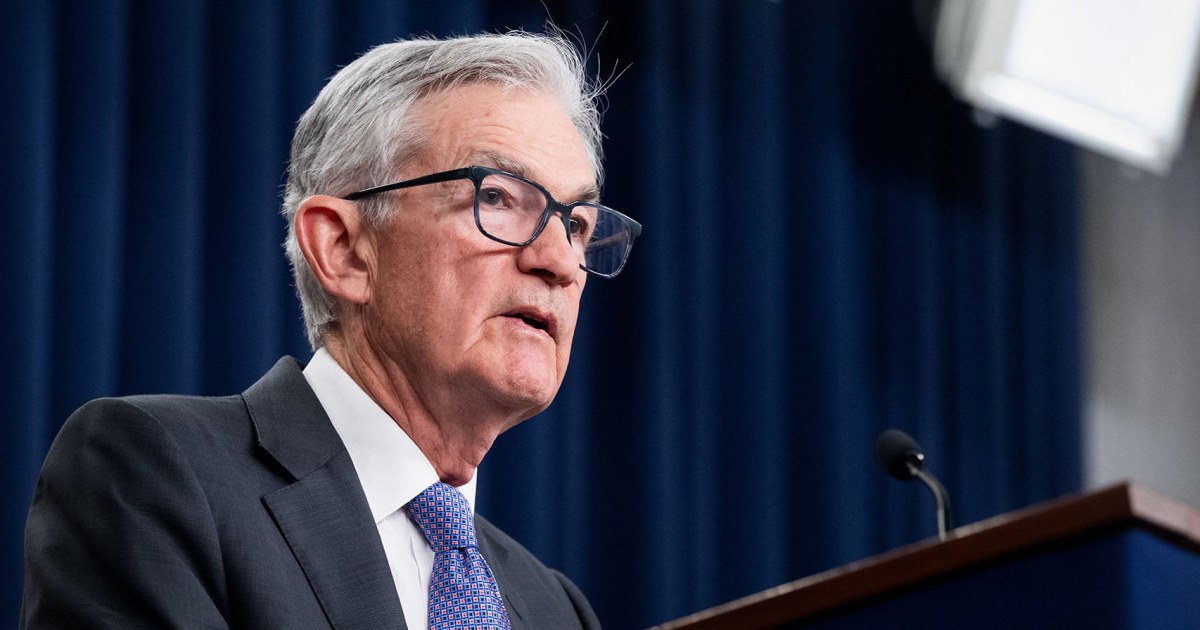
The Federal Reserve lowered its benchmark interest rate by 0.25 percentage points, marking the third reduction this year, as policymakers respond to signs of a softening labor market and persistent inflationary pressures. Chair Jerome Powell noted that while employment figures appear stable on the surface, underlying data suggests otherwise, with unemployment rising slightly from June through September and recent job gains possibly overstated by around 60,000 positions. According to revised estimates, the economy may have actually lost approximately 20,000 jobs monthly rather than gaining 40,000 as previously reported.
This adjustment is expected to ease borrowing costs for households managing mortgages, credit card balances, or personal loans, and could also benefit businesses seeking affordable financing. However, concerns remain that lowering rates too quickly might reignite inflation, which continues to hover above the Fed’s 2% target. Powell acknowledged that tariffs have contributed to elevated goods prices, though service-sector inflation shows signs of cooling.
The central bank’s decision was not unanimous. Three officials dissented—Stephen Miran supported a more aggressive half-point cut, while Jeff Schmid and Austan Goolsbee favored holding rates steady. These disagreements mark the highest level of dissent since 2019, reflecting growing uncertainty within the committee.
In accompanying economic projections, Fed officials raised their growth forecast for next year to 2.3% and anticipate one additional rate reduction in 2026 and another in 2027. They also revised their inflation outlook downward, now expecting it to reach 2.4% next year compared to a prior estimate of 2.6%.
Despite the cut, the Fed signaled a cautious stance, indicating no immediate plans for further action until after its January meeting. “We are well positioned to wait and see how the economy evolves,” Powell stated, emphasizing the delicate balance between supporting employment and controlling price increases.
Data limitations have complicated decision-making, as the recent federal government shutdown delayed key reports. The October jobs and inflation data were not released, and the November employment report is still pending, scheduled for publication on December 16. Meanwhile, alternative indicators such as ADP’s private payroll data suggest a weakening labor market, with small businesses cutting an estimated 120,000 jobs in November.
Financial markets reacted positively, with the S&P 500 gaining about 0.25% following the announcement. The Fed also revealed plans to resume monthly purchases of U.S. Treasury securities, a move intended to support financial system stability and contributing to the rally in equities.
— news from NBC News
— News Original —
A divided Fed cuts interest rates again as economic concerns persist
The Federal Reserve on Wednesday cut its influential interest rate for the third time this year, pointing to a job market that Chairman Jerome Powell said may be weaker than it appears. n nThe cut of a quarter point — a cautious interest rate move by the Fed — could make it cheaper for average Americans who hold a mortgage, have credit card debt or need to take out or refinance a personal loan. It would also help businesses borrow at lower rates. n nBut it comes at the risk of stoking inflation that has yet to fall to the Fed’s preferred levels. At a news conference following the Fed’s announcement, Powell said that tariffs were helping to keep inflation higher than it might be otherwise. n nGiven the Fed’s dual mandate of promoting maximum employment while keeping prices stable, any move the central bank makes comes with risks. n n“There is no risk free path for policy as we navigate this tension between our employment and inflation goals,” Powell said. “Our obligation is to make sure that a one time increase in the price level does not become an ongoing inflation problem.” n nThe Fed chair said the committee decided to cut rates because of a number of factors. n n“First of all, gradual cooling in the labor market has continued,” he said. “Unemployment is now up three tenths from June through September.” n nPowell also said the central bank believes that there has been an “overstatement” in recent jobs numbers of about 60,000 jobs. In his view, data showing that payrolls have been pacing at about 40,000 jobs added per month are, in fact, really pacing at 20,000 jobs lost per month. n nThe rate cut had been anticipated by investors, but some doubt remained after a few members of the Fed’s committee expressed concerns that lower interest rates could push consumer prices higher. n nThe Fed’s “target range” is now set at its lowest level since late 2022. n nThree Fed officials dissented against the cut. Fed governor Stephen Miran, who is on temporary leave from the White House, voted for a half point cut. Regional presidents Jeff Schmid and Austan Goolsbee voted for no change to rates at all. n nThe three dissents were the most for the normally united committee since September 2019. n nIn economic projections released alongside Wednesday ‘s interest rate statement, Fed officials said they saw growth picking up next year more than previously expected, to 2.3%. Fed officials also projected one more interest rate cut next year and another in 2027. n nLanguage used in the Fed’s statement indicated that Wednesday’s cut would likely be the last for now, at least until after its next meeting on Jan. 27-28. n nPowell said essentially the same thing. “We are well positioned to wait to see how the economy evolves,” he said in response to a question asking if the Fed is now on hold. n nFed officials also said that they expected inflation to decline to 2.4% next year, down from their previous expectation of 2.6%. n n“Available indicators suggest that economic activity has been expanding at a moderate pace,” the Fed said in a statement. “Job gains have slowed this year, and the unemployment rate has edged up through September.” n n“Inflation has moved up since earlier in the year and remains somewhat elevated,” members of the Fed’s open market committee added. n nAffordability has remained a major issue across the U.S., with President Donald Trump — who has repeatedly and vociferously called for the Fed to continue to cut interest rates — recently downplaying those concerns after having campaigned on them. n nDoubt about the overall economic picture lingers thanks in part to the fog of a data blackout, the result of the prolonged federal government shutdown this fall. Meanwhile, alternative data has consistently pointed to a slowing labor market. The payroll processor ADP’s most recent monthly private jobs report showed small businesses shed a whopping 120,000 jobs in November. n nThe Bureau of Labor Statistics has released the September jobs report, but the October report was canceled altogether, and the November report remains a work in progress. The delayed November jobs report is set to be released Dec. 16. n nLike the jobs report, October’s consumer price index was canceled. And all-important November inflation data will also arrive late, on Dec. 18. n n“Very little data on inflation have been released since our meeting in October,” Powell said at a press conference in Washington. n n”Inflation for goods has picked up, reflecting the effects of tariffs,” he said. But, he noted, the services component of the economy is experiencing disinflation. n nStocks jumped to their highs of the day after the Fed’s announcement, with the S&P 500 rising about a quarter of a percent. The Fed also announced Wednesday that it would buy billions of dollars of U.S. Treasury bonds per month, a move aimed at bolstering the plumbing of the financial system. This also helped push stocks higher.