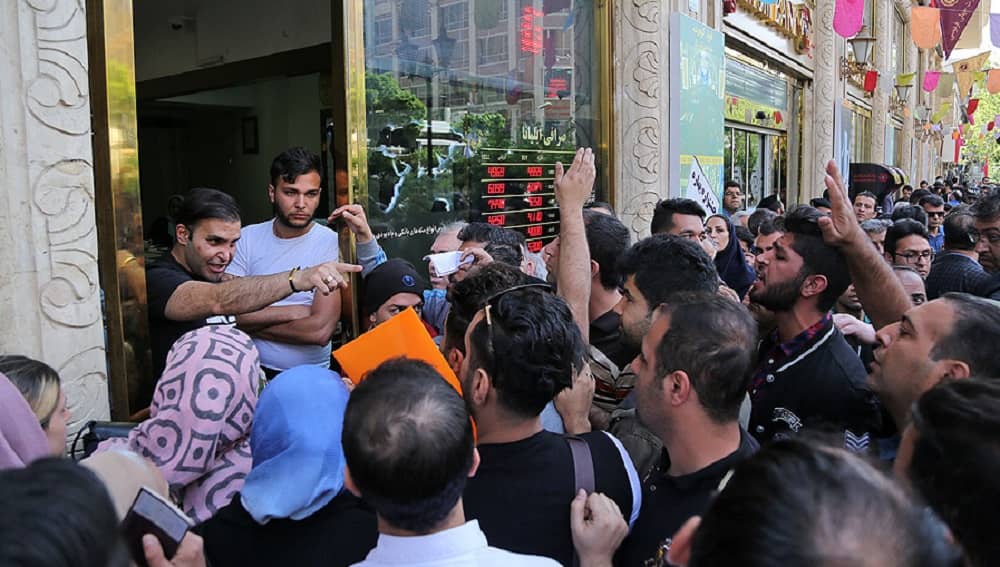
Iran is grappling with a deepening crisis marked by soaring inflation, currency devaluation, and deteriorating public health conditions. In early December, the national currency fell below 126,000 tomans per U.S. dollar, while major cities, including Tehran, endured hazardous air quality levels, prompting school closures and overwhelming emergency medical services.
Government officials acknowledged severe fiscal strain, with retirees’ associations reporting that the state owes thousands of billions of tomans in unpaid social security obligations. Medical insurance contributions have been reduced from 50% to 30%, even as healthcare costs surge. Inflation, once suppressed in official reports, has been confirmed to exceed 50% in ten out of twelve months in 2023. A senior energy official cited a 1,000% increase in essential goods prices over seven years, with bread and meat prices rising 13-fold and 21-fold, respectively.
Social welfare programs are being scaled back rather than expanded. The Talasemia Association warned that the removal of preferential foreign exchange access for life-saving medications could increase treatment costs by four to twelve times, potentially forcing families to consider extreme measures, including organ sales, to afford care.
Fuel and food prices are adding pressure on households. A new tiered gasoline pricing system will introduce a rate of 5,000 tomans per liter starting December 12, 2025. President Masoud Pezeshkian defended the move as a matter of economic justice, though he admitted it relies on monetary expansion. Meanwhile, raw milk prices jumped from 23,000 to 35,000 tomans per kilogram in two months, leading to a 35–40% rise in dairy product costs. Feed shortages have become so severe that some poultry farms report cannibalism among chickens.
To curb capital flight, the Central Bank banned the use of gold, cryptocurrency, or any non-rial asset for transactions, labeling it a defense of national monetary sovereignty. The restriction coincided with the rial’s sharp depreciation.
Environmental degradation is compounding the crisis. Tehran’s air quality index reached 165—classified as red—leading to school shutdowns in 15 to 16 provinces. The Health Ministry reported 170,000 emergency visits in one week due to respiratory and cardiac issues, with over 59,000 deaths linked to pollution in the past year. Power plants are burning high-sulfur mazut at record levels, contributing to toxic emissions. A former Tehran municipal adviser described 2025 as the worst year for air quality in two decades, with acceptable-air days dropping to one-third of the year.
Water scarcity is worsening. A deputy energy minister warned Iran is nearing a point of no return, with northern glaciers vanishing and rivers drying prematurely. Land subsidence is accelerating in urban centers like Tehran and Karaj, with Pezeshkian admitting, “the ground beneath us is hollowing out.”
Government responses have drawn criticism even from aligned factions. Pezeshkian’s order to restrict internet access for officials—referred to as “blackening white SIM cards”—was condemned by state-affiliated media as a failed policy that spreads repression rather than reform. Some lawmakers now warn of an impending wave of impeachment motions, while clerical figures face backlash for inflammatory remarks.
The convergence of economic mismanagement, environmental collapse, and eroding public trust suggests a system under severe stress, with diminishing capacity to respond to mounting challenges.
— news from National Council of Resistance of Iran – NCRI