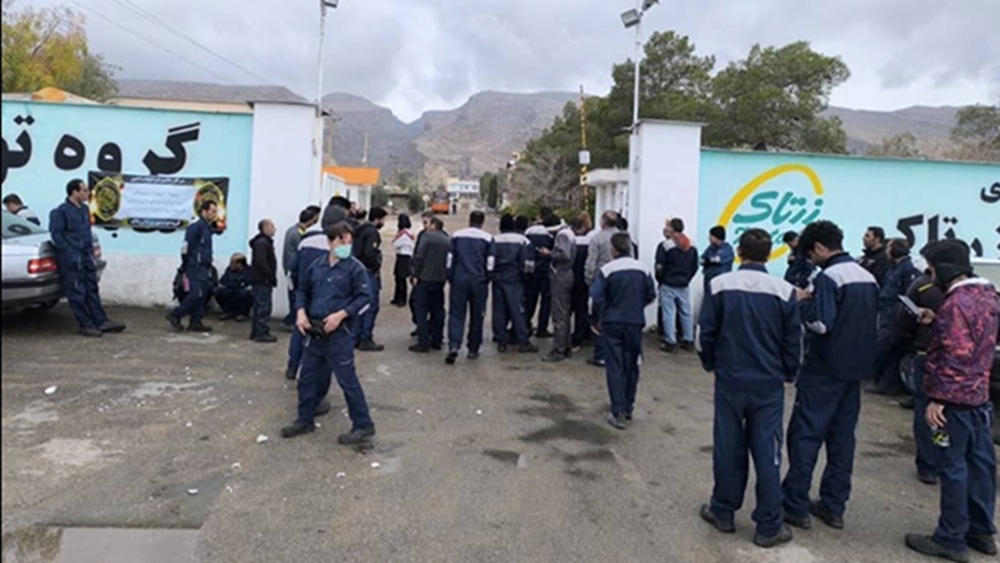
On December 20, 2025, coordinated demonstrations unfolded across several Iranian provinces, signaling widespread public frustration amid a worsening economic situation. In Tehran, Ahvaz, and Fars, individuals from different sectors—students, medical personnel, and industrial workers—took to symbolic spaces within their communities to voice grievances over deteriorating living standards and institutional neglect. n nIn Ahvaz, healthcare employees at Khomeini Hospital gathered inside the facility to protest unpaid salaries and declining working conditions. Their demonstration underscored the strain on public health services, with staff emphasizing that their demands were not for special benefits but for basic subsistence. They warned that continued financial instability among medical workers could compromise patient care, calling for transparency in overdue payments and urgent adjustments to compensate for rising costs of living. n nMeanwhile, in Kavar County, Fars Province, laborers at the Vardar Zartak Production Group halted operations following months of unmet requests for wage improvements. As the second-largest employer in the region, the company’s workforce had repeatedly submitted formal appeals without response, prompting the work stoppage. This action follows similar unrest at the nearby Kavar Steel complex, suggesting a growing pattern of organized resistance among industrial workers facing poverty-level incomes. n nAt the University of Tehran, students defied administrative warnings to protest the removal of housing support for graduate and undergraduate students in advanced academic terms. Rallying near the Central Library, they rejected claims of budget constraints, instead pointing to systemic mismanagement and large-scale financial corruption within state institutions. Chants such as “The student dies but accepts no humiliation” reflected deep resentment toward policies perceived as undermining educational access. Protesters framed the housing cuts as part of a broader shift toward privatization, warning that such measures would progressively exclude lower-income students from higher education. n nThese concurrent actions highlight a mounting disconnect between citizens and governing authorities. Whether in hospitals, factories, or universities, the underlying theme remains consistent: economic hardship, coupled with perceived administrative failure, has driven diverse groups to assert their rights through collective action. n— news from National Council of Resistance of Iran – NCRI
— News Original —
Simultaneous Protests Erupt in Tehran, Ahvaz, and Fars as Economic Crisis Deepens
On Saturday, December 20, 2025, a synchronized wave of unrest swept across multiple Iranian provinces, challenging the regime’s narrative of stability. From the academic halls of Tehran to the medical wards of Ahvaz and the industrial lines of Fars, diverse sectors of society launched strikes and rallies, united by a common rejection of systemic mismanagement and economic deprivation. n n“Frying for Bread and Justice” in Ahvaz n nIn the southwestern city of Ahvaz, the corridors of Khomeini Hospital became the site of a tense standoff. Medical staff and personnel gathered inside the facility to protest unpaid wages and the authorities’ refusal to address their deteriorating living conditions. The protesters emphasized that their demands were not for “privileges” but for basic “livelihood.” n nThe rally highlighted a critical breakdown in the healthcare infrastructure. Staff members warned that the financial pressure on caregivers has reached a breaking point, directly threatening patient care. “When the hospital itself becomes a place of protest, the situation is more dire than ever,” the staff declared, calling for immediate transparency regarding arrears and the implementation of “extraordinary special” pay adjustments. n nIndustrial Strikes in Fars Province n nSimultaneously, in the southern county of Kavar, Fars Province, the industrial sector saw a significant halt in production. Workers at the Vardar Zartak Production Group, the second-largest company in the county, initiated a strike on Saturday morning. n nThe labor action follows months of administrative stonewalling. Workers reported that after submitting multiple written requests for wage increases and improved conditions—all of which went unanswered—they were left with no choice but to stop work. This strike is viewed as a continuation of the labor unrest that recently began at the nearby Kavar Steel complex, signaling a growing organized movement among workers facing poverty-level wages. n n“University is a Bastion of Freedom, Not a Money-Making Machine” n nIn the capital, the University of Tehran witnessed a defiant gathering of students protesting the monetization of public education. Despite explicit threats from university security and management, students rallied in front of the Central Library to condemn the cancellation of housing accommodations for Master’s students in their 6th term and PhD and Bachelor’s students in their 10th term. n nThe students rejected the administration’s excuse of “budget shortages,” pointing instead to the regime’s misplaced priorities. In a direct challenge to state corruption, students chanted, “The student dies but accepts no humiliation.” Speakers at the rally questioned how a system plagued by “multi-thousand billion” embezzlement cases claims poverty when providing dormitories and food for students. n nThey described the housing cuts as a “direct attack on educational justice” and part of a broader policy to privatize state universities, effectively conditioning education on wealth. “Today term 6, tomorrow term 5, the day after everyone,” the students warned, vowing to continue their protests until the right to housing is restored. n nA Nation in Crisis n nThe simultaneous eruptions of dissent illustrate a deepening rift between the Iranian people and the ruling establishment. Whether it is the nurse in Ahvaz unable to feed their family, the worker in Kavar ignored by management, or the student in Tehran being pushed out of their dormitory, the message is uniform: the regime’s corruption and incompetence have left the population with no recourse but to reclaim their rights through protest.