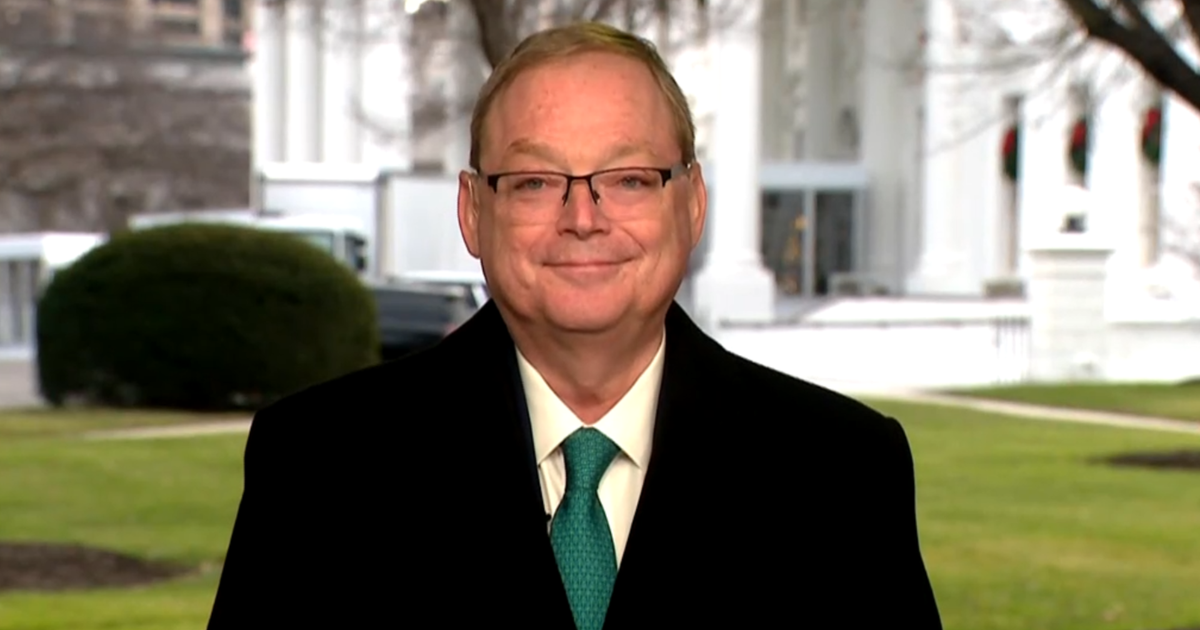
White House economic advisor Kevin Hassett indicated Sunday that President Trump’s proposal to distribute $2,000 payments to Americans using tariff revenue hinges on congressional action. Speaking on “Face the Nation with Margaret Brennan,” Hassett said the administration expects to present a formal plan to Congress in the new year.
Since July, the president has discussed the possibility of rebating tariff income to citizens. Last month, he announced via social media that a “dividend of at least $2,000 a person (not including high income people!)” would be issued to eligible individuals. Treasury Secretary Scott Bessent later clarified that the payments would likely target households earning under $100,000, though the idea remains under discussion.
Hassett emphasized that any disbursement would require legislative authorization, as funds would need to be allocated through the tax system. He noted that while he was uncertain about fiscal space for such a move in the summer, recent economic data has improved the outlook.
“The economy has seen nearly two quarters of 4% growth, we’ve run a government surplus for several months in a row, and the deficit is down $600 billion compared to last year,” Hassett explained. “Back then, I wasn’t confident such a payment was feasible. Now, I believe it is.”
He suggested tariff receipts could finance the initiative, though ultimately, Congress decides how to allocate all forms of federal revenue, including taxes and customs duties.
The administration continues to promote tariffs as a cornerstone policy, arguing they generate new income and stimulate domestic manufacturing. Hassett claimed most tariffs introduced this year have proven effective, citing strong economic growth, a shrinking trade deficit, and reduced imports from China.
“There’s a lot of success to point to in the tariff space,” he said. “But we’re also hearing feedback from trading partners and U.S. companies involved in international trade, suggesting some adjustments might be needed.”
Hassett mentioned a willingness to exempt certain goods from tariffs if they are impractical to produce domestically, such as due to climate constraints. U.S. Trade Representative Jamieson Greer is leading this review process.
Additionally, Hassett expressed confidence that the Supreme Court will uphold the president’s authority to impose tariffs under federal emergency powers laws, which the administration has used to levy duties on nearly all U.S. trading partners.
“We really expect the Supreme Court is going to find with us,” he stated.
— news from CBS News
— News Original —
Top White House economic adviser Kevin Hassett says $2,000 tariff checks for Americans will depend on Congress
Washington — Director of the National Economic Council Kevin Hassett said Sunday that President Trump ‘s idea to give Americans $2,000 checks funded by tariff revenue will “depend on what happens with Congress.”
“I would expect that in the new year, the president will bring forth a proposal to Congress to make that happen,” Hassett said on “Face the Nation with Margaret Brennan.”
Since July, Mr. Trump has floated a possible rebate for some Americans based on tariff revenue. And last month, the president posted on social media that a “dividend of at least $2,000 a person (not including high income people!) will be paid to everyone.” Treasury Secretary Scott Bessent told Fox News last month that the checks would likely go to households making less than $100,000. He said at the time it remained “in discussion.”
Hassett noted that Congress would have to approve the funds, which would likely be issued through the tax code and require lawmakers to pass new legislation authorizing the Treasury Department to send checks. But Hassett touted “a lot of positive news about the economy” since July that he suggested makes the checks more possible.
“We ‘ve had a couple of quarters of almost 4% growth, we ‘ve got a big government surplus actually running for a few months in a row, the deficit relative to last year is down by $600 billion,” Hassett said. “And so, in the summer, I wasn ‘t so sure that there was space for a check like that. But now I ‘m pretty sure that there is.”
Hassett said the funds could come from tariff revenue, while noting that “in the end, you know, we get taxes, we get tariffs, we get revenue from lots of places, and then Congress decides how to spend those money. That ‘s an appropriation.”
The comments come as the president has defended the tariffs as one of his administration ‘s signature policies, touting the approach for helping the U.S. raise new revenue and driving investment in U.S. manufacturing.
Hassett said most of the tariffs put in place this year “have proven their mettle,” pointing to high growth, reduction in the trade deficit and lower imports from China.
“So there ‘s a lot of success to crow about in the tariff space,” Hassett said. “But there are also things that we ‘re hearing, when we talk to people like trading partners and companies that trade a lot in the U.S., there are also things that maybe could be adjusted.”
Hassett said “there ‘s an appetite to exempt things if they ‘re really not meant to be made in the U.S.” because of factors like climate. He said U.S. Trade Representative Jamieson Greer is leading that effort.
The top White House economic adviser also expressed confidence that the Supreme Court will side with the administration as the justices consider whether the president has the authority to unilaterally impose tariffs under a federal emergency powers law. The administration has relied on the law to impose duties on nearly every U.S. trading partner.
“We really expect the Supreme Court is going to find with us,” Hassett said.